By Michael Karadjis
The Lebanese people can feel some relief now that Israeli bombing has stopped – well, mostly, despite ongoing violations – and they can move back to their wrecked towns and homes. It is a good thing Hezbollah agreed to the ceasefire because there is no more to be gained against such a violent enemy.
However, there should be no doubt that Israel has just won a smashing victory in Lebanon with its wanton brutality, despite the heroism of the fighters in the south that kept its ground invasion forces at bay.
Many observers claim this is a partial “victory” for Hezbollah and partial defeat for Israel; if these tracts merely aim at morale boosting, that is understandable, but this is not useful for cold analysis, which is badly required at this time. On the other hand, there have also been statements from Israeli leaders, not only on the far-right but even in the centre,and frm many ordinary Israelis interviewed, that this was a “defeat” for Israel and that Netanyahu gave up a chance to “destroy” Hezbollah. These statements are not only the opportunist words of oppositionists, but also an indictment of current Israeli society at large, which remains united to an unusually large degree around insatiable lust for war and killing, around the idea that any war that doesn’t result in total holocaust for the enemy is a defeat for Israel.
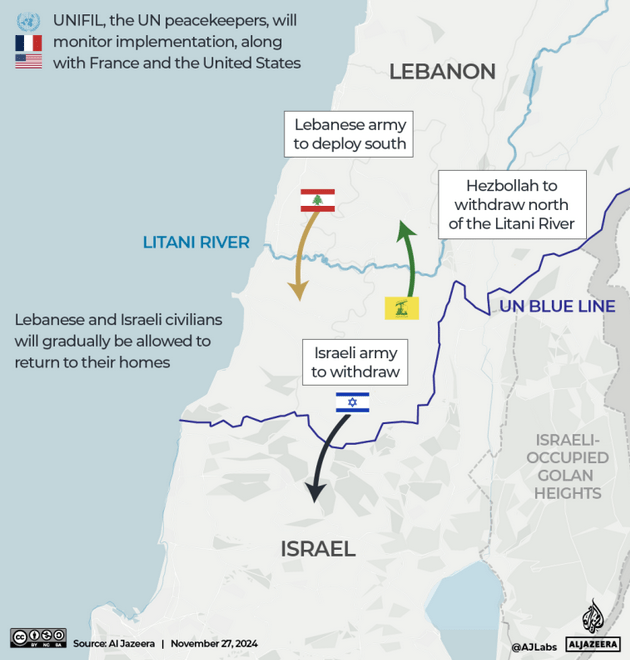
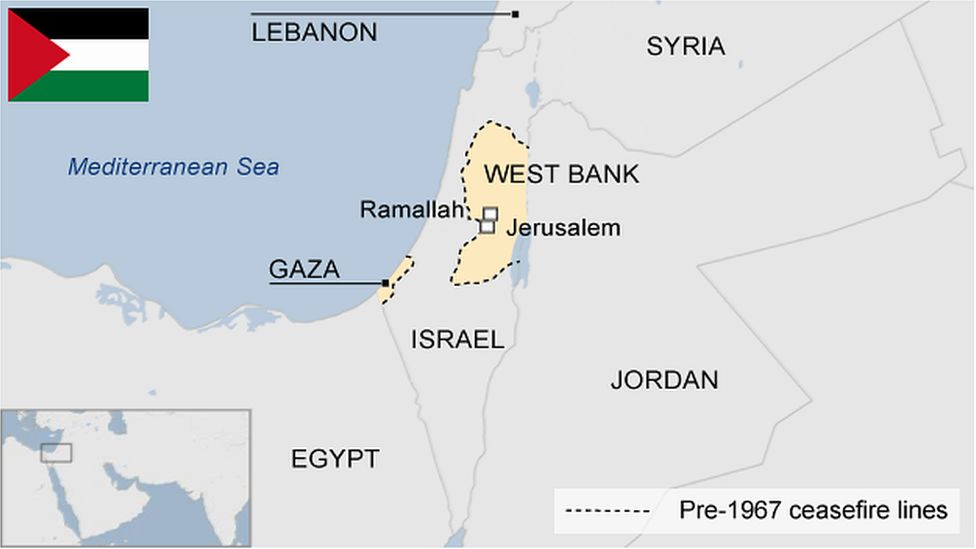
Let’s look at the outcome. The ceasefire is based on UN Resolution 1701 of 2006, ie the Lebanese army will move in Lebanon south of the Litani river to replace Hezbollah, which has remained there since 2006 in defiance of the resolution; implementation of this has been demanded by Israel since then; clearly a victory for the Israeli position.
Worse, now there is a direct US (and French) role, alongside the long-term UN role, in the implementation. Pretty obvious whose interests this serves.
Further, in a special US letter to Israel that is attached to this agreement, the US has given Israel an on-paper guarantee of its right to attack targets inside Lebanon for “defensive” reasons, and as we know, for Israel, everything is “defence.” While the Lebanese government and Hezbollah are obviously not signatories to this letter, they obviously know of it as it is the basis on which Israel agreed to sign.
Next, this also means the end of the so-called “unity of arenas”, meaning Hezbollah’s earlier assertion that it would only agree to a ceasefire if there were a ceasefire for Gaza also. Of course, this “unity” was in fact limited to Hezbollah on the south Lebanon border, and the Houthis’ Red Sea blockade, and had no real echo in the actions of the Iranian regime, let alone the Iraqi or Syrian regimes, or the Iraqi Shiite militia. But now even that largely symbolic solidarity – with a heavy price in Lebanese blood – on the Israel-Lebanon border “arena” has ended.
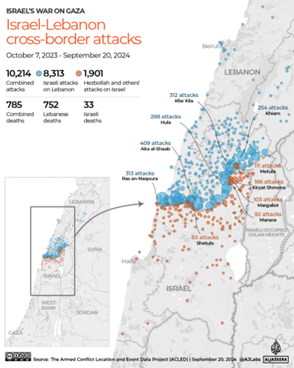
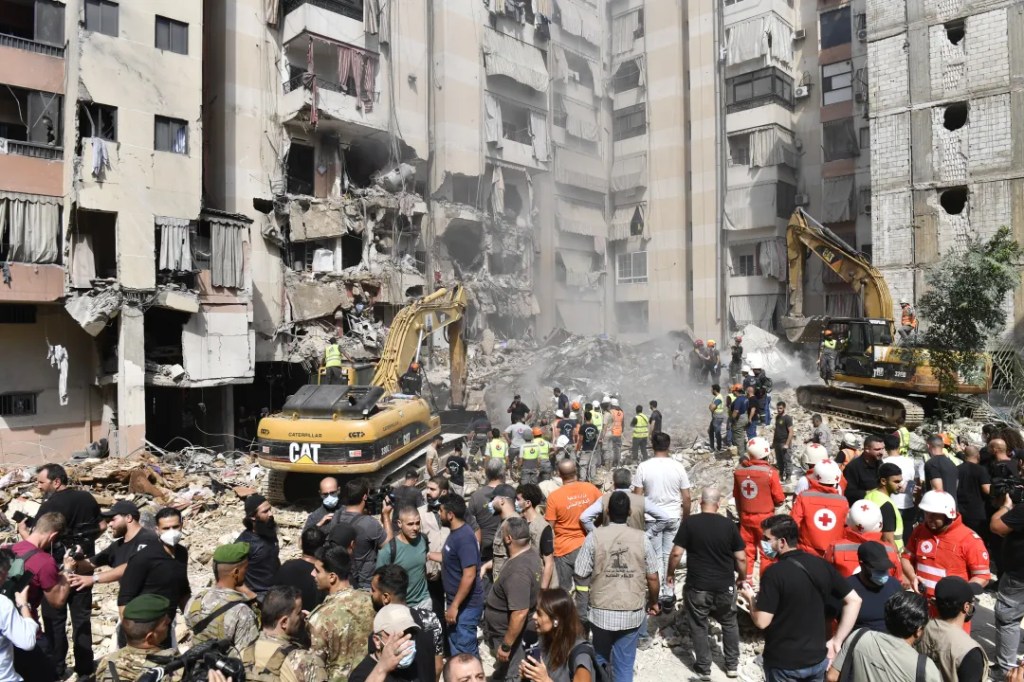
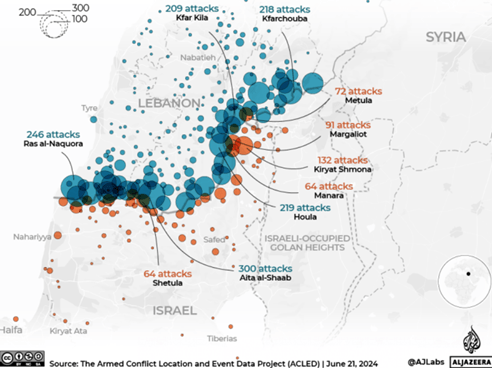
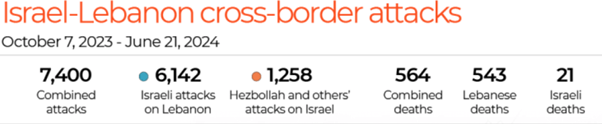
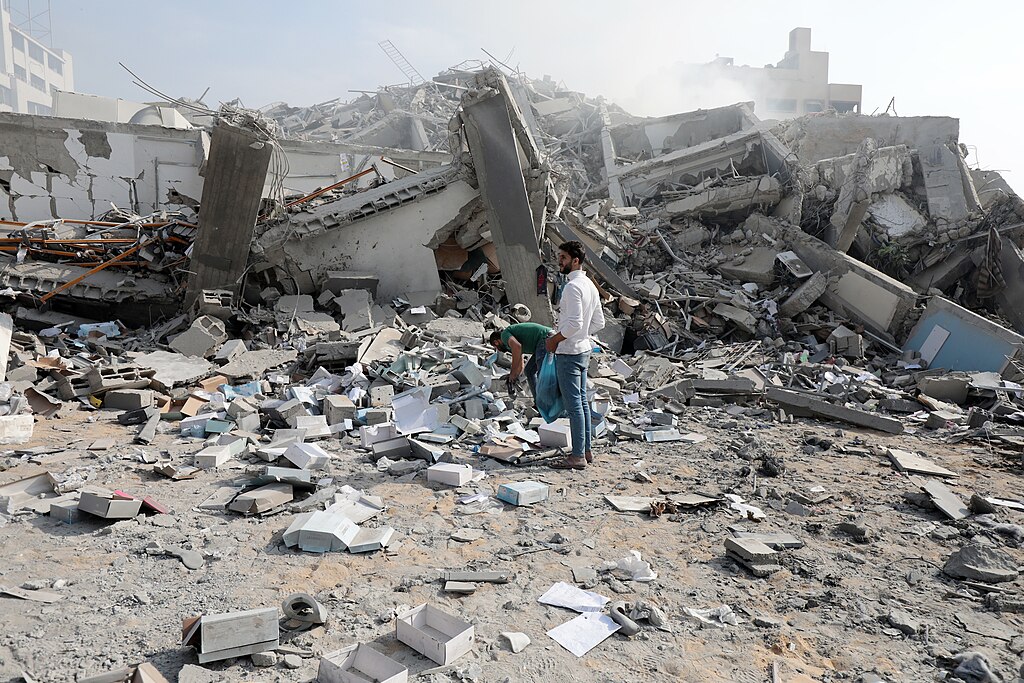
Hezbollah itself has had its communications network, much of its capacity and nearly all of its leadership and command destroyed, while Lebanon has once again been laid to waste, with some 4000 killed and a quarter of the population uprooted.
So, in what senses can it be claimed that it was also at least a partial Israeli defeat or Hezbollah victory?
First, if we think that Israel’s aim was to re-occupy or annex Lebanon south of Litani (or that it in effect became its aim as it became intoxicated with its rapid victory), then Hezbollah’s defeat of the invading forces can certainly be considered a victory. The sacrifice of the south Lebanese resistance was in any case heroic and effective. However, this was never spelt out as Israel’s aim, it even explicitly denied it at times; the idea was just dangled by the some of the Israeli uber-right, either as an ambit claim to be easy to withdraw from, or to be ‘oppositional’ in some cases. Hezbollah’s actual victory over Israeli occupation in 2000 still sets the terms, and I see no reason for Israel to want to return there. Israel sent in troops to aid in its destruction of Hezbollah assets rather than to occupy, in other words, if the conflict was not already there, I don’t think there would have been an invasion (the border was quiet for 17 years).
Second, some say the fact that Hezbollah is still standing is a victory, because Israeli leaders claimed they wanted to “destroy” Hezbollah. But like with the mythical “destruction of Hamas,” these leaders know themselves when they say it that they are talking nonsense, and that a guerilla force rooted in the population cannot be “destroyed,” merely weakened – and no-one seriously denies how much Hezbollah has been drastically weakened (or Gaza has been genocided). These fantastic aims are merely a cover to keep killing and destroying (this being the actual aim in Gaza).
Third, some Lebanese argue that Israel had aimed to divide and rule, by widespread killing and destruction, hoping to put the non-Shia Lebanese (Sunnis and especially Christians) against the Shia, who live in the south facing Israel and form the base of Hezbollah. It is fair to say that Israel failed to do this at a community level; in any case, recklessly murdering people en-masse was never going to gain Israel any friends, no matter what they thought of each other. Acts of solidarity across communities on the ground were very important.
However, I think Hezbollah has a hard job ahead explaining to Lebanese what exactly they achieved in any sphere, from their decision to begin strikes in solidarity with Gaza on October 8 last year, that warranted thousands killed and the country again turned to rubble. While solidarity itself is good, do most Lebanese people believe it was Hezbollah’s decision to make? What will they say? That they beat back an invasion that was not happening before the border was activated? How do they explain resisting 1701 for 17 years then suddenly signing on? How do they explain no ceasefire without Gaza then dropping this?
Of course, they were right to drop these conditions and sign on, because they correctly recognised the sacrifice of Lebanese blood was too great. But many will question then why they didn’t make their concession on these two fundamental points loud and clear weeks ago, when Israel suddenly turned on Lebanon in full force?
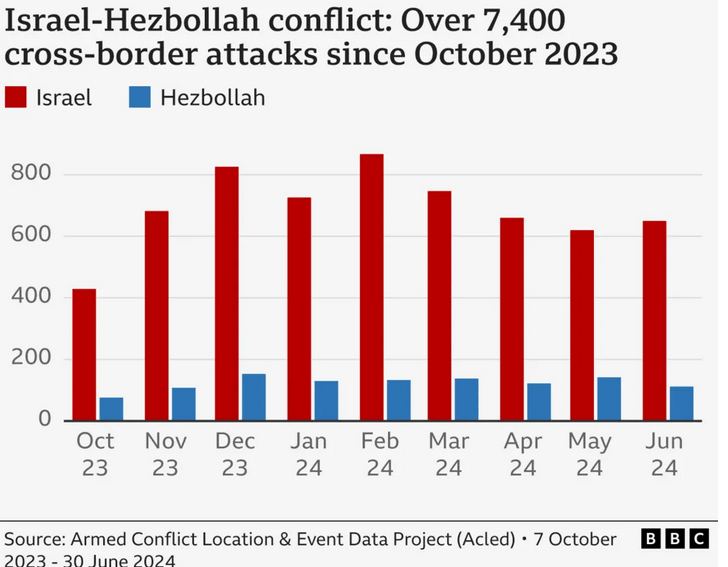
We also have the harsh reality that a year of largely symbolic attacks on military targets across the Israeli border – which from the outset were met by much more murderous Israeli attacks – made no difference to the genocide in Gaza. Sure, it kept some troops stationed in the north to bomb Lebanon, though it is doubtful they would have removed them in any case. But the Gaza genocide has hardly relied on troop numbers, but rather on massive destruction of virtually everything in Gaza using warplanes and missiles. So, while the Palestinians no doubt appreciated the solidarity, there is nothing concrete in Gaza to show for it. I’m not happy to say that, but it is what it is.
It is very important also that Israel has not let up in Gaza at all while it escalated in Lebanon, on the contrary, it has pretty much carried out the Generals Plan for the ethnic cleansing of northern Gaza to completion in the most barbaric fashion while the world was looking away at Lebanon. Whether we like it or not, this really does demonstrate the military power of Israel and belie the illusions many have had about the ability to militarily defeat it. So, on one hand, almost a year of small-scale Hezbollah attacks in the north of Israel made zero difference to the genocide in Gaza; then when Israel decided that it had decimated both Gaza, and Hamas, adequately to look elsewhere, it simply turned around and smashed Hezbollah’s capacity and leadership in about 10 days, then just kept wanton killing there more or less aimlessly because it could, yet all the while actually escalating its genocidal brutality in Gaza at the same time!
For the record, I don’t think destroying Lebanon or Hezbollah was ever a fundamental aim of Israel in this war (and still less is the Iran issue, which is essentially a spectacle/sideshow for the Zionist regime – and vice versa). I think Israeli leaders figured their state had to show its “deterrence” capabilities, with Hezbollah on its back for a year, so they turned around and demonstrated it with flying colours.
After all, what is Israel’s use to world imperialism if it cannot demonstrate “deterrence” to someone rudely firing on it, even if at a symbolic level? And while slaughtering in Lebanon a militia it claims is run by a brutal Iranian regime as “the head of the snake,” and global media can echo this nonsense, the real Israeli aims of completing the genocide in Gaza, total ethnic cleansing and annexation of the north of Gaza, and annexation of much of the West Bank, could go ahead with less coverage.
Incidentally, we heard for years that Hezbollah had “150,000 rockets aimed at Israel,” so it will not be a pushover like Hamas (actually, while I reject the idea that “the Palestinian fighters are winning” in a holocaust, I would say they have actually been much less of a pushover than Hezbollah ultimately). What happened to them? We’ve seen a few thousand. We’ve seen nothing remotely like capacity. I’m not condemning them for this, or saying they should or shouldn’t have used them fully. Maybe there are good arguments to not use them, to avoid “escalation”, though eventually that was not avoided. But if the … “axis resistance” concept was supposed to have something to do with Palestine, then wouldn’t full-scale genocide be precisely the time to use them? If not, when? What are they for? And if not for Palestine, then surely when Lebanon itself is under attack, and Hezbollah itself is being decapitated, would the time, right? So if not, what are they for? And whose decision would it have been to use them, or to not use them? Would it have been a sovereign decision of Hezbollah in Lebanon, or was it instead a decision to be made by the Iranian regime which sent them?
But Iran did not send them to Lebanon for the sake of Palestine, and apparently, not even for Lebanon or even Hezbollah. Oh, that’s right, the 150,000 missiles are just Iran’s forward defence, in case of an Israeli attack on its nuclear facilities, placed in someone else’s backyard, where those people cop it sweet from Israel. Let’s be clear: there was no way Iran was never going to waste these rockets on Palestine, which has purely a symbolic value for the mullahs, or on Hamas, which had defied it by correctly siding with the Syrian uprising, and which did not warn Iran of October 7, and apparently, there was no way they were going to waste them even on Hezbollah itself.
As the Israeli attack was rapidly escalating, leading to Nasrallah’s assassination, Iranian president Pezeshkian, speaking at the UN in New York, responded “We don’t want war [with Israel]… We want to live in peace.” Nasrallah was told “the timing isn’t right” for Iran to come to Hezbollah’s aid, which raises the somewhat obvious question of “when is”, for a regime forever parading its “resistance” credentials. Iranian foreign minister Abbas Araghchi claimed, laughably, that “Hezbollah is fully capable of defending itself independently” at the moment when its communications network, its launching capacity and most of its historic leadership were being destroyed.
Of course, the Assad regime in Syria never lifted a finger for Palestine – that has never happened historically, and so was not expected – but notably also didn’t lift a finger for Hezbollah just across the border, despite Hezbollah – in sharp contrast to Hamas – having come to the regime’s aid as it was brutally suppressing its people in another genocide. Assad waited three days to even make a statement about the killing of Nasrallah, and meanwhile the regime closed Hezbollah recruitment offices, while turning a blind eye to Israeli expansion inside the Syrian-controlled part of Golan to link up to its war in southern Lebanon. While Israeli-Russian meetings, in both Israel and Russia, have discussed a mechanism whereby the Assad regime prevents Iranian arms crossing to Lebanon for Hezbollah. Of course, Russia has no relation to any “axis of resistance” so cannot be accused of “betrayal,” while the Assad regime is also not a real “member” of the “axis” but rather a kind of semi-partner which kept one foot in (due to Israel refusing to negotiate on the occupied Syrian Golan), however, one with zero “resistance” credentials and with solid alliances also with the most pro-Israel Arab regimes (Egypt, UAE, Bahrain). Iran, however, is supposed to be the real thing, the head of the “axis.”
Let the reality sink in. Hezbollah fighters sacrificed on the ground, the Lebanese people paid with rivers of blood, but the alleged “axis” behind them was always a myth, and a catastrophic one. Even more catastrophic for the Palestinians, whose leadership apparently formed illusions, after reconciling with Iran the last few years, that someone was going to come to their aid in a decisive way, even despite Iran and Hezbollah telling them, honestly enough if indirectly, “now is not the right time” (ie, forget it). Perhaps Hamas imagined they would be shamed into action.
The worst defeat for Palestine since 1948 is not the “end of Palestine.” Palestinian people still live and so will find another means of struggle against the colonial, apartheid reality between the river and the sea. But this round is done, this ‘paradigm’ is done, and hopefully the illusions with it. No repressive capitalist states, whether labelled “resistant” or otherwise, are ever going to give a fig about the Palestinians while they brutally oppress their own peoples. Their relationship to Israel is symbiotic. Towards the new liberation struggle.


 Their Anti-imperialism and Ours

