The Australian government, like a number of other western governments, lists Hezbollah as a “proscribed terrorist organisation.” This led to a great deal of hysteria among Australian politicians of both major right-wing parties and among talking heads throughout the monochrome Australian media after Hezbollah flags and photos of its dead leader, Hassan Nasrallah, were displayed by some of the crowd at last Sunday’s weekly rally against Israel’s Gaza genocide. The display of such symbols, aside from being illegal, allegedly causes great “distress” among Jewish-Australians, who do not feel “safe”, and all “antisemitism” must be rejected and so on and so forth.
Just as an aside on that rally: it is worth noting that from the beginning last October, organisers of the weekly rallies asked marchers not to bring symbols associated with proscribed “terrorist” organisations, for legal reasons, to prevent the rallies being closed down, while not making judgements on the politics of these organisations. However, it was to be expected that with emotions high just after Israel had killed about 1200 Lebanese people in around a week, sent over a million fleeing, and also killed Nasrallah, that some members of the Lebanese community who supported Hezbollah might bring Hezbollah symbols, and it would have been difficult for rally organisers to prevent this in the circumstances. However, it was not their choosing, and many at the rally, who were happy to rally for the Lebanese people as well as the Palestinians, were not so happy with the focus of part of the rally being turned to Nasrallah. But let’s get back to the point.
I hold no brief for Hezbollah, at all, as I will explain below, and much less for its reactionary Iranian paymaster. However, at this moment it is the Israeli state, backed by the Australian government and other western governments, that has carried out a virtual holocaust in Gaza over the last year, is actively stealing land and killing with impunity in the Palestinian West Bank while the world looks away, and has just carried out a devastatingly murderous attack on the neighbouring sovereign state of Lebanon, bombing entire city blocks in the capital Beirut with 2000 pound bombs in the process of killing a handful of Hezbollah leaders. If “terrorism” means killing civilians as part of a political action, then the Israeli regime is one of today’s arch-terrorists. However, let’s put that aside for the moment and classify that as “state terrorism,” and focus instead on the “terrorism” of non-state actors.
In that case, Hezbollah is not a “terrorist” organisation in any conventional sense. It is unclear why its flag should create “distress” among Jewish Australians. When has Hezbollah ever planted bombs in cafes or on buses, when has it shot up civilians in shopping malls, when has it specifically targeted Jews as Jews? This is quite simply not how Hezbollah has ever operated. The “terrorist” label therefore is simply driven by the political views of the US and Israeli states; it is worth looking at where it comes from.
The source of the bogus “terrorist” label: legitimate national resistance
The first source of the “terrorist” labeling was the US itself rather than Israel. Following the end of Israel’s horrific 1982 invasion of Lebanon, when it killed 20-30,000 Lebanese and Palestinians in an unprovoked 3-month Blitzkrieg, the entire time with the full support of the US government of Ronald Reagan, an agreement was signed for a Multi-National Force (MNF) consisting of US, French and Italian troops to move in and supervise the forced withdrawal of the Palestine Liberation Organisation (PLO), the goal of Israel’s war.
Given the total US support for Israel, much of Lebanon’s Muslim population viewed the “peace-keeping force” as occupiers. As soon as the PLO withdrew, Israel facilitated the slaughter of 2-3000 defenceless Palestinian civilians in the Sabra and Shatilla refugee camps by the right-wing Lebanese Christian Phalange/Lebanese Forces militia. In such conditions, the election, in an unfair sectarian system, of Phalangist leaders Bashir, then Amin, Gemayel to the presidency was rejected by Sunni, Shiite and Druze communities. Yet as civil war soon re-erupted around Beirut, the supposedly neutral US forces bombed Muslim and Druze forces in the nearby Shouf mountains. It was in these conditions that Iranian-inspired Shiite suicide bombers bombed the barracks of the MNF in October 1983, killing 241 U.S. and 58 French military personnel.
This killing of so many US troops is the origin of the particular US hatred of Hezbollah and its “terrorist” labelling. However, even if we exclude all the context above, there are two problems. First, regardless of one’s view of such an action as a method of struggle, “terrorism” refers to the targeting of civilians, not of military personnel, however one views their mission. Secondly, Hezbollah was not officially formed until 1985, and it is little more than conjecture that the shadowy pro-Iranian ‘Islamic Jihad’ (not to be confused with today’s Palestinian Islamic Jihad) group which claimed responsibility was a precursor of Hezbollah. Even according to Reagan’s Defence Secretary Caspar Weinberger, speaking in 2001, “we still do not have the actual knowledge of who did the bombing of the Marine barracks at the Beirut Airport, and we certainly didn’t then.”
The second source of the “terrorist” labeling is even more dishonest, stemming merely from Hezbollah’s leadership of the Lebanese national resistance against the Israeli military occupation of southern Lebanon, an entirely legitimate struggle. Following its 1982, Israel remained in occupation of southern Lebanon all the way up to Beirut, and so a national resistance movement began fighting to drive them out. By 1985, they had been driven from Beirut and much of the south, but remained in a significant swathe of territory closer to the Israeli border. While the resistance included a range of political forces, including leftists, nationalists and Islamists, from both Sunni and Shiite communities, ultimately the south is largely Shiite populated, and the Iran-backed Shiite Hezbollah became the dominant force. There were no Israel civilians in southern Lebanon; and Hezbollah never bombed Israeli civilians across the border. Israel merely regards legitimate resistance against its brutal military occupation to be “terrorism” in Lebanon just as it does in occupied Palestine.
Israel was driven from Lebanon by the resistance in 2000. However, it remained in a 25-square kilometre piece of land called the Shebaa Farms, which Lebanon claims but Israel says is part of the illegally-occupied Syrian Golan (as if that justifies the Israeli position!), and this is part of its justification for remaining a “resistance” militia separate to the Lebanese Armed Forces after 2000. When Hezbollah kidnapped some Israeli troops on the border in 2006 aimed at freeing several Lebanese prisoners in Israeli prisons and liberating this final piece of land, Israel unleashed massive bombing against Lebanon, killing 1500 people and devastating the country again. Nasrallah admitted its actions had been an error, and Hezbollah’s position looked very weak politically; then Israeli arrogance trumped common sense when it attempted a ground invasion, allowing Hezbollah to route the invaders as an on-the-ground resistance again, not only saving but boosting Hezbollah’s resistance credentials.
More generally, since the 1990s, Hezbollah has engaged in parliamentary elections and been part of coalition governments with parties representing other sectarian interests. That’s why even some countries that call the military wing of Hezbollah “terrorist” do not classify the political organisation as such. Far from challenging the sectarian system, Hezbollah has largely bought into it, and despite rhetoric about “the dispossessed,” has emerged as a key party of the Shiite bourgeoisie. Soon after its 2006 triumph, Hezbollah showed itself to be little different to any of the other sectarian militias in Lebanon, when it invaded mainly Sunni-populated West Beirut in 2008 and seized control from the Sunni Future Movement. And in 2019, when Lebanese from all backgrounds rose up against the sectarian system as a whole, targeting all historic sectarian leaders and warlords, Hezbollah came to the defence of the system by helping violently crush the movement.
Hezbollah becomes a state-terrorist partner of the Assad regime
Despite its close relationship to the Iranian dictatorship, Hezbollah had its own origins as a legitimate national resistance movement in a Lebanese context and cannot be viewed as a mere proxy. However, ultimately, Iran is its paymaster, and this side of the organisation came upfront following the outbreak of the April Spring uprisings in 2011. Its opposite views on Libya and Syria is instructive.
When the Libyan revolution began, both Iran and Hezbollah hailed the revolt against Gaddafi’s oppressive rule; despite the image of Iran and Libya being both anti-Israel “rejectionist” states (in both cases reflecting safe geographic distance from Israel, allowing lots of loud rhetoric from afar), there is a dispute going back decades, when Musa al-Sadr, the leader of the Lebanese Shiite movement Amal, disappeared while on a trip to Libya. Lebanon in 2011 was on the UN Security Council, and its vote in support of the UN resolution to dispatch a NATO operation against Gaddafi was decisive, a vote that Hezbollah had to give its support to. Following the 6-month NATO intervention, the rebellion triumphed, and when Gaddafi was killed, celebrations were organised in Iran and in Hezbollah-controlled Lebanese communities.
In contrast, when the people’s uprising began against the tyrannical Assad dictatorship in Syria, Iran sent forces in to support the regime, both its own ‘Revolutionary’ Guard forces, and Iranian-backed Iraqi, Afghan and Pakistani Shiite sectarian militia. This was necessitated by the defection of a large part of the Syrian army to the uprising, forming the Free Syrian Army (FSA). While the Assad regime’s own sectarian ‘Shabia’ death squads were the most notoriously bloody militia taking part in Assad’s sensationally brutal and bloody repression of the Syrian people, the Iranian-backed militia were not far behind.
There seems some evidence that Hezbollah was initially hesitant about Iran’s demand that it enter Syria. During the 2006 war, Syrians took in thousands of Hezbollah supporters and Lebanese Shiite refugees, seeing them as heroes. One of the places this occurred was in the town of Qaysar near the border, which was now in rebel hands. When Hezbollah decided to enter the war as an Iranian proxy, the first place it helped the regime smash the rebellion was in Qaysar.
The irony of supporting the uprising against Gaddafi, despite it being backed by a direct US and NATO armed intervention, while taking part in crushing the anti-Assad uprising, where there was never any US intervention against Assad (indeed the US actively blocked the rebels from receiving essential anti-aircraft weaponry from neighbouring states), is surely too great, when Hezbollah and Iran and their western “anti-imperialist” flunkeys justify their support for Assad’s perennially anti-Palestinian regime on the basis of … “anti-imperialism.”
If Hezbollah had merely taken a back-seat role out of necessity due to its Iranian paymaster, it would have been bad enough, but perhaps understandable. However, once in, it went in with a vengeance. Particularly in southwestern Syria, Hezbollah played a prominent role in the Assad regime’s starvation sieges of various rebel-held towns, especially in Madaya and Zabadani, as well in Aleppo in the north. According to al-Jazeera, “Zabadani and Madaya, both located near the capital Damascus, are besieged by the army of Syrian President Bashar al-Assad and allied fighters from Hezbollah, the Lebanese Shia group.” They even took part in the regime’s siege of the Palestinian Yarmouk camp south of Damascus. The largely Sunni and anti-Assad populations of these towns were eventually forced out and dispatched to a region of northern Syria still under rebel control.
According to an Amnesty report: “The Syrian government and allied militias destroyed local food supplies by burning agricultural fields in Daraya and Madaya. Amnesty International’s analysis of satellite imagery shows the massive decrease in agriculture over the years and an obvious dead zone around Daraya. ‘The government and Hezbollah forces burned the agricultural fields, just as a form of punishment, even though we couldn’t access them’, a former teacher in Madaya told Amnesty International.”
Therefore, while Hezbollah is no “terrorist” organisation in the manner meant by hypocritical western governments, it certainly was responsible for large-scale killing and starving of civilians in Syria (along with its Iranian paymaster). However, it did so in the service of the Syrian state machine; in other words, like Israel, and the Assad regime itself, Hezbollah engaged in state terrorism. But that is not what the West and Israel care about. Indeed, when Biden congratulated Netanyahu for killing Nasrallah, he claimed it was justice for Hezbollah’s “many victims, including thousands of Americans, Israelis, and Lebanese civilians,” whatever that may even mean (mostly US and Israeli occupation troops). He managed to not mention any victims from Syria, the country with the vast majority of its civilian victims!
The Assad regime is the most similar to Israel in the region in the degree of mass murder and devastation it uses against its population, with some 700,000 killed in the conflict, including at least 300,000 civilians, overwhelmingly victims of the regime, most cities destroyed by regime and Russian bombing, and an industrial-scale torture gulag. Hezbollah and Iran are so widely hated for their role in backing the regime that, despite Syrians in rebel-held zones demonstrating against Israel in support of Gaza for the entire year since October, there were expressions of joy when their former killers were killed. They did not thank Israel, but they viewed it as a conflict between two of their enemies, two occupiers of Syria, wishing ‘good luck’ to both. For Syrians, Hezbollah and Iran acted as the IDF in their towns.
One does not have to share this perspective to understand it. For Lebanese living under Israel’s terror bombing and massive devastation now, their reality is that, whether or not they love Hezbollah, at this moment most Lebanese are united against the Zionist killing machine. Moreover, for southern Shia, Hezbollah is the organisation that led the 18-year struggle for freedom from brutal Israeli occupation. From afar, we need to be able to understand both perspectives.
So, where is the “terrorism”? On the border?
Returning to now, the point is that “terrorism” is a meaningless label in the case of Hezbollah to justify massive Israeli state terrorism and the support to it given by our government. When asked if Lebanon had the same right to “defend itself” as he claimed Israel does, prime minister Anthony Albanese immediately responded “of course we regard Hezbollah to be a terrorist organisation.” This sleight of hand allows him and other leaders to simply avoid the issue of Israel’s massacres and its blatant violation of Lebanese sovereignty. “Terrorism” justifies all. It has extraordinarily sweeping use. “What else can Israel do?” when confronted by a “terrorist organisation” on its border?
Yet the border itself belies this labeling. In sharp contrast to its massacre of civilians in Syria when engaged in the regime’s state terror, Hezbollah’s cross-border attacks since October 8 have been meticulously aimed at Israeli military facilities. No-one can seriously deny that, and the data speaks for itself. In contrast, Israel’s attacks over Lebanon’s border (ie, before the flare-up in the last 2 weeks) have not only been vastly disproportionate in terms of sheer number, but also far more targeted at civilians; until September, Israel had launched 8313 attacks on Lebanon, to Hezbollah’s 1901 attacks on Israel; Israeli attacks had killed 752 Lebanese, including hundreds of civilians, to only 33 Israeli deaths, overwhelmingly military.
Think what you want of Hezbollah politically – but right now it is resisting Israel’s new invasion of southern Lebanon in its own country, while Israeli state terror has killed hundreds of Lebanese civilians; some 2000 Lebanese have been killed by Israeli attacks over the last year, 60 percent of them over the last two weeks, and this includes 127 children, and, for good measure, by the beginning of October, Israel had already killed 96 Syrian refugees (including 36 children) who are only in Lebanon in the first place to escape the atrocities of the Assad regime, which was aided by Hezbollah! Over 100,000 refugees have fled into Syria, both Lebanese and Syrian refugees – and the Syrian regime has already begun arrests. Christian and Sunni towns in the south have been bombed alongside the Shiite civilian population; mostly Sunni regions of Beirut are being devastated alongside the Shiite regions which are Hezbollah’s base. Israel did want to decapitate the Hezbollah leadership, to re-establish its “deterrent” power, but it is also waging a war on Lebanon and the Lebanese people.
To cite Syrian writer Robin Yassin-Kassab: “I oppose Hizbullah absolutely when it is murdering and expelling Syrians on Iran’s orders. And I support absolutely its legitimate resistance to genocidal Zionist fascism.”
On July 31, Ismail Haniyeh, the political leader of Hamas, was assassinated while in Tehran for the inauguration of new Iranian president Masoud Pezeshkian, which was also attended by some 70 delegations including from regional heavyweights Turkey, Egypt, Saudi Arabia and Qatar, as well as representatives from the European Union, China and Russia.
The brazen nature of the act, the violation of Iran’s sovereignty at such an important occasion, and the stature of Haniyeh in the region – as we will see, a voice of strategic moderation within Hamas with a long diplomatic presence in the region – led the 57-nation Organisation of the Islamic Conference (OIC), meeting in the Saudi capital Jeddah on August 7, condemned the attack, to declare it “holds Israel, the illegal occupying power, fully responsible for the heinous attack.” Saudi Arabia a declared it a “blatant violation of Iran’s sovereignty;” Qatar, where Haniyeh lived and Hamas headquarters are based, condemned the “heinous crime” and “shameful assassination;” Turkey’s President Erdogan condemned the “perfidious assassination” of his “brother” Haniyeh, who regularly visited Turkey, the state declaring a day of mourning.
Given the need for high security around a figure such as Haniyeh, he was sleeping in the most secure compound, where only a number of officials from the Iranian Revolutionary Guard were also located. Despite this, the assassins – presumed to be the Israeli secret police agency Mossad – were able to place an explosive in the room some months before, then set it off remotely once it was confirmed to them that Haniyeh was indeed there.
Such a feat is a severe humiliation to the Iranian regime, and has, not surprisingly, led to conspiracy theories that some part of the Iranian state apparatus conspired with Israel to kill Haniyeh; either due to nefarious collusion between the reactionary, semi-theocratic regional projects of Israel and the Iranian regime, who, from differing perspectives, benefit from keeping the region boiling as long as the necessary retaliation and counter-retaliation can be kept within certain limits; or due to hard-liners with the Iranian regime aiming to embarrass and disrupt the plans of the new ‘reformist’ Pezeshkian, whose stated aim was to try to re-open to the West and explore restoration of the Iran nuclear agreement which was scrapped by Trump in 2018. Interestingly, this would correspond to an Israeli aim, because “Israel prefers hardline leaders to maintain a monolithic view of the enemy,” its assassination in Tehran forcing the reformist Pezeshkian “into a corner.”
More likely, as with most events that lend themselves to such theories (eg the alleged attempted assassination of Trump), incompetence within the Iranian intelligence regime is the simple explanation, alongside the extraordinary skills of Israeli intelligence – skills, ironically enough, which apparently were comprehensively absent on October 7, to name another such event …
The killing of Haniyeh came just a day after Israel had killed Hezbollah’s top military commander in Lebanon, Fuad Shukr, in a residential building in a heavily populated south Beirut suburb, a bombing attack that also killed three women and two children, while 80 people were injured.
Israel hypocritically claimed that the Lebanon attack was in revenge for the rocket that killed 8 Syrian Druze children and teenagers in the Israeli-occupied Syrian Golan Heights on July 27, accusing Hezbollah of firing the rocket; Hezbollah denies this, and instead claims they were killed by Israeli anti-missile interceptors. The jury is still out on that (and either way, clearly killing Druze children was not the aim but a misfire), but given that most of this Druze community (including all the affected families) have all rejected Israel’s “offer” of citizenship for 57 years now, and they abused and insulted Netanyahu and his fascist finance minister Smotrich when they attempted to turn up and give ‘condolences’, and they made explicit they do not want to be part of anyone’s games and especially that no other children should die on their account, Israel’s alleged excuse for the attack is razor-thin.
While the circumstances were quite different – Israel gave no excuse for killing Haniyeh, indeed has not even formally admitted it, but considers the killing of any Hamas operative a matter of course – the timing of one straight after the other has led to a regional stand-off, with both Iran and Hezbollah declaring the need for some kind of face-saving retaliation, which many worry could spiral out of control into a regional conflict.
**********************
I will go on record here – like every other time similar headlines have dominated the news-world in recent decades – to say that a regional blow-out is extremely unlikely, as will be explained below; the more theatrical ‘threat of World War Three’ I consider too fantastic to warrant any serious commentary, except to suggest that those spouting this cliche of doom every time tensions increase in the region might do better to remember that it already is a world war for the Palestinian people, and these constant suggestions that it is really about all of us under threat from a “world war” mainly serves to belittle what is actually going on.
***********************
A reality check on who is “winning” and “losing” – based on Israel’s actual aims
The context of course is Israel’s 10-month genocidal operation in Gaza, which aims to make Gaza uninhabitable, kill or drive out as much of the population as possible, ensure that whoever remains will find life impossible, re-occupy the territory or at least part of it, while also annexing more and more of the occupied West Bank.
The stated aim of “destroying Hamas” is an absurd smokescreen: like them or not, resistance organisations like Hamas exist due to decades of brutal occupation. Given Israel’s apocalyptic slaughter since last October, ordinary Gazans join Hamas and other resistance groups simply for self-defence, simply to resist the genocidal invasion; the fact that polls at the same time show Hamas drastically losing political support in Gaza (and in 1948 Palestine, yet gaining it in the West Bank and among Palestinian refugees in Lebanon) demonstrates that it is precisely continuing invasion and occupation that necessitates Hamas as a fighting force, whereas a permanent ceasefire would open political space for ordinary Gazans to challenge its rule.
Therefore, since Hamas only exists because of the horrifically oppressed and terrorised population it exists within, “destroying Hamas” effectively means continuing the war until the Gazan population is destroyed, but of course that is precisely the point: this is the actual aim.
Of course, Israel’s victory is not complete, because it has not been able to push 2 million Gazans into Egypt, the ultimate aim. This is due to both extraordinary Palestinian resistance, and to the fact that the Egyptian al-Sisi dictatorship rejects this Nakbah for its own reasons: namely, it does not want Palestinians in Egypt because it hates them as much as Israel does. If one wants to describe a, let’s say, 80 percent Israeli victory – the total obliteration of Gaza, setting it back decades, making it uninhabitable – as a Palestinian “victory” and Israeli “defeat” because Palestinian resistance has prevented a 100 percent Israeli victory, so be it; that’s a question of one’s criteria. If the intention is to validate the Palestinian resistance, then I believe it is overwhelmingly validated anyway by its prevention of the worst, by its prevention of total Israeli victory.
But that does not alter the fact that compared to the pre-October 7 situation, the Palestinian situation in both Gaza and the West Bank, and inside Israel, has been set back so drastically it is difficult to fathom. If we look at who are the net winners and losers since October 7, it defies logic to claim that Palestine’s situation today represents a net victory. If a ceasefire today led to negotiations on some kind of settlement, the Palestinian bargaining position, from the ruins of Gaza, is drastically weaker. The pre-war blockade of Gaza would continue, probably with a vengeance, and in addition Israel would almost certainly retain some degree of direct occupation of Gaza, especially in the emptied north, a strip across the centre and perhaps even in a ‘buffer zone’.
Both the preferred one-state democratic solution, and any half-decent version of the two-state solution, as well as refugee return, are further away than ever. Yes, the global pro-Palestine movement is extraordinary (though it has also plateaued) and is contributing to a change of consciousness in the West which may have future impacts, but this is a reaction to Israel’s decision to carry out genocide; it was not brought about by October 7, but on the contrary, came about despite it. October itself led to a wave of sympathy to Israel which has sustained the wave of Zionist McCarthyism in the West and the steadfast support for Israel among western governments for 11 months, and to the most complete reactionary consolidation within Israel itself ever.
Israel’s genocidal war: Zionist ‘victory through ceasefire camp’ versus Zionist extermination camp
That said, Israeli society is also in a sustained crisis. Israel’s acute economic crisis, business bankruptcy (especially in tourism and hospitality), the emigration of large numbers of middle class specialists to live out the war in the Greek islands and elsewhere, including many essential for Israel’s high-tech industries, the lack of Palestinian labour upon which so labouring work relies, a small yet important number of BDS successes, a crisis within the armed forces with exhaustion of troops and difficulty replenishing them, and Israel’s gradual loss of international legitimacy (though very few governments have broken relations with it), especially with the ICJ and ICC rulings, are causes for enormous concern among the Zionist mainstream; and of much excitement among pro-Palestinian, anti-Zionist movements worldwide. These are the very real factors cited by many mainstream Zionists opposed to Netanyahu’s extremism on the one hand, and many pro-Palestinian voices unwilling to criticise the dominant Palestinian narrative on the impact of October 7 (and even more so, acolytes of the so-called “axis of resistance”) on the other.
Without wanting to downplay any of this real crisis Israel is in, overwhelmingly its causes stem from Israel’s ongoing genocidal war of choice itself. And the longer it continues, the more these crisis factors will be accentuated, the more the Israeli regime threatens to turn its victory in obliterating Gaza into the kind of ‘defeat’ being warned of, but a self-imposed one.
Therefore, precisely because Israel has been in fact the net winner to date, a varied bloc of Zionist leaders more rational than Netanyahu and his neonazi coalition partners Ben-Gvir and Smotrich believe that Israel’s victory would be better consolidated by agreeing to the US plan for a ceasefire (ie, the Biden ceasefire plan announced in May, laughably called ‘Israel’s ceasefire plan’ by Biden, which was accepted by Hamas but reject by Israel), rather than pushing on with the most extreme and probably fantastic plans to complete the ethnic cleansing of Gaza (with the alleged fantastic aim of “destroying Hamas”) and thereby making Israel even more of a regional and international pariah, accentuating the economic and other societal crises and thus suffering losses medium to longer-term.
The US goal of bringing about a ceasefire – while refusing to put any pressure on its Israeli client to agree to one – is not to undermine Israel or aid Palestine. Rather, in recognition of how difficult and destabilisingly murderous it would be to complete the Netanyahu-Smotrich-Ben-Gvir strategy, and how the hatred of the Arab masses for their rulers for doing nothing to prevent it could lead to new revolutionary uprisings and completely alienate even these regimes from the US, the Biden administration calls for the revival of an extremely limited version of what it disingenuously calls a ‘two-state solution’, to provide some kind of limited self-rule for remaining Palestinians in a series of reservations.
This has nothing to do with the actual two-state ‘solution’ on the table since the late 1970s, which has for many decades now been accepted by the Palestinian leadership, all Arab governments, most governments of the Global South and eastern Europe, and officially the European Union, rejected only by the US and Israel. That is, for a sovereign Palestinian state in the illegally occupied West Bank and Gaza, with illegally occupied East Jerusalem as its capital, and some solution for the Palestinian refugee population. This ‘solution’ only gives a Palestinian state 22 percent of Palestine while leaving 78 percent for Israel – obviously, anything but a fair arrangement – yet the PLO and all Arab states officially accepted it in 1982 at the Fez Summit (and unofficially even earlier), and have continually reaffirmed it (eg, at the PLO Congress in Algiers in 1988, the fateful acceptance of Oslo in 1994 based only on never-fulfilled Israeli promises, in the Arab Peace Plan in 2002 etc) in the hope that it could be a transition to something better via refugee return to Israel and democratisation of Israel itself.
When Biden however talks of a ‘two-state solution’, he means not including Jerusalem, the natural geographic and economic centre of the West Bank, which the Trump regime recognised as Israel’s “capital” in 2017 (a decision not rescinded by Biden), and not including most of the illegal Israeli “settlements” in the West Bank, which physically divide up the territory, and probably without the usual features of sovereignty, such as the right to its own armed forces, and with the right of Israel to veto virtually any decision made within such a Palestinian ‘state’; a Palestinian ‘state’ governed by “a matrix of surveillance, separation and control.”
But the US and ‘centrist’ Israeli supporters figure that, given Israel’s complete destruction of Palestinian society and all that is necessary to sustain human life in Gaza since October 7, the Palestinians will have little bargaining power, and hence the return of some kind of stability, the ability to live without hell raining on their heads at every moment, together with some kind of limited self-rule, may be accepted, even as a reprieve, by enough Palestinians for it to get the blessing – and participation – of the reactionary Arab rulers; while ceasefire would allow the return of Israeli captives and of a semblance of normality in Israeli society.
“After more than six months of hybrid warfare – in the air, on land and underground – it’s possible to conclude that the bulk of Hamas’ military power has been dismantled. Most of its rockets and launch sites have been destroyed and there has hardly been any rocket fire from the Gaza Strip for over four months … A considerable portion of Hamas fighters has been killed, an accomplishment that is highly significant. These are not just its frontline combatants, but also members of its command level.
“However, there is one goal we have not achieved yet – releasing the hostages. This goal was not at the center of Netanyahu’s attention from the start, and he has apparently thwarted several opportunities to expand understandings brokered between Israel and Hamas and proceed to a comprehensive deal that would release all the hostages. Rafah is not a crucial objective that would decide the outcome of the fighting between Israel and Hamas.
“Taking Rafah has no strategic significance as far as Israel’s vital interests are concerned. Netanyahu understands this, as do some senior military officers and retired officers. Destroying four additional Hamas battalions might have been the correct move had it been disconnected from the wider context of events. But such a manoeuvre would take months and involve many fatalities among our soldiers, kill thousands of uninvolved Palestinians and crush what remains of Israel’s international reputation.”
This is quite a good summary of the position of more rational ‘centrist’ Zionist leaders, including much of the military high command; Olmert is no dove, indeed his 2006 war against Lebanon, and then Operation Cast Lead in Gaza in 2008-9, give him good standing as a Zionist war criminal, but one with a strategic sense of how far to go, which more or less coincides with the position of Biden and the mainstream of US imperialism (a Trump regime in the US may be an altogether different thing).
In August, US officials concluded that Israel had “achieved all that it can militarily in Gaza,” that it “had severely set back Hamas but would never be able to completely eliminate the group,” that it had “done far more damage against Hamas than U.S. officials had predicted when the war began in October.” Continuing the war would only kill more civilians with no significant further setback to Hamas, while the other alleged Israeli objective – the return of hostages – could only be achieved via ceasefire, not militarily. “Hamas is largely depleted but not wiped out, and the Israelis may never achieve the total annihilation of Hamas,” according to former senior C.I.A. official Ralph Goff.
Needless to say, the Netanyahu regime rejects these conclusions, because its objectives are the obliteration and emptying of Gaza, the re-occupation and perhaps even settlement of Gaza, while continuing the war on Gaza also acts as a smokescreen for the more important Zionist objective, the ethnic cleansing and annexation of much or all of the West Bank, aside from Netanyahu’s personal reasons for continuing the war to avoid going to prison.
Palestinian unity gathering in Beijing
Meanwhile, on July 23, 14 Palestinian resistance organisations, including Fatah, Hamas, the Popular and Democratic Fronts for the Liberation of Palestine, Palestinian Islamic Jihad and others, gathered in Beijing and signed an agreement to end their schisms and form an interim national unity government for the Palestinian territories. The Beijing Declaration states that the Palestinian organisations agree to forge “a comprehensive Palestinian national unity that includes all Palestinian factions under the PLO framework, and to commit to the establishment of an independent Palestinian state with Jerusalem as its capital … with the help of Egypt, Algeria, China and Russia.”
China has long had very good relations with Israel, and is its second largest trading partner, but since the onset of the Gaza genocide relations have frayed, as China, like Russia, seeks to maintain and increase its influence in the region, exploiting deep alienation from the US’s total and unconditional support for Israel. To that end, China seeks an opening for a role in the negotiation process, not so much for a ceasefire, but for the post-conflict arrangement. By bringing all the major Palestinian factions together under its aegis, based on the moderate and UN-consensus proposition of a Palestinian state next to Israel, and getting Hamas to place itself within “the PLO framework,” China establishes itself as an important player, while still maintaining its relations with Israel.
A look at the list of countries who attended the China-Palestine conference and allegedly took part in some fashion – Egypt, Algeria, Saudi Arabia, Qatar, Jordan, Syria, Lebanon, Russia and Turkey – shows a rather obvious omission of a major state: Iran.
A common misconception in much pop geopolitics has been that there is a ‘Russia-China-Iran’ alliance against ‘the West’ (and even more fantastic version is an imaginary ‘Russia-China-Iran-Hamas alliance’!), and that their ‘alliance’ with Iran is the reason Russia and China have taken some distance from Israeli actions since October, despite their very close relations with Israel before that. In reality, both are doing something quite different: aligning themselves with the Arab and Muslim mainstream, conservative regimes of the regional capitalist classes who oppose the destabilising impacts of Zionist extremism while also aiming for some kind of regional deal that secures their thrones and allows for a ‘peace process’ with Israel. The two-state solution has always been their chief policy weapon.
For example, in December 2022, Chinese President Xi Jinping received a lavish welcome in the Saudi capital Riyadh from Saudi ruler Mohammed bin Salman, where he also met other leaders of the Gulf Cooperation Council (GCC) countries, signing a joint declaration which, on one hand, supported the joint Arab position on a Palestinian state next to Israel, and on the other, also supported the joint Arab position that the three islands the Shah of Iran seized from the UAE in 1971 were occupied Emirati territory, leading to Iran summoning the Chinese ambassador to protest. In July 2023, Russia signed a similar declaration with the GCC supporting the UAE’s claims, likewise earning Iranian rebuke, and in December 2023 the Russian envoy was once again summoned for a “strong protest” by the Iranian regime when Russia again signed a joint declaration with Arab states in support of the UAE. As a notable aside, Russia’s Syrian satrapy, the Assad regime, despite also been quasi-allied to Iran, also signed the Arab League Summit declaration which affirmed the sovereignty of its close UAE ally over the islands, earning a harsh lashing in the Iranian media.
Thus, far from the Russian and Chinese position on Gaza being due to some ‘Iranian alliance’, on the contrary, Iran’s total isolation from the West means they can take it for granted. Like Russian and Chinese imperialism, the mainstream Arab states have little use for the shrill, while hollow, rhetoric emanating from the Iranian theocracy, which aims to use such rhetoric, from a safe geographic distance, as a means of rivalry for regional influence with these other states, though their relations have improved markedly over the last few years. Indeed, previous to the Beijing gathering, China had earlier scored a major regional diplomatic victory by bringing together rivals Saudi Arabia and Iran to restore relations in Beijing in March 2023.
Meanwhile, the other state obviously left out of Beijing was Israel, which vigorously denounced the declaration. With the US on one side, supported by the EU, attempting to align with a more rational Zionist bloc to pressure Netanyahu on a ceasefire and hostage release agreement, and the Beijing-led Palestinian factions, together with the Arab and Muslim regional mainstream, heading up the opposing negotiating position, two states, or at least parts of the regimes of two states, had an interest in messing with the arrangement: the Netanyahu-Smotrich-Ben Gvir regime in Israel, and the Iranian regime, or at least parts of it oppose to Pezeshkian.
Who is Haniyeh and why assassinate him?
When Haniyeh was killed, prime minister Mohammed bin Abdulrahman Al-Thani of Qatar – where Haniyeh lived and the Hamas political leadership is based – made the obvious point, “How can mediation succeed when one party assassinates the negotiator on other side?” Qatar, along with Egypt, has been a key mediator in the talks involving Israel, Hamas and the US for ceasefire and hostage release.
Of course, al-Thani’s question provides the answer: that was precisely one of Israel’s key aims in assassinating Haniyeh. No ceasefire, Israel continues to obliterate Gaza and exterminate its people. But it wasn’t just the fact that Haniyeh was the key negotiator for Hamas in these talks; it is also related more broadly to who Haniyeh was: the face of relative political moderation and strategic sense within Hamas, precisely what Israel sees as a threat.
Israeli leaders hated Haniyeh so much they have also murdered a dozen or so members of Haniyeh’s family, including his three sons, grandchildren, and his sister by deliberately bombing their homes in Al-Shati refugee camp in Gaza. Cambodia’s infamous Khmer Rouge made this feudal idea of murdering entire families of people they didn’t like like famous, so it is fitting that a Pol Potist Israeli regime follows up.
While Israel might claim it killed a “terrorist” responsible for October 7 atrocities in Tehran, it is well-known that neither Haniyeh, nor anyone in the external, political leadership of Hamas, had any prior information about October 7. The internal military leadership in Gaza kept the operation top secret – for obvious reasons – among a very small group of people, and the head of Hamas in Gaza, widely held to be the key leader behind October 7, was Yahya Sinwar – who Hamas has appointed as political leader to replace Haniyeh! This is a decision Israel will be very pleased with, as we will discuss below, but first let’s look a little more at Haniyeh and why Israel would want him dead.
Haniyeh was born in 1963 in Gaza’s al-Shati refugee camp, to where his family had fled during the 1948 Nakbah, when Zionist forces destroyed their village, Al-Jura (in Ashkelon in today’s ‘Gaza pocket’ in Israel). He joined the Islamic Resistance Movement (Hamas) in Gaza in 1988, and in 1993 became dean of the Islamic University of Gaza. By the early 2000s he had emerged as a key leader of Hamas in Gaza, particularly after Israel’s assassination of both Hamas founder Sheikh Ahmed Yassin and his successor, Abdel-Aziz al-Rantissi a few weeks later, in 2004. In 2006 Haniyeh led the Hamas ticket in elections to the Palestinian Authority, which emerged victorious over rival Fatah, and Haniyeh became Palestinian prime minister, as well as overall leader of Hamas in Gaza.
In these years of the mid-2000s, Haniyeh was associated with a marked moderation in Hamas’ official positions, a maturing that moved it away from the more extreme aspects of its ideology and practice. Despite originating as a religious-sectarian militia whose 1987 charter was full of antisemitic prejudice, as an organisation first and foremost dedicated to the liberation of the Palestinian people, the realities of Palestinian society eventually had an impact on the movement. This was all the more so in the 1990s as Hamas became the key vehicle to which militant Palestinians – not necessarily attracted to political Islam as such – drifted towards following the Fatah leadership’s Oslo capitulation in 1994 (the collapse of the Soviet bloc had also severely impacted the attraction of the Palestinian left). While Hamas retained a modified version of its rightwing Islamist ideology and certainly remained distant from leftist or socialist thinking, from the mid-2000s at least it became more useful to analyse it as a bourgeois-nationalist, national-liberation movement, rather than primarily as a religious-sectarian outfit. Indeed, the 2006 Hamas election ticket included women and even Christians.
Hamas first renounced its horrific suicide bombing strategy in 2003, briefly resumed it when Israel’s killings shot up unabated, then ended it completely in 2005. While the famous ‘Hudna’, or ceasefire, proposal, had already been put forward by Sheikh Yassin in the late 1990s, it was under Haniyeh at this time that it took on more of a public life. Basically the Hudna is the same as the two-state proposal, but with long-term ceasefire replacing full peace with recognition. Hamas stated that the armed struggle was necessary to liberate the West Bank and Gaza, but if a Palestinian mini-state were established there with Jerusalem as its capital, Hamas would institute a 10-year ceasefire with Israel which could be extended to decades if Israel kept the peace, during which time civil struggle would continue for Palestinian freedom (including return) in Israel. This went hand in hand with statements by Haniyeh, his ally and head of the Hamas political bureau Khaled Mashal, and other Hamas leaders that their struggle was against Zionism and occupation, not against Jews, who they did not want to “drive into the sea,” and this was later instituted into their new political program. Even the question of recognising Israel was declared “a decision for the Palestinian people” in Hamas’ 2006 draft government program.
If Israel wanted ‘peace’ and a ‘moderate’ Hamas, it had it; but that was precisely the problem for Israeli leaders; Hamas was only useful for Israel as an ‘extremist’ pole which could justify continued Israeli rejectionism; Israel was so terrified of peace that it assassinated Hamas mediator Ahmed Jabari in 2012 just after he received the draft of a permanent truce agreement with Israel, which he had been negotiating with Israeli mediator Gershon Baskin. Israel’s reaction was to lock up Gaza, where Hamas dominated, in a 16-year land, sea and air blockade, which reduced Gaza to conditions the UN described as “unliveable,” while regularly bombing the extremely densely packed sealed ghetto to ash and killing thousands of civilians. All this aimed, among other things, at the political regression of Hamas to what extremist Israeli leaders preferred as a ‘war partner’; and maintaining the division of 1967 Palestine between Gaza ruled by Hamas and the West Bank ruled by the pathetic PA.
While the October 7 attack may suggest Israel had succeeded in its aim of leading Hamas back to ‘extremism’ on the ground in Gaza by 2023, at the political level the new Hamas charter noted above, instituted by the Haniyeh-Mashal leadership, was published in 2017, many years into the blockade. Even on the ground in Gaza, the attempt to march peacefully against blockade and for return in the great ‘March of Return’ in 2018-19 indicated Hamas was still open to political struggle; this was met with mass Israeli killings of hundreds of Gazans, including dozens of children, while over 30,000 were wounded, including 3000 children; perhaps this was one of the points of no return.
While I cannot pretend to be any expert on likely differences within the Hamas leadership, it is enough that Haniyeh was widely known for his ‘moderate’ political acumen, whereas Sinwar – whether rightly or wrongly – has been demonised by Israel as an uncompromising “terrorist” who wants nothing but the “destruction” of Israel. It is unlikely that even Sinwar planned for his fighters and others to commit atrocities on October 7 – in secret correspondence obtained by the Wall Street Journal, Sinwar allegedly claimed that “things went out of control … People got caught up in this, and that should not have happened.” But that does not matter; the picture created by Israel is what counts.
This was enough reason for Israel to want Haniyeh dead – basically an announcement that Israel had no use for a ‘peace partner’ – and to be ecstatic about Hamas’ decision to appoint Sinwar as new Hamas leader. For Israel, this appointment allows it to claim that there is no point in any ceasefire or negotiations, as Hamas can only be a ‘war partner’ with Sinwar at its head, justifying its continued genocide operation full throttle.
That may suggest Hamas made a serious mistake in choosing Sinwar. A non-Palestinian writer in a faraway land is not someone to be making such judgements about a Palestinian organisation, rather, it is interesting to consider possible reasons for this choice. There may be two aspects. First, while it gives Israel carte blanche, it is not unreasonable for Hamas, indeed most Palestinians, to conclude that Israel has already shown over 10 months that it has no intention of negotiating for a ceasefire honestly anyway; choosing Sinwar may be intended as a statement recognising this Israeli deception, a statement of defiance. Secondly, while Haniyeh is widely respected for his negotiating role, within Gaza there is reportedly much unease with Hamas leaders who live comfortably in Qatar while Palestinians in Gaza live through hell, as a result of Hamas actions on October 7. While this can be considered unfair on a number of grounds – it was not Haniyeh or the Qatar-based leaders responsible for October 7, and it is essential for any military force to have a political and negotiating team – nevertheless in the circumstances a choice was made of a leader living in Gaza.
Sinwar’s first statements since taking over do not reject negotiations; while refusing to turn up to the umpteenth US-led “negotiations” with Israel as it slaughters greater and greater numbers of civilians, Sinwar’s leadership instead demanded that Biden’s July ceasefire plan, which Hamas had accepted but Israel rejected, be enforced. This implies continuity. On the other hand, the apparent suicide bombing in Tel Aviv on August 18 (which only killed the attacker), and Hamas’ claim of responsibility, could indicate that a Sinwar-led Hamas has given up on the necessary political side of the struggle, but so far this has not been repeated.
Finally, there is the widespread suggestion within amateur mass-media Hamas Byzantinology that Sinwar is “close to Iran.” Haniyeh, by contrast, along with Meshaal and other key Hamas leaders in 2011 showed independence and defied Iran by taking the side of the Syrian people’s revolutionary uprising against the Assad tyranny. In Cairo’s al-Azhar mosque after the Arab Spring revolution in Egypt, Haniyeh said “I salute the Syrian people who seek freedom, democracy and reform,” the worshipers responding “God is great” and “Syria! Syria!” Hamas quit Syria, where it had been based, its offices were ransacked by the Syrian regime, and it moved to Qatar, its leaders sharing much of their time between Qatar and its geopolitical ally Turkey, the two chief supporters of the Syrian uprising. Iran reduced support to Hamas by half, though Deputy Chairman of Hamas’ political bureau, Musa Abu Marzouk, claimed in 2016 that “since 2009, we have not received anything from them [Iran] and everything they say is a lie, they didn’t contribute anything to us.” While Hamas attempted to maintain relations with Hezbollah, it demanded Hezbollah “withdraw its forces from Syria,” and direct its weapons “only at the Zionist enemy.” In 2016, Hamas first “congratulate[d] the steadfast Syrian people and its fighting and fastening factions on the breaking of the siege of the liberated areas in Aleppo the Venerable,” and then when Assad reconquered and destroyed that city, Hamas released a statement declaring “We are following with great pain … the horrific massacres, murders and genocide its [Aleppo’s] people are going through, and condemn it entirely.” There were even reports of Hamas training some Syrian rebel groups, from both regime and rebel sources, though Hamas denied it; fighters in the Palestinian Yarmouk camp connected to Hamas, Aknaf Beit al-Maqdis, fought on the side of the rebels.
With the crushing of the Syrian people by the end of last decade, Hamas and the Assad regime both came under massive pressure from Iran to restore formal relations with each other, Hamas probably given some vague promise of “uniting the fronts” in the event it come into serious conflict with Israel (which has not materialised). For both, it was a “cold” restoration; for Hamas, since it already had formal relations with other regimes that despise it, such as Egypt and Saudi Arabia, non-relations with Syria was an exception, so restoration was treated as a formality rather than an alliance; Assad was more resentful, accusing Hamas in August 2023 – 10 months after restoring relations – of “treachery and hypocrisy”, falsely asserting that Hamas “waved the flag of the French occupation of Syria” (Assad meant the flag of the Syrian revolution, Syria’s independence flag). Unlike Iran, Assad would have made no false promises to Hamas in this exchange, and in contrast to the at least symbolically ‘hot’ Israeli-Lebanese border, Syria’s ‘border’ with its Israeli-occupied Golan territory has remained quiet as always – as Netanyahu and countless other Israeli leaders have praised Assad for (by contrast, rebel-held regions have been continually demonstrating in solidarity with Gaza).
Incidentally, Haniyeh had background on the question of Assad and his history of collaboration with Israel. “As a student at the Islamic University of Gaza in late 1983, Haniyeh led a demonstration in support of PLO chairman Yasser Arafat while the latter was under siege” by the Syrian military, Syrian-backed Palestinian mutineers and the Israeli navy in Tripoli in northern Lebanon.
Clearly, while relations with Iran had been fully restored, Haniyeh represented an independent-minded Hamas leadership, which had defied Iran to support the Syrian people, and which could balance necessary relations with Iran with strong relations with Turkey and Qatar, and in later years even Egypt, and other forces in the region; while also being a leadership with political acumen on the Palestinian issue, something not needed by Iran. Sinwar by contrast is typically pictured as a “hard man” focused narrowly on the military confrontation with less interest in political strategy. While this may not be an accurate picture, to the extent it may be it could mean he is more focused on the Iran alliance due to illusions or at least hopes that Iran’s loud empty rhetoric and false promises may some day materialise as actual support; and he may be more useful to Iran in that sense, since its interest in Palestine has always been about regional influence, certainly not about Palestine winning. But I’d emphasise that this is largely speculative.
Will Iran retaliate?
The two issues – the ceasefire negotiations, and the threat of retaliation by Iran and Hezbollah for the Israeli killings on July 30-31 – have now come together, because Hezbollah will end the tit-for-tat with Israel if a ceasefire is signed, while Iran – in a quandry regarding how to retaliate – has implied that it may refrain from retaliating if a Gaza ceasefire goes into effect, its UN representative Amir Saeid Iravani asserting that, despite the need to retaliate, ceasefire and Israeli withdrawal from Gaza were Iran’s “top priorities.” This could act as a face-saver, even allow Iran claim ‘credit’ for facilitating a ceasefire; Iran’s UN mission stated “Iran will meticulously calibrate its response to prevent any potential negative consequences that could affect a possible ceasefire.”
Whether and how Iran may retaliate remains an open question, the regime remaining tight-lipped. Former CIA director and US CENTCOM Commander David Petraeus aptly sums up the situation, that a big blow-out is unlikely because neither Iran nor Israel really want a war and its catastrophic consequences: “I think [the Iranians] have to respond … this is an enormous blow to Iran’s honor … But I don’t think that Iran wants to get into a real direct back and forth war with Israel… And frankly, I don’t think Israel wants to get in a real full-on war with Hezbollah or with Iran.” The Israel-Iran ‘conflict’, after all, has always largely been symbolic and theatrical, mediated by safe geographic distance.
However, there are two problems. The first is that Iran arguably exhausted the possibilities of theatrical retaliation in April; and the second is that, while Petraeus is right that Israel does not want a war with Iran for itself, it may well want to provoke a conflict that could draw the US into war with Iran.
Although Israel had struck Iranian assets in Syria many times for years with zero Iranian retaliation, the bombing of its diplomatic compound in April was deliberately aimed at making it impossible for Iran to not retaliate. Israel’s aim was not, of course, to get itself into a two- or three-sided war that would weaken its main objective of destroying Gaza; rather, if massive Iranian retaliation forced the US into the conflict to ‘protect’ Israel, Israel could then subject Gaza to even greater barbarity in an attempt to complete the ethnic cleansing under the cover of a greater ‘regional conflagration’.
However, as neither Iran nor the US had any interest in playing Netanyahu’s game, Iran carried out a highly choreographed drone and missile attack with 72 hours warning to enable the US and others to help Israel shoot them all down; the US then told Israel to “take the win” and not retaliate hard, and Israel likewise carried out a theatrical response, while over the same weekend it killed another 160 Palestinians in Gaza while the world was distracted by theatre in the skies. The US, Israel and Iran all emerged with faces saved, Palestine covered with extra blood.
Following this, Iran declared that its action was entirely about self-defence, and that “the matter can be deemed concluded,” a message to any hopeful Palestinians as much as to Israel.
But Netanyahu is playing the same game, again carrying out an action – killing a guest at the president’s inauguration – that no state can fail to retaliate to. Former Israeli prime minister Olmert claims “The Ben Gvirs and the Smotrichs” are “yearning” for an Iranian response, as massive as possible, that will lead to a regional war they could use for ethnic cleansing, to “force out all the Palestinians from the territories.”
This puts Iran in a quandry; doing the same as last time, now that Israel has upped the ante, would be a climb-down showing Iran is out of options; yet doing something too big risks precisely playing Israel’s game and risks a US response. Trying to find a fine line in between while still saving face is a challenge. To make matters clear, the US has moved the aircraft carrier USS Abraham Lincoln, with its F-35C fighter jets, into the region, as well as a number of other warships and an additional squadron of Air Force F-22 fighter jets. The US does not want to play Netanyahu’s game, but if there were a large-scale Iranian attack, it would be compelled to defend its only real ally in the region.
According to one report, Iran’s new ‘reformist’ president Pezeshkian pleaded with Supreme Leader Ali Khamenei to not launch a direct attack on Israel, citing its disastrous impact on his presidency and the threat of escalation; from another perspective, the conservative Iranian Khorasan Daily argued that while a missile attack was appropriate in April, the circumstances are different this time; as this was an attack from inside Iran, Iran should respond via creating insecurity in Tel Aviv via one of its proxies, not from Iranian territory. Some western officials believe Iran may be reconsidering retaliation, both due to US pressure but also due to the nature of the attack – ie, via a concealed bomb – “perhaps prompting a different response.” From another angle, the long wait for Iranian retaliation has imposed a psychological cost on Israeli society; according to right-wing Israeli oppositionist Avigdor Lieberman, this itself is an achievement for Iran. Now Supreme Leader Khameini – who had initially ordered a direct attack on Israel as a response – has given his official blessing to Pezeshkian re-opening talks on a renewed nuclear treaty with the US, which would almost certainly mean any response has been shelved.
On August 5, Russian president Putin sent top advisor Sergei Shoigu to Iran allegedly to advise a “restrained” response and to avoid civilian casualties, but other sources claimed he brought a letter directly from Putin asking Iran to refrain from retaliating against Israel altogether, to allow Russia to mediate between the two countries. However, it is unclear what Russian mediation could achieve in the circumstances. Rather, there may be a different deal in the offing; while Iran has asked Russia to sell it Su-35 fighters, and received no response, the August 5 New York Times claimed Russia was sending air defense systems to Iran. Iran has been demanding Russia supply it the advanced S-400 air defence system (Russia only supplied Iran the older S-300 system in 2016, despite supplying S-400s to Turkey and offering them to Saudi Arabia and Egypt). Russia may be aiming to prevent Iranian retaliation with such a sweetener. If so, Putin may expect some Israeli favour in return, though since Israel has to date rejected US pressure to provide any weaponry to Ukraine for two and a half years, it is unclear how much more he can ask for. Meanwhile, Russian foreign minister Lavrov accused Israel of trying to provoke Iran, but declared that “Tehran would not succumb to such provocations”!
********************
Full circle “resistance”:
Iran to liberate Jerusalem!
Well, OK, no, we didn’t really mean that, but Iran will respond to Israel’s provocative killing of our guest in a way that will make Israel sorry!
Ah, no, we meant we will continue our resistance by not falling for such provocations, by not responding, as per Lavrov’s orders!
********************
Meanwhile, according to the Times of Israel, US officials have also warned Israel to not respond too strongly if and when the Iranian retaliation comes. “Don’t push it. Think carefully before you attack in return. The goal at the end of the day is not to lead to an all-out war,” was the alleged US message to Israel. Given that Israel only wants escalation if it brings the US in, the distinct desire of the US – as well as Iran – to avoid such an outcome likely means Israel’s planned escalation will fizzle out. Yet on the other hand, the US aim of pushing Israel into a ceasefire (while promising another $20 billion in weaponry!), with its new urgency dictated both the aim of heading off an Iranian response as well as the approach of US elections, is also likely to be frustrated, with Israeli rulers likely to use Sinwar’s rise or any other convenient event to justify continuation of the genocide.
So was that Hezbollah’s retaliation? Israel and Hezbollah both claim victory!
To complicate matters further, the killing of Shukr gave Hezbollah its own reasons to launch a face-saving retaliation bigger than the daily tit-for-tat; initial suggestions included carrying this out in conjunction with Iran’s retaliation, retaliating even if Iran doesn’t, or more fancifully, a coordinated attack on Israel by Iran, Hezbollah and the Houthis (the latter risking going beyond that fine line and bringing in the US). As usual, media frenzy led by cold warriors and Zionists and acolytes of some “resistance axis” alike a out “regional war” turned into much the same anti-climax as any time over the last few decades.
Could the almost simultaneous heightened attacks by Israel and Hezbollah on August 25 – when Israel allegedly pre-empted a massive Hezbollah attack by destroying hundreds of Hezbollah rocket launchers while Hezbollah fired 300 Katyusha rockets at 11 Israeli military sites – be Hezbollah’s face-saving retaliation for Shukr, with Israel saving face at the same moment, and thus both avoiding the problem of how to respond again to save face and so on and so on? While it would be conspiratorial to suggest collusion, it was almost too perfect. Both claimed hits, and both denied the hits claimed by the other. If Israel’s claim is true that it destroyed hundreds of rocket launchers and pre-empted more massive strikes, it can claim a big victory – it claimed Hezbollah suffered a “crushing blow” – yet Hezbollah claimed Israel hit “empty valleys.” Both said that’s all for now, and according to Reuters, “exchanged messages that neither wants to escalate further,” but both said there may be more at some unspecified time. Both claimed success. According to Nasrallah, “If the result is satisfactory, we will consider that the response process has been completed, and if the result is not sufficient, we will reserve the right to respond at a later time,” but since the operation was completed “as planned,” this means the former. He even told the 100,000 Lebanese “Let everyone relax. He who wants to go home, go home.”
And if Hezbollah’s retaliation is “completed,” could that be it for Iran as well, ie, Iran
has responded “through Hezbollah” rather than directly? Perhaps. If Iran’s response was “through Hezbollah,” it would indeed want it to be measured, as it did turn out. If its retaliation “through Hezbollah” had been massive, Iran could be accused of sacrificing hundreds of Lebanese lives while remaining unscathed. More importantly, a large enough Hezbollah response could elicit a massive Israeli attack on Hezbollah’s missile stocks, which Iran has built up as a form of ‘forward defence’ in the case of an Israeli attack on Iranian nuclear facilities; Iran has no interest in getting them wasted on behalf of a dead Hamas chief, or of Hamas or Palestine in general. Of course, neither does Israel really desire such a war, because Hezbollah’s thousands of advanced rockets raining on Israel would lead to enormous destruction and killing on both sides, unless it brought about US intervention.
Did the “resistance axis” inadvertently encourage Hamas into disaster, and did Hamas act on this basis?
As Palestinian professor Rashid Khalidi states, in response to Hamas’ likely expectation that Hezbollah would open up a second front, and that other Iran-backed militia, and perhaps Iran itself, may join the fight:
“Hamas was wrong to expect it. … It’s a perfect example of how little they understand of the world. For all their acumen in other respects, the leaders who organized this assault have what I would call tunnel vision. … But while it [the Lebanon-Israel border] may still explode into a full-scale war, so far it’s been tit for tat, very measured and controlled. This is a function of what anybody with eyes to see could have told the boys in the tunnels, which is that Iran did not invest in building up Hezbollah’s capabilities for the sake of Hamas. It did so in order to create a deterrent to protect Iran against Israel; that’s the only reason. The idea that Hezbollah and the Iranians would shoot every arrow in their quivers to support Hamas, in a war it started without warning its allies—it beggars belief that anybody could think that that would be the case. Iran is a nation state that has national interests, which are restricted to regime preservation, self-defence and raison d’état. You can talk about Islam, ideology and the ‘axis of resistance’ until you’re blue in the face. I will tell you: raison d’état, regime
protection—that’s what they care about, and that’s why they backed the build-up of Hezbollah’s capacity. And they’re not going to shoot that bolt. There was no possibility under any circumstances of their doing that to support Hamas.”
“Regime preservation,” “national interests” – in a word, Iran, like all the other regimes of the region, is a capitalist state run in the interests of its ruthlessly oppressive ruling class. States that bloodily repress their own working classes do not give a dime about the oppressed elsewhere, no matter what they proclaim. Yes, capitalist states can be rivals – though Iran-Israel “rivalry” has never had any substance (except arguably in Shiite southern Lebanon during Israel’s occupation till 2000), but rather has always been about ideological mobilisation of the base on both sides, to bolster their nationalist-theocratic projects, mediated by safe distance.
Khalidi is correct that Hamas gave Iran and Hezbollah no warning of its October 7 operation; they simply had nothing to do with it; after all, the Gaza-based Hamas military leadership did not even tell the outside-based Hamas political leadership; even the actual fighters who took part only learned the specifics some hours earlier. Indeed, Khameini’s excuse for not coming to Gaza’s aid was to tell Haniyeh in November that Hamas “gave us no warning, we will not enter the war on your behalf,” and some of the pro-Iran Iraqi Shiite militia allegedly made the same complaint. However, it appears likely that in the well-known meetings between Hamas, Hezbollah and Iranian Revolutionary Guard leaders earlier in 2023, Iran gave some kind of vague promise about “uniting the fronts” in the event of a conflict with Israel; Hamas apparently expected more from them. Hamas’ military commander Mohammed Deif’s October 7 call to “Our brothers in the Islamic resistance in Lebanon, Iran, Yemen, Iraq and Syria, this is the day when your resistance unites with your people in Palestine,” certainly suggests this.
If Hamas acted on the basis of this expectation, it was an error of catastrophic proportions. And if the Iran-led forces did give such deceitful assurances, then all the so-called “axis of resistance” has brought the Palestinian people is a facilitation of Zionist genocide, tens or perhaps hundreds of thousands of murdered Palestinians and the complete obliteration of Gaza, perhaps followed by the West Bank, while Iran is unscathed, and some symbolic actions of some Iranian allies have boosted Iran’s “axis of resistance” myth. As Khalidi once again puts it:
“Looking back over the past eight and a half months – at the cruel slaughter of civilians, the millions of people made homeless, the mass famine and disease induced by Israel – it is clear that this marks a new abyss into which the struggle over Palestine has sunk. While this phase reflects the underlying lineaments of previous ones in this hundred years’ war, its intensity is unique, and it has created deep, new traumas. There is no end to this carnage in sight, and there seems to be no viable path towards a lasting, sustainable resolution in Palestine.”
I think Khalidi is correct. Even Hamas’s al-Aqsa Brigades, in a message to the Muslim world speaking of its abandonment, shows a more realistic face than what we often hear, asking them “are you waiting for it to be said that Gaza has been destroyed and Islam has been extirpated from it? For indeed if the war continues for a long time, it will result- perhaps by God- in the vanishing of the creed and disappearance of the religion from a noble territory of the land of the Muslims.”
Of course, that does not mean that Israel’s smashing victory is cost-free for itself and its future – whether talking about its economic crisis, the crashing of its global legitimacy, or its lack of clear perspective of what to do with the Palestinians who stubbornly remain and their governance – nor does it mean it is complete, and nor does it mean that this situation is permanent. Indeed, Khalidi notes that “in spite of their overwhelming power, they [also] have put themselves in a hopeless strategic situation.” Still less does it mean that the noble Palestinian resistance inside Gaza is futile; no matter how obliterated Gaza is, it still makes a difference that the Palestinians have not been driven out, their continued existence among the ruins does represent potential hope for the future – even if their bargaining position in the short- to medium-term has been smashed – whereas full Nakbah could have meant the end of Palestine.
But to cite Khalidi yet again:
“ … ultimately, war is an extension of politics by other means, and they [Hamas] have not projected a clear, strategic, unified Palestinian political vision to the world. I don’t think people are saying these kinds of things, hard as they are to say. But they should be.”
“We’re not asking for much, just the fall of the regime.”
This is one of the slogans being raised in the wave of mass protests currently rocking Syria, in a stunning rebuke to the narrative that the 2011 revolution has been extinguished.
As Syrian activist Leila al-Shami puts it:
“These courageous women and men across the country have shown that the regime cannot bomb, starve, torture, gas and rape the Syrian people into submission. Despite everything they have been through, and in the absence of meaningful solidarity with their struggle, the dream of a free Syria is alive.”
From mid-August, from its epicentre in the southern Suwaida province, dominated by the Druze religious minority, the demonstrations have spread, first to neighbouring Daraa, where the 2011 revolution began, to Damascus towns and suburbs, to 55 locations in the south, and then to regime-held Aleppo in the north. The upsurge has even spread to the traditionally pro-Assad province of Latakia, heartland of the Alawite religious minority; leading to solidarity demonstrations in opposition-held Aleppo, Idlib, Azaz, al-Bab, Raqqa, Hassakah and Deir Ezzor.
The tradition of mass Friday protests, which began in 2011, has returned, with August 25 Friday protests throughout the country demanding “Accountability for Assad” and “We want the detainees!”, referring to the 130,000 people detained in Assad’s torture chambers or “disappeared,” often since 2011 or even longer. The next Friday, September 1, saw protests grow from hundreds to thousands. “Come on, leave Bashar!” thousands chanted in central Suwaida.
While the regime so far has avoided massive repression of the kind that it met the 2011 upsurge with, nevertheless there have been clashes and regime killings, particularly in the Damascus suburbs, Daraa and Aleppo. Following protests in the Daraa town of Nawa on August 21, when roads were blocked with burning tyres, the regime used gunfire and mortar shelling against protestors and local neighbourhoods. By the end of August, 57 civilians had been arrested just in Daraa, according to the Syrian Network for Human Rights.
Meanwhile, the regime and Russia continue to bomb opposition-controlled Idlib and regions of Aleppo in the northwest. On August 23, civilians were killed by Russian airstrikes which targeted a water station near the village of Arri; three days later, two schools were bombed.
The immediate trigger for the uprising was the regime’s drastic cuts to fuel subsidies which more than doubled the cost of fuel. Over 90 percent of the population already lives in poverty, and the continued rise in the cost of basic goods stands in sharp contrast to the obvious wealth of regime-linked cronies and capitalists. Rising fuel costs and the collapse of the Syrian currency make the cost of everyday goods and transport impossible. One sign held by a demonstrator read “a hungry people does not eat rocks, it eats its rulers.”
The protestors have no doubts about who is responsible: the regime which destroyed the country, its cities, its housing, hospitals, schools, water plants and other basic infrastructure, while refusing to reconcile with the peoples of the two regions outside its control, in the northwest and northeast, the latter including significant resources.
Does the current uprising have the potential to lead to a new chapter in the Syrian revolution which began in 2011? In fact, this is a continuation of that same revolution, and a rejection of the narrative that the regime crushed it.
Off course the regime largely defeated the military aspect of the revolution via massive bombing of population centres with cluster bombs, barrel bombs and missiles, widespread use of chlorine gas and even sarin, targeting of hospitals, schools, markets, bakeries, apartment buildings and refugee camps, turning Syrian cities into moonscapes, and the truly extraordinary scale of incarceration, torture and disappearance. With the aid of Russian bombing, Iranian-backed militia and US facilitation, the regime eventually recaptured most of the regions that had been taken by the armed opposition.
However, revolution was never synonymous with armed struggle. In the first six months of 2011, the upsurge was like now – mass peaceful demonstrations calling for the overthrow of the regime. From the first days they were met with massive repression, and this large-scale killing of protestors, and torture of those detained, drove the revolution forward. But this inevitably forced the movement to arm itself in self-defence, and the Free Syrian Army (FSA) arose, forcing the civil movement into the background.
Forcing the opposition to take up arms was a strategic decision for the regime, knowing the rebels could never match the regime’s killing machine.
Assad’s other weapon was sectarianism. Throughout 2012, the regime unleashed sectarian militia known as ‘shabiha’, based among Assad’s Alawite community, against Sunni Muslim towns and villages, where they would massacre dozens or hundreds of people, inflaming a sectarian response among part of the opposition, leading to the rise of specifically Islamist militias alongside the FSA. Later these included hard jihadist militia such as Jabhat al-Nusra, which was until 2016 affiliated to al-Qaida.
This allowed the regime to intensify repression by claiming the mantle of the US-led “war on terror,” and also allowed it to claim to be the protector of religious minorities – Christians, the Alawite population of the coast, and the Druze – against “jihadi terrorism,” a label it used for the entire opposition.
The entry of the Islamic State (ISIS) into Syria from Iraq with its barbaric reign of terror allowed the regime to further consolidate this discourse, even though both the regime and ISIS spent most of their energy fighting the FSA and other rebels rather than each other.
So can Assad use his two key weapons – massive repression, and sectarianism – to save his regime this time?
It may seem surprising that the regime has not so far fired into the crowds as in 2011 and beyond. Partly, the regime may simply hope for some steam to be let off before the movement subsides; knows from experience that extreme repression may be counterproductive.
But there is a specific aspect to this uprising that makes direct repression more risky for the regime: the fact that its epicentre is in the minority Druze region of Suweida. The Druze flag today flies next to the flag of the revolution. According to Leia al-Shami, the revolution flag was raised at the tomb of Sultan Prasha Al Atrash, a Druze hero of the anti-colonial struggle against France.
Not that Suweida was ever quiet or pro-regime. It witnessed many anti-regime outbreaks, but they were not aimed at overthrowing the regime. They broke out in opposition to moves by the regime to violate Suweida’s declared neutrality, by trying to recruit from the region or make the Druze fight the rebels. Druze leaders called on soldiers to desert the army, and opposed deployment of Assad’s military to Suweida, insisting only local troops protect the region from possible jihadist attack. Protests also erupted in 2015, when Wahid al-Balous, a leader the anti-Assad Sheiks for Dignity, was killed in a car bomb, which locals blamed on the regime.
On July 25, 2018, ISIS entered Suweida and carried out a horrific massacre of 273 Druze civilians. The night before, the checkpoints of the Syrian army around Suweida had been withdrawn, and electricity and telephone services cut off. This came just after Druze leaders rejected pressure to join the Russian-led 5th Corp in the region.
While the regime’s complicity only led to more hate for it, the very danger of ISIS played into the regime narrative of the Sunni extremist danger to minorities.
Therefore, now that the Druze are leading the uprising, the basis of the regime’s narrative is dust. And it will be even more so if the regime employed the kind of terror it used for years against the mostly Sunni-based uprising.
While Suwaida and (largely Sunni) Daraa have always had good relations, there is good reason for tension with Idlib in the northwest, currently ruled by the Salvation Front (HTS), a hard-Islamist coalition led by the what was once Jabhat al-Nusra, because Nusra harshly oppresses the small local Druze population there.
Red rose raised by a protester during a demonstration in Syria’s rebel-held northwestern city of Idlib on Aug. 25, 2023, in support of anti-government protests in the regime-controlled southern city of Suwayda. – ABDULAZIZ KETAZ/AFP via Getty Images https://tinyurl.com/55xmawad
The powerful show of two-way solidarity between the peoples of Suwaida and Idlib has the potential to pressure HTS to end its oppression of the Druze. In Idlib and neighbouring Atarib, Druze and Kurdish flags have been raised alongside the revolution flag.
The Druze are also a powerful minority in Lebanon, which has largely stood in solidarity with the anti-Assad uprising; this may limit the ability of the regime to use Lebanon’s Hezbollah against the Syrian Druze.
The largely Druze population in the Israeli-occupied Golan have also come out in the streets demanding the overthrow of Assad. “Oh Houran, we are with you until death,” chanted the people of the town Majdal Shams. The Golan Druze have never been reconciled with Israeli occupation, but have been divided between pro-Assad and pro-opposition sections of the population. So the Druze leadership of the Syrian uprising has the potential to link up with the anti-occupation movement there.
The Druze minority in Israel itself has traditionally been pro-Israel, but has become markedly more alienated since Netanyahu passed the 2018 law declaring Israeli the “nation-state” of the Jews. The anti-sectarian nature of the current uprising therefore has regional implications.
This also means that Assad cannot rely on even the Alawite heartland. Reportedly, 22 people have been arrested in Latakia following calls from within the Alawite community for Assad’s fall. One of them is Ayman Fares, who released a viral video blaming the regime for the disastrous economic situation, even accusing Assad and his wife Asma of stealing aid sent to earthquake victims. He was arrested trying to flee to Suwaida.
According to Robin Yassin-Kassab, “the regime tried to organise a pro-regime rally in Alawi-majority Tartus, but it didn’t work out. There were almost no volunteers, only a few rich kids in nice cars.”
Leaders of the other large minority, the Kurds, have also declared solidarity with the uprising. Both the Syrian Democratic Council (MSD) – which runs the Autonomous Administration of North Syria, outside regime control, affiliated with the Syrian Democratic Forces (SDF) – and the rival Kurdistan National Council, issued statements supporting the uprising. “The government in Damascus produces no solutions in the face of this dangerous situation at a time of widespread poverty, corruption, and economic crisis,” declared the MSD.
In 2011, Arabs and Kurds across the north joined together in the anti-Assad uprising. However, the Democratic Union Party (PYD), which dominate the MSD, took a similar neutral stance to the Suwaida Druze leadership, while carving out their own Kurdish space in the northeast. Once ISIS invaded, its main concern was defending themselves, entering a long-term alliance with the US air war on ISIS.
The common stance of the two Kurdish bodies again shows neutrality is not an option. In the case of the MSD, however, this has been complicated by an uprising of the Arab population of Deir Ezzor, an Arabic region under the control of the largely Kurdish SDF. The causes are complex, but the Deir Ezzor Arabs are very anti-Assad, suggesting the regime will not be able to exploit the situation.
This upsurge also features a striking presence of women playing leading roles. This is again reminiscent of 2011, but years of regime massacre, rape, torture and disappearance, and the descent into armed conflict, drove women from the frontlines – though, as Syrian activist Leila Nachawati notes, women remained “a fundamental part of the resistance, and they have continued to be in other elements of life since the civil disobedience movement of 2011.” Pointing to the prominent role of women, of the villages, and of local Bedouins, Suwaida writer Hafez Karkout states the current upsurge has “brought in new segments—all parts of society have gotten involved.”
All these factors point to a potentially even broader movement than in 2011, and one with the hindsight to avoid past mistakes. This makes it harder for the regime to crush with weaponry or sectarianism. But can it lead to the regime’s overthrow?
We have no crystal ball, and pessimism must be avoided at the moment when thousands are potentially putting their lives on the line. At the same time, it is important to note objective difficulties as well as the strengths.
In the view of the pro-opposition Syria TV, “the ongoing protests may continue and even intensify, but it’s unlikely they will culminate in a revolution like the one in 2011. The current Syrian population is burdened with profound pain, hunger, and loss.” While the outbreak has been sparked precisely by the regime’s economic measures driving the population further into poverty, nevertheless, a situation of near-destitution, combined with defeat and unimaginable trauma, are often not the best conditions for successful revolution; daily struggle for survival dominates.
The site adds, “a revolution typically requires the involvement of a middle class to lead it effectively, yet Assad systematically eliminated emerging leaders and depleted Syria of its potential future leaders.” Indeed the systematic destruction of the intelligentsia, activist leaders, teachers and anyone raising their head was deliberate regime policy; thousands more fled abroad. At the same time, new leaders can arise from movements such as this.
Swiss-Syrian researcher Joseph Daher claims that while “you have forms of solidarity from other cities,” the movement would only threaten the regime if “there were collaboration between (protesters in) different cities.” This again points to the need for coordination, difficult in conditions of harsh dictatorship and where so much of the previous leadership has been eliminated.
The working class and semi-proletarian suburbs and outskirts of the two major cities – centres of the revolution – have been devastated by years of regime bombing. Meanwhile, the more formal sectors of the working class are under totalitarian control and surveillance: while the regime has not yet met the protests with terror bombing, Syrians know what it means to be arrested, jailed or ‘disappeared’.
These are genuine obstacles; but the movement provides hope. Success and failure will also greatly depend on, and in turn impact, the region-wide movement for liberation that began in early 2011.
In horrible news on July 27, 12 young Druze, mostly children, in the Israeli-occupied Syrian Golan Heights were killed by rocket fire, while playing football in a sports ground. The first thing to say of course is, regardless of who turns out to be responsible, that this is horrific, and our thoughts are first with the children and their families and community. Children like these, and like the 15,000 children that Israel has massacred in Gaza over the last 10 months, should not have to be killed in wars.
Second, while Israel has blamed Hezbollah firing from southern Lebanon, and Hezbollah has categorically denied this, and instead blamed Israeli interceptor fire gone wrong, at this stage we just don’t know for sure. But whichever it turns out to be, one thing is certain: either way it was a mistake. The occupied Golan has not been a theatre in the conflict between Israel and a number of Lebanese and Palestinian groups in southern Lebanon, led by Hezbollah, over the last 10 months. That conflict has been restricted to the southern Lebanese border with northern Israel. The Israeli-occupied Golan is nearby, to the east of this area, but has not been part of the hostilities.
Therefore, given Hezbollah’s emphatic denials, and Israel’s well-known penchant for lying, Israel’s accusation that it was Hezbollah has to be taken with bucket-loads of salt until we get better information; and even if it does turn out to have been a misfired Hezbollah rocket, Israeli leaders’ current use of such a tragic mistake to threaten a far bigger tragedy by launching full-scale war on Lebanon and turning it “into Gaza” as these leaders so charmingly offer, has to be fought against tooth and nail.
All wings of the Israeli regime – from open neo-Nazis Ben-Gvir and Smotrich, through Netanyahu’s genocidal clique to alleged “centrist” but equally war-crazed Benny Gantz, have called for war on Lebanon. Israel has already attacked a number of towns throughout southern Lebanon as of July 28, but so far nothing out of the ordinary. Of course there has been a border conflict for 10 months now, but it has been largely well-contained on both sides, restricted to a small border region – though it must be said that while some 21 Israelis, mostly troops, have been killed in 1258 attacks on Israel, over 25 times that number, some 543 Lebanese, including about 100 civilians, have been killed in 6142 Israeli attacks on Lebanon, so it is rather obvious who is trying to escalate.
The Druze, a religiously defined community that are neither Muslim, Christian or Jewish, are the majority in the occupied Golan, and a minority population in Israel, Syria and Lebanon. It is important to first note what they are saying. The overwhelming message appears to be for everyone to leave them alone to their grief; according to Suweida24, a voice from the Syrian Druze community, “The families of the victims in Majdal Shams, in a frank position during the funeral ceremonies, rejected any political exploitation of their tragedy.”
Ghalib Saif, head of the Druze Initiative for Al-Risala, blamed Israel, claiming that “the missiles that fall on the Druze villages in the Golan and Galilee are Israeli interceptor missiles, and they always cause great damage to places and lives. We see every day the Iron Dome missiles miss their target and fall on us.” Lebanese Druze leader, Walid Jumblatt, condemned the targeting of civilians as unacceptable, whether in occupied Palestine, the occupied Golan Heights, or southern Lebanon; though an opponent of Hezbollah in Lebanese politics, in light of Hezbollah’s denials, he warned people in Lebanon and occupied Golan to be vigilant against “any slippage or incitement within the enemy’s [Israel’s] destructive project, calling for support to “the resistance and all resistance fighters” against any resurfacing “Israeli project,” ie, any attempt by Israel to re-occupy southern Lebanon. Notably, when Israeli government ministers, including the fascist-extremist Finance minister Smotrich, defied the community’s express requests that they keep away from the funeral and showed up anyway, they were jeered and sworn at, and Smotrich told frankly “Get out of here, you criminal. We don’t want you in the Golan.” Yasser Gadban, chairman of the Forum of Druze and Circassian Authorities, when demanding in writing they do not turn up, also requested “that you not turn a massacre event into a political event.” The following day Netanyahu also turned up uninvited, and was greeted with signs saying “War criminal” and “Down with the killing of children” and chants of “Killer! Killer!” and “You’re not welcome here!”
This total rejection of Israeli authorities should not be misconstrued as indicating support for Hezbollah. Sheikh Hikmat Salman Al-Hijri, of the United Druze Muslims sect in Syria, strongly condemned “the heinous crime perpetrated against the innocents and children in the peaceful village of Majdal Shams,” demanding “the prosecution of the criminal party” through international law, whoever it is found to be. Implicitly taking aim at both sides, he stated that “our children are neither training sites nor testing sites, our skies are not battlefields for anyone, nor the fulfillment of anyone’s goals through the blood of our children.” According to Suweida24, the position of the victims’ families and community is “is one of sadness, mourning and reverence, and we condemn the targeting of civilians everywhere, at all times and from any side.” Another resident they spoke to stated that “The two sides [Hezbollah and Israel] are in a war that has been raging since last year, and its rules and regulations are drawn in the blood of innocents in this wretched Middle East; the strong message regarding the threat to escalate the war in their name is “Leave us to grieve for our children, and we do not want the death of other children anywhere in this world.”
The Israel-Lebanon border conflict
While I certainly hold no brief for Hezbollah, at all, whose intervention in Syria as a tool of the Iranian theocracy’s support for Assad’s genocide regime in Syria was outrageous, where despite acting largely an Iranian tool, they played quite a generous role of their own in some of the regime-led slaughter of Syrian civilians as agents of this counterrevolution, and who also played a decisive role in saving all the sectarian Lebanese elites by using violence against Lebanon’s own anti-sectarian uprising in 2019, nevertheless, the conflict on the Israel-Lebanon border has its own dynamic which is very distinct from these two events.
Firstly, southern Lebanon was under direct Israeli occupation from 1978 to 2000, and though Israel withdrew then, the border has not been finally demarcated; Lebanon disputes certain areas, particularly the Shebaa Farms region. The fact that Israel and Lebanon (under a government including Hezbollah) just recently demarcated their sea borders (and hence borders of gas fields), in an agreement backed by Iran, demonstrates that there are potential ‘national’ issues involved here. Secondly, the hundreds of thousands of Palestinian refugees in southern Lebanon – refugees from 1948 Palestine (Israel) who cannot return – are a permanent factor in southern Lebanese politics, who would have taken action even if Hezbollah hadn’t (for example, in April 2023, Palestinian fighters in southern Lebanon had fired rockets at Israel in retaliation against Israel’s attack on the al-Aqsa mosque in Jerusalem, while Hezbollah remained quiet; Israel retaliated only against the Palestinians). In fact, southern Lebanon basically merges into northern Palestine. While the resistance to Israel’s long occupation in the south had involved an array of different parties and militias, it is not surprising that Hezbollah emerged as the leading party, given the overwhelmingly Shiite population of the region.
All these factors give the southern Lebanon-northern Israel region a specific character; thus while Hezbollah is the leading force in the current border skirmishes, this should not be seen as an essentially ‘Iranian-inspired’ conflict (if anything, Iran has tended to attempt to restrain Hezbollah). The battles against Israel have also involved the anti-Hezbollah al-Fajr Forces, of the Sunni organisation Jamaa al-Islamiya, which had supported the Syrian uprising, but sees the battle against Israel and in support of Gaza as primary, as well as Palestinian forces (including Hamas, who also fought against the Assad regime in Syria and thus were on the opposite side to Hezbollah there).
And in this conflict, as opposed to other, unrelated, conflicts, the Hezbollah-led side has not been targeting civilians, but rather Israeli military forces; this is a simple observation of the data. So there is no reason whatsoever for Hezbollah to suddenly decide to kill a dozen Syrian Druze children in a region that is not part of their conflict; in contrast to southern Lebanon, the Assad regime has kept the Golan ‘border’ dead silent (indeed, Israeli leaders’ and strategists’ continually-expressed preference for Assad to defeat the uprising was in part due to their trust in Assad keeping the ‘border’ that way; as Netanyahu stated as he, Trump and Putin connived to facilitate Assad’s reconquest of southern Syria in 2018, “We haven’t had a problem with the Assad regime, for 40 years not a single bullet was fired on the Golan Heights”).
There is even less reason for Hezbollah to want to kill Syrian Druze given that they are for the most part anti-Israel; indeed in June last year there were major anti-occupation disturbances involving thousands of Druze, with Israeli forces using tear gas, bullets and water cannon against them. Indeed the same Smotrich, who tried to turn up to the funeral, at the time released a statement welcoming the police attacks on the Druze, stressing there would be no “giving in to violence” by the occupation authorities.
Of course, none of this makes it impossible that the terrible mistake was made by Hezbollah rather than Israeli rocket fire.
Golan Heights: Sovereign Syrian land
Israeli leaders assertions that Hezbollah has just killed a dozen “Israeli” children are both incredibly hypocritical and bald-faced lies. Firstly, this occurred a day after Israel just killed another 30 civilians, mostly children, in an attack on a UN school in Gaza; this is the eighth time since 6 July that a school had been hit, leaving a total of more than 100 people dead. A genocidal regime which has killed 15,000 Palestinian children in Gaza – just one almost inconceivable fact within its Gaza holocaust – does not care about children’s lives, to state the obvious.
But just as importantly, these are not “Israeli” children. The Golan Heights is sovereign Syrian territory that was conquered in 1967 during Israel’s unprovoked aggression against all its neighbours, when it also conquered the Egyptian Sinai, and the Palestinian West Bank, Gaza and East Jerusalem. Some 130,000 people lived in the part of Golan conquered by Israel at the time, the vast majority Sunni Muslims, in 139 towns and villages; following Israeli conquest, nearly all were expelled or fled into Syria, and are still unable to return, leaving only 6396 people, mostly Druze, in four remaining villages. The now 20,000 Druze share the territory with some 25,000 Israeli colonists (“settlers”) in 30 illegal settlements. In 1981, Israel formally annexed the Golan (and East Jerusalem), ie, declared it simply part of Israel, in much the same way as Russia annexed Crimea, and later four eastern Ukrainian oblasts. Israeli rule in Golan is rejected by the UN and by every country in the world (and, for that matter, by the Syrian anti-Assad opposition as well as regime), with the sole exception of Donald Trump’s rogue US regime which recognised Israeli “sovereignty” while last in power (and the Biden regime has shamefully not reversed this).
The Golan Druze population have overwhelmingly remained loyal to their Syrian citizenship. While there has been incremental growth in recent years of some Druze accepting Israeli citizenship for very practical purposes (eg, otherwise they have no passports etc), still only 20 percent have done so; 80 percent still see themselves as Syrian citizens, as of 2022 data. This ratio is the same in this town, Majdam Shams, where this tragedy took place. And if some take Israeli citizenship for practical purposes, even this does not mean loyalty to Zionism or the Israeli occupation; for example, in local elections in Majdam Shams in 2018, of 12,000 residents, only 282 voted in local elections. Incidentally, loyalty to Syria has nothing to do with loyalty to the Syrian regime (the article linked in this paragraph seems to suggest this, though it may merely journalistic laziness); opinions among Golan Druze are divided between Syrian regime and opposition; indeed, during large-scale Druze-led protests against the Assad regime in 2020 in southern Syrian province Suweida, there were demonstrations among Golan Druze in support of their brothers and sisters on the other side of the Israeli-occupation boundary, and this occurred again during the Druze-led uprising against Assad in Suweida in mid-2023.
Finally there is the question of whether this was an Israeli “false flag” operation to justify war on Lebanon. This is probably unlikely; the fact is that convenient errors can occur. But it is awfully convenient. For months, Netanyahu, Smotrich and Ben-Gvir have been threatening to escalate the border conflict with Hezbollah into a full-scale war. While it may seem mad that they would want a two-front war (when to date Hezbollah’s actions have been largely symbolic and had no effect on Israel’s ability to carry out genocide in Gaza whatsoever) – and indeed it is quite likely that even this time it will once again blow over after some harsh rhetoric and mild escalation – there are other factors at play.
One is simply Netanyahu’s own stake in ongoing war – he knows that if the Gaza war winds down due to pressure for a ceasefire and hostage exchange, he is finished, and the high-level corruption charges against him may land him in jail, so ongoing war is a temporary saviour. More broadly, Israel’s already escalatory actions in Lebanon are widely seen as aiming to create a larger regional conflagration, to bring in both Iran and the US, so that the US, it hopes, could do its job for it keeping Lebanon, and perhaps Iran, busy, and Israel could then get on with and perhaps complete the genocide in Gaza under the cover of this much larger regional apocalypse; in other words, it is not that Israel wants to fight Hezbollah (and still less Iran), rather it wants the US to do that as a sideshow – Israel’s actual war remains the extermination of Palestine. To date, the Biden administration has shown no interest in being involved in this game, and has been working feverishly to bring about a new Israel-Lebanon borer agreement in which both sides could save face; even after Majdal Shams, the first statements by Blinken have been calling for restraint.
But it seems no coincidence that this new wave of loud Israeli aggressiveness towards Lebanon is taking place just after Netanyahu’s meeting with Trump, and after his speech to Congress was received with rapturous applause from US leaders on both sides, but especially from the fanatical Republican side. While some have mistakenly seen Trump’s ‘muscular realism’ as ‘isolationism’, this is both an error in general, but above all total myopia with regard to the Israel-Palestine conflict, where Trumpism and traditional ‘Reaganite’ or ‘neoconservative’ Republicanism are in total agreement in support of Israeli extremism. Consider Trump’s record in office: recognition of Israel’s annexation of East Jerusalem and Golan, moving the US embassy to East Jerusalem, declaring that the US no longer sees the occupied Palestinian territories as occupied, the ‘deal of the century’ which proposed to bring ‘peace’ to the region by giving Israel everything and Palestine nothing, cutting off funding for UNWRA etc.
Trump and co almost certainly gave Netanyahu to go-ahead for an invasion of, or at least a bigger attack on, of Lebanon. Of course, they are not in power, but creating a crisis for Biden-Harris before the US elections would be an added bonus, for Trump, and for Netanyahu who wants another Trump regime. While false flags and conspiracies are generally the least likely possibilities, this tragedy in the Golan has come at an incredibly fortuitous time for Netanyahu’s thugs.
“HUWARA, West Bank, Oct 6 (Reuters) – A Jewish settler killed a 19-year-old Palestinian during a settler attack on the occupied West Bank town of Huwara on Friday, the Palestinian Health Ministry said. Residents said a group of settlers had erected a tent in Huwara, held prayers and later marched through the town. Some of them were carrying arms and began vandalising shops and cars, they said. One of the settlers shot university student Labib Dumaidi, who later died of his wounds in hospital, the residents said.”
As this settler murder was a rather run-of-the mill event in occupied Palestine, clearly there was no “ceasefire” for Palestinians on October 6.
What they mean is that there was a ceasefire for Israelis on October 6, and before. Of course there has been no ceasefire for Palestinians since 1948, when they were ethnically cleansed from their homes and land to create a Jewish state on their land, at a cost of 15,000 Palestinians killed by Zionist terror gangs, something, understandably enough, they have never accepted; the process then continued after 1967 in complete international illegality (despite the lack of any international sanctions) in the West Bank, Jerusalem and Gaza; and has been ongoing ever since. And since these territories conquered in 1967 are recognised by international law to be under illegal occupation, then resistance, including armed resistance, of the occupied Palestinian people is recognised as their legal right; clearly, if another country is illegally occupying yours, there is by definition no “ceasefire.”
But since that begins a long way back, and is such a sweeping picture that many simply refuse to accept the reality that dispossession, occupation, ongoing land theft, apartheid and complete Israeli impunity over Palestinian life is no “ceasefire” and leads naturally to armed and civil resistance, let’s begin a little closer to the date, the last 20 years for example.
In the last 20 years, the number of Palestinian civilians killed (4331) is over 22 times the number of Israeli civilians (195) within this just war of resistance against occupation (much the same for total casualties, 6936 Palestinians versus 330 Israelis or 21 times); thus even if we make the caveat that the right of armed resistance does not give that resistance the right to target civilians, then Israel is 22 times more guilty than the Palestinian resistance of such violations, and needless to say killing thousands of Palestinian civilians does not make the period a “ceasefire” for them. Even during the Hamas suicide attacks in the early 2000s, the numbers of Palestinians killed was double, triple or quadruple the numbers of Israelis; and starting from 2004 when these attacks declined then ended completely in 2005, and thereafter, as the number of Israeli casualties reduced to close to zero, the number of Palestinians killed increased dramatically, as the first chart below shows:
These killings include such major Israeli atrocities in Gaza as Operation Cast Lead in 2008-2009, when Israel killed some 1400 Palestinians, 82 percent of whom were civilians, and as usual massively attacked human infrastructure, with egregious crimes including the killing of entire families, attacks on schools, use of white phosphorous, and killing of civilians carrying white flags; Operation Pillar of Defense in November 2012, which killed 167 Palestinians, “including at least 87 who did not take part in the hostilities, 32 of whom were minors;” Operation Protective Edge in 2014, when Israel killed 2250 Palestinians, two-thirds civilians, including 551 children, and injured 11,231, including 3,540 women and 3,436 children, mostly civilians, while in addition “118 UNRWA installations were damaged, including 83 schools and 10 health centres,” and “over 12,600 housing units were totally destroyed and almost 6,500 sustained severe damage,” while another 150,000 were rendered inhabitable, and 500,000 were internally displaced; Israel also massively attacked Gaza’s water and power infrastructure, with long-term consequences as the blockade made repairs almost impossible; the Great March of Return in 2018-19, when thousands of Palestinians daily rallied peacefully next to the Israel-Gaza fence and Israel’s response was to shoot to kill and maim, with 266 Palestinians massacred, including 50 children, while over 30,000 were wounded, including 3000 children, with special focus on the knees leading to a spike in amputations; 2021, which killed 261 people, including 67 children, wounded over 2,200, destroyed or damaged over 1770 housing units, while 290 water infrastructure “objects” were damaged, leading to “untreated sewage flowed into the streets, lakes, and sea.” And this is all in the context of the Israeli air-land-sea blockade of Gaza, the impact of which on Palestinians’ access to food, water, medical care and the ability to have any kind of economy has been widely documented, the UN describing Gaza under its impact as “unliveable.”
None of this suggests any “ceasefire” in the last 20 years before October 7. But once again, some may still find this too large a sweep to accept that the reality for Palestinians was anything but ceasefire. So, once again, let’s narrow the picture further, to just 2023.
Before October 7, 2023, 234 Palestinians had been killed by Israeli forces in the West Bank since the beginning of that year, and another none were killed by “settlers,” including 41 children. By the end of 2023, this figure had doubled to 507, including 81 children, making it “the deadliest year for Palestinians since the United Nations Office for the Coordination of Humanitarian Affairs (OCHA) began recording casualties in 2005.” This was up from 155 killed in 2022, already the highest figure since 2005. By August, the number of Palestinians injured with live ammunition in the West Bank stood at 683, more than double the 2012 figure of 307. There were an average of 95 monthly settler attacks on Palestinians in 2023, up from 71 in 2022.
Let’s look at some major cases of non-ceasefire from 2023.
On January 15, the IOF shot 14-year old Omar Khaled Lutfi Khmour in the head, killing him, in a pre-dawn raid on Dheisheh refugee camp in Bethlehem, the fourth child, and 14th Palestinian, to be killed already in the first two weeks of the year.
On January 26, the IOF invaded Jenin refugee camp, killing 10 Palestinians, including a 61-year old woman, and wounding another 20. Bottom of Form
An ambulance driver attempting to get to the wounded was shot at and prevented from approaching.
Ceasefire? Israeli forces raided the Jenin camp, January 2023 [Zain Jaafar/AFP]
On February 23, the IOF raided an apartment block in Nablus, killing 11 people, including a 72-year old, and wounding over one hundred civilians with gunshots, the IOF claiming to be hunting three resistance fighters. Video shows IOF killers shooting an unarmed man running away, and an Israeli military vehicle plowing into a crowd.
On March 16, the IOF killed 2 men and a 16-year old boy in Jenin by firing on their car; the three had been prisoners in occupation jails who were recently released, while another 14-year old boy who had been shot days earlier also died.
Ceasefire? Palestinian children inspect the rubble of their demolished school in Jib al-Dib.
On May 7, the IOF demolished the Palestinian primary school in Jib al-Dib, an “unrecognized village” near illegal Israeli “settlements” in Area C of the occupied West Bank. The school was attended by 40 children aged 6-10. Before the school was built, children in Jib al-Dib had to walk an hour each way to school. The school was constructed by the Palestinian Authority without the permission of the illegal occupation authorities, who reject around 99 percent of such requests in Area C. The EU, which had funded the project, condemned the demolition and said it was “appalled,” empty words Palestinians are used to hearing.
On May 9, the IOF attacked Gaza in a firefight with Palestinian resistance fighters; of the 33 killed, 13 were civilians, including “four girls, three boys, four women and two men,” according to the UN, while 6 were known to be fighters, the status of the remainder unconfirmed. Al Mezan, a Gaza-based human rights organisation, said the IOF had Israel “destroyed nearly 60 residential units, displacing almost 375 people, around a third of them children.” Israel also banned fuel for Gaza’s powerplant, forcing the closure of water treatment plants which caused 120,000 cubic meters of untreated wastewater to be discharged into the sea, while medical facilities and schools were also damaged by the strikes.
On May 22, extreme right-wing Minister of National Security Itamar Ben-Gvir stormed the al-Aqsa mosque in Jerusalem with dozens of Israeli settlers, guarded by Israeli cops, who also restricted entry to Palestinians. In early June Ben-Gvir called on illegal settlers to take over the territory and kill dozens, hundreds or thousands of Palestinians, as necessary.
On June 19, Israel again invaded the Jenin refugee camp, backed by air strikes from helicopter gunships for the first time in 20 years in the West Bank, killing 5 and injuring 91 Palestinians. Once again ambulances were attacked as they came to the rescue.
On July 3, the IDF again invaded the Jenin camp, with over 1,000 troops “backed up by Shin Bet intelligence agents, Magav border police, armed drones, helicopter gunships, armoured personnel carriers and armoured bulldozers,” killing 13 Palestinians and wounding over 100.
On August 4, these near-daily Israeli atrocities were becoming so blatant that even the US State Department used the terms “terror attack” and “violent extremism” to describe the murder of 19-year old Palestinian Qusai Jamal Maatan, near Ramallah, by settler fanatics who stormed his village.
According to the UN, “On 10 August, an Israeli undercover unit raided Nablus city, where an exchange of fire with Palestinians ensued, killing a 23-year-old Palestinian man. On 11 August, Israeli forces raided the Tulkarm Refugee Camp and shot and killed a 25-year-old Palestinian. At least three others were also injured, including two by live ammunition. According to a human rights organization, the man killed was not involved in the exchange of fire between Israeli forces and Palestinians. On 15 August, Israeli forces shot and killed two Palestinians including one 16-year-old child, during a search-and-arrest operation in Aqabet Jaber Camp Refugee Camp (Jericho).”
In the same report, the UN reported that “on 21 August, Palestinians demonstrated along Israel’s perimeter fence marking the 54th anniversary of burning Al-Aqsa Mosque. Palestinians burnt tires and threw stones and explosive devices towards the Israeli fence. Israeli forces shot live ammunition, rubber bullets and teargas canisters, injuring 19 Palestinians, including 12 children.”
On September 24, two Palestinians were killed when the IOF attacked Nour Shams Refugee Camp near Tulkarem in the northern West Bank.
And so on. These are just the killings – it would be difficult to document all the land seizures, destruction of housing and infrastructure, arbitrary arrests, home raids, endless harassment at checkpoints that have all been part of Palestinians’ daily lives for decades but which have increased sharply in 2023. In August 2023, the Norwegian Refugee Council produced a report on the forced displacement of Palestinians from their land which stated that “entire Palestinian communities [are] being wiped off the map.”
Obviously, none of this sounds much like “ceasefire.” And if even this picture of the whole of 2023 is still not convincing, let’s return to the beginning, to October 6:
“HUWARA, West Bank, Oct 6 (Reuters) – A Jewish settler killed a 19-year-old Palestinian during a settler attack on the occupied West Bank town of Huwara on Friday, the Palestinian Health Ministry said. Residents said a group of settlers had erected a tent in Huwara, held prayers and later marched through the town. Some of them were carrying arms and began vandalising shops and cars, they said. One of the settlers shot university student Labib Dumaidi, who later died of his wounds in hospital, the residents said.”
Obviously, both armed and civil resistance are justified against violent occupation, and when the occupier is killing you every day to facilitate ongoing land theft, you have every right to fire back. Far from October 7 breaking a “ceasefire,” it is clear from this brief summary that it was merely a continuation.
One might say that the right to armed resistance against a brutal, murderous occupation regime does not justify the likewise brutal large-scale slaughter of Israeli civilians as occurred on October 7, and most would agree [and it is a secondary question whether that was the intent of the al-Aqsa Flood operation on October 7, which goes against the evidence I am aware of, or rather was an unintended consequence as hundreds of brutalised-from-birth Palestinians broke out of the cage they were locked in all their lives and turned brutaliser]. But if we agree that civilians should not be killed in military operations, surely that applies over 20 times as much to the Israeli occupation regime for the two decades (at least) prior to October 7, given the data above? And given that Israel’s so-called “response” has killed 40-50 times as many Palestinians since October as Israelis who were killed on that day, let alone the deliberate destruction of everything necessary for human life in Gaza and Israel’s policy of deliberate starvation, then it should also apply dozens of times more to Israel?
October 7 was not the end of a ceasefire, it was a continuation of decades of anything other.
It is well-known that Israel’s Gaza genocide is principally enabled by the constant supply of tens of billions of dollars of killing equipment by the United States, making it the principle accomplice in the genocide, with Germany coming in a close second.
An important secondary question, however, is that of who continues to supply most of the state’s oil and coal (Israel has its own Mediterranean gas supplies) that keep the Israeli economy and war machine running. It may surprise some that the main culprits have been publicly critical of Israel’s actions, including BRICS members Russia, Brazil, Egypt and China, as well as some who have condemned Israel most furiously, such as BRICS member South Africa and, indirectly, Turkey.
According to S&P Global in late October 2023:
“With almost no domestic crude or condensate production, Israel has been importing around 300,000 b/d of crude this year to process at its two refineries in Haifa and Ashdod. Israel’s biggest source of oil is the Kazakh-sourced CPC Blend crude exported via Russia’s Black Sea port of Novorossiisk and Azeri Light which is shipped from Turkey’s Mediterranean port of Ceyhan. Together they accounted for over half of Israel’s crude imports this year” [emphasis added].
Map showing the routes of the BTC pipeline (red), through which Azeri oil reaches Israel via the Turkish port of Ceyhan, and the CPC pipeline (green), through which Kazak and Russian oil reaches Israel via the Russian Black Sea port of Novorossiysk
It is worth breaking this down a little more. First, even with regards to fuel, the US is also a supplier, mainly of refined JP-8 Jet Fuel for Israel’s killer jets, as part of US military aid to Israel; three tankers of jet fuel have arrived since October. Before the war, the only other form of refined fuel Israel imported was from BRICS member and rabid Israel-ally India, which supplied diesel, but this has fallen off, not due to good intentions, but rather due to the Red Sea blockade by AnsarAllah authorities in north Yemen. Regarding India, it is worth adding that an Indian-Israeli joint-venture has been producing Hermes 900 UAV attack drones and providing them to Israel; India has also been providing large numbers of rockets and explosives to Israel. Indian leader Modi is, of course, a close ally of his “dear friend” Vladimir Putin as he described him in his recent trip to Moscow.
Besides refined fuel, “Israel’s military requires significant quantities of diesel and gasoline for tanks and other military vehicles” which “is supplied by Israel’s refineries” in Ashdod and Haifa, which rely on imported crude oil. This is where Azeri, Russian-Kazak, Brazilian and Egyptian crude comes in, alongside growing supplies from Gabon/Nigeria.
Azerbaijan has been a major supplier of oil to Israel for many years, as part of a two-way arrangement in which Israel supplies Azerbaijan with guns. The basis of this cozy arrangement is Azerbaijan’s fraught relationship with neighbouring Iran; Azerbaijan’s three-decade autocrat Aliev runs a secular dictatorship, but as Azerbaijanis are largely Shiite, he fears the influence of Iran’s fundamentalist Shiism; while Iran itself includes a very large Azeri minority, and Iran in turn fears Azerbaijan’s potential influence there. Though this has not prevented some growing Iran-Azerbaijan cooperation, particularly on the International North-South Transport Corridor running from Russia, via Azerbaijan into Iran and out into the Indian Ocean to the Indian city Mumbai, nevertheless this arms for oil Israel-Azerbaijan arrangement has stood the test of time.
Israeli arms played a decisive role in facilitating Azerbaijan’s reconquest of the Armenian-populated Ngorno-Karabakh region in 2023, which led to the flight of 90 percent of the population.
The problem is that for landlocked Azerbaijan to get its oil to the Mediterranean Sea, it must go through Turkey via the BTC (Baku-Tsibilisi-Ceyhan) pipeline; while long ago a reliable ally of Israel under the Kemalist military, Erdogan’s Islamist AKP regime turned markedly anti-Israel and pro-Palestine since coming to power in 2003. But this did not prevent long-established, large-scale Turkish-Israeli trade from flourishing, indeed Turkey had been Israel’s fifth largest trading partner; and above all Azerbaijani oil has continued to flow through Turkey to Israel.
Erdogan’s regime finally put its money where its mouth is in May 2024, cutting off all Turkish trade with Israel. However, given the international agreements involved with Azeri oil and the BTC pipeline (BP is the major shareholder along with Equinor, Eni, Total, Exxon and the Azeri oil company, while the Turkish oil company TPAO only holds a 6.5 percent stake), Turkey would find it very difficult to prevent Azeri oil going through to Israel, without forcing a legal showdown and by all accounts this oil continues to flow to Israel.
As such, while Erdogan tells a gigantic state-organised march that Hamas is a “national liberation movement”, calls for a genocide trial for Netanyahu and claims there is “no difference between Netanyahu and Hitler,” while Turkey was the first country to formally join South Africa’s genocide case against Israel in the International Court of Justice (ICJ), and while finally ending trade relations, Azeri oil traversing Turkey still accounts for some 40 percent of Israel’s crude imports.
Kazakhistan, Russia and the CPC pipeline
The other major source of Israel’s crude imports has been from Kazakhistan, which, like Azerbaijan, is landlocked; in this case Russia takes the place of Turkey, with Kazakh oil entering the Black Sea at Russia’s port of Novorossiysk via the Caspian Pipeline Consortium (CPC). Israel also exports drones, precision rockets, radar systems and communications equipment to Kazakhistan, as well as the spyware technology of the NSO Group, with which the autocratic Kazakh regime infects the phones of dissidents. Kazakhistan is a close Russian ally and a member of the Shanghai Cooperation Organisation (SCO).
Notably, in contrast to Turkey, Russia is not merely a transit territory but the major investor and minor supplier itself. Some 44 percent of CPC shares are owned by Russian companies, above all the state-controlled, joint-stock company Transneft, the largest oil company in the world which alone owns a quarter of CPC, alongside Lukoil (12.5 percent) and Rosneft (7.5 percent); other shareholders include Chevron, Exxon, Shell, Eni and Kazakh oil companies (20 percent). Likewise, “CPC oil is a blend made up of oil from major fields in and around both the Kazakh and the Russian sections of the Caspian Sea, as well as smaller onshore fields in southern Russia. The majority is Kazakh, and cargoes are given either a Kazakh or a Russian certificate of origin in overall proportion to the amounts of oil that are shipped through the system from each country.”
As we see in the chart above, in July-September 2023, CPC supplied some 40 percent of Israel’s oil imports; while it has fluctuated since, in January 2024 it still accounted for some 40 percent of the total. The data shows that at least 600kt of Kazakh/Russian crude has been shipped to Israel since October via the CPC. This later chart based on data from Oil Change International, shows this has continued through 2024, the CPC supplying some 40 percent of Israel’s oil in March and 100 percent in June:
Despite Russia’s verbal criticism of Israel’s actions, the only unlikely danger to the CPC supply would be not Russian government policy but western sanctions on Russia over Ukraine (sanctions which Israel does not take part in), but “the importance of Caspian Sea oil and gas to US firms ExxonMobil and Chevron — and the lack of viable alternative export routes — has so far saved the CPC system from Western sanctions, and there is no reason to suspect that this will change in the near future.”
In addition, Russia also exports ‘dirty’ petroleum products to Israel, notably VGO fuel oil, which is upgraded into jet fuel (!) and diesel, and “this flow does not seem to have been affected by recent events, with four cargoes having reportedly arrived since 13 October 2023,” carrying 120 kt. Russian VGO has been impacted by EU sanctions, probably making the Israeli market for VGO even more important today.
Russia and the US have also been the main suppliers of processed oil products to Israel over the last year, on some months Russia ahead of the US, though both were surpassed by BRICS member Brazil in April:
Finally, Russia is also an important supplier of coal to Israel, exporting 247,500 mt to Israel in the first half of 2014, second only to Colombia, which in June banned coal exports; more on this below.
Interestingly, both Turkish and Russian trade with Israel was jointly highlighted on June 9 when the Turkish cargo vessel Yaf Horizon caught on fire in Haifa harbour. It was somewhat embarrassing because this was after Turkey’s trade ban, indicating that some Turkish companies have attempted to get around the ban (indeed some circumvent it by re-routing through Greece, which is currently strongly allied to Israel on an anti-Turkey platform). The vessel had first docked at Russia’s Novorossiysk port, where it picked up Russian iron or steel for export to Israel.
Where does Israel-Russia collaboration stand at present?
Of course, there ought to be nothing surprising about Russia supplying, and facilitating the supply of, oil to Israel, given the long-term close relationship between the two countries. During Israel’s ‘Operation Protective Edge’ Gaza blitzkrieg in 2014, which killed 2500 Palestinians, Putin declared “I support the struggle of Israel,” while Israel refused to join its western allies in condemning the 2014 Russian annexation of Crimea, abstaining in the UN and rejecting sanctions.
It was hardly surprising that Netanyahu’s equally ultra-rightist successor, and former ally, then prime minister Naftali Bennett, was the first ‘world leader’ to make a high level visit to Moscow to meet Putin after his invasion of Ukraine. Bennett’s first statement following Russia’s invasion merely affirmed Ukraine’s right to sovereignty, but made no mention of Russia. Following US pressure, foreign minister and ‘moderate’ Zionist Yair Lapid issued the official, half-hearted condemnation. Bennett then issued a demand that his ministers say nothing; rejected Ukraine’s calls for arms, blocked any attempt by third parties to send Israeli-made arms to Ukraine, and blocked the US from providing Israeli ‘iron dome’ missile shield technology to Ukraine. Despite two and a half years of pressure from Israel’s main ally, the US, Israel has still not sent a gun to Ukraine. Even in January 2024, Israel rejected US requests for it to supply some very old (supplied to Israel in the 1960s) anti-aircraft weaponry to the US for it to give to Ukraine. Not long before October 7, Russia announced the opening of its consular offices in West Jerusalem, which it had recognised as Israel’s capital several years earlier, despite that city’s illegal incorporation of East Jerusalem.
Following the onset of the Gaza genocide in October 2023 however, these powerful Russian-Israeli relations began to fray. The above demonstrates that this was not because of any problem with Israel as such, but rather was related to Russian-American rivalry. For nearly two years, the US, for its own imperial reasons, had led support for Ukraine’s legitimate struggle for self-determination against Russia’s illegal and barbaric war of aggression. Now it was Russia’s chance to turn the tables, criticising the US for its 100 percent support for Israel’s absolutely apocalyptic actions, showcasing Russia’s more “balanced” view of the Mideast crisis, blaming the US for not having brought about the ‘two-state solution’. While Putin’s target is the US rather than Israel as such, this discourse by definition means criticism of Israel, resulting in damage to Israeli-Russian relations.
While much analysis suggests this is due to the growing relationship between Russia and Iran (eg with Iranian provision of killer-drones for Moscow’s war in Ukraine), in reality Russia (and China) merely place themselves in the exact ‘Arab mainstream’ on these issues alongside their BRICS allies Egypt, Saudi Arabia, the UAE etc – recognition of Israel, calls for ‘two-state solution’, supporting UN ceasefire resolutions, condemnation of the October 7 attack as an “absolutely unacceptable terrorist attack against Israel,” demanding the unconditional release of all Israeli hostages, strong support for the collaborationist Palestinian Authority, refusal to join South Africa’s ICJ case against Israel and so on. Russia’s mild change of stance has not led to even one Israeli warplane being shot down by Russian-controlled air defence while attacking pro-Iran targets in Syria. Meanwhile, in contrast to the active Israel-Lebanon border, the Syria-Israel Golan demarcation line “remains conspicuously calm,” the Syrian regime having instructed its forces in the Golan “not to engage in any hostilities, including firing bullets or shells toward Israel.” To keep it that way, Russia has beefed up its forces along the Golan occupation line to ensure no stray Palestinian or Iran-backed forces cause any trouble.
Of course, the shallowness of Russia’s public criticism of Israel can be gleaned from some of the more serious Russian commentary, such as Foreign Minister Sergey Lavrov’s December 28 interview, in which he directly compared Russia’s and Israel’s campaigns in Ukraine and Gaza by using Russia’s Orwellian terms to describe its own invasion: “Prime Minister Benjamin Netanyahu announced that Hamas must be destroyed as a whole and as a military force. It sounds like demilitarisation. He also said that extremism must be eliminated in Gaza. It sounds like denazification.” He then went on to commend Netanyahu for not criticising Russia’s war in Ukraine.
In this light, Russia’s provision and facilitation of a major part of Israel’s oil and coal supplies should not be any surprise, but in case anyone were taken in by its newly critical position towards Israel, these material facts are a reminder of reality.
Iraq, Egypt and Brazil
Until April 2023, Iraq’s Kurdistan Regional Government was also an important oil exporter to Israel, again traversing Turkish territory to Ceyhan, but a legal dispute between the KRG and the Iraqi government halted this flow. The main sources making up for this loss have been Gabon and Nigeria, Brazil and Egypt.
BRICS member Brazil is another important supplier of crude to Israel, with two shipments totalling 260 kilotonnes delivered to Israel in December 2023, and February 2024. This crude was supplied from oil fields owned by Shell, TotalEnergies and Brazil’s Petrobras. This is despite the Lula government’s sharp criticism of Israeli actions, leading to the withdrawal of Brazil’s ambassador to Israel in late May and expression of support to South Africa’s genocide case against Israel in the International Court of Justice (ICJ), at one point Lula even calling the Israeli military campaign ‘genocide’.
Finally, Israel imports a small but regular amount of oil from its BRICS neighbour Egypt, via Sidi Kerir, near Alexandria, the terminus of the SUMED pipeline. Oil from BRICS members United Arab Emirates and Saudi Arabia, as well as Iraq, also feeds into this pipeline. Many might say, this is no surprise, Egypt being the first Arab state to recognise Israel, the irony being that many ‘anti-imperialist’ critics believe BRICS to be the answer to US imperialism – yet BRICS members Russia, China, India, Brazil, South Africa, United Arab Emirates and Ethiopia, like Egypt, all have long-term relations with Israel; only Saudi Arabia and Iran do not. Words are good, but oil profits are another thing.
Of course, it is certainly true that the al-Sisi dictatorship has collaborated with the Israeli blockade of Gaza for years, and now blocks Palestinians fleeing from Gaza not to prevent the new Nakbah, but because the regime hates Palestinians as much as Israel does. But alarmed by the impact Israel’s genocide on its borders was having on its own population, Egypt announced in May it was formally joining South Africa’s genocide case against Israel in the ICJ, alongside Turkey and Colombia. But of course, like the others, Egypt still draws the line at actually taking any concrete action.
Coal: Russia, China, South Africa to the rescue
On June 8, Colombia’s President Gustavo Petro announced that his country would suspend coal exports to Israel – Colombia had on average supplied about 50-60 percent of Israel’s coal. Israel had imported 1.4 million metric tons (mt) of thermal coal in 2024 to date, of which Colombia supplied 855,700 mt, or 60 percent of Israel’s coal imports.
But according to S&P Global Global Commodities at Sea data, Russia was next, exporting 247,500 mt to Israel in that period, fellow BRICS member South Africa next at 169,200 mt, then the US at 86,100 mt and BRICS member China with 53,000 mt. LSEG Data and Analytics shows slightly different but similarly revealing data, showing that Russia had exported nearly double that amount, some 512,000 mt, to Israel since October 7, South Africa 496,000 mt, while not revealing any Chinese coal exports:
This data from LSEG Data and Analytics, showing coal shipments to Israel in 2024, reveals the large role of Russian coal in sustaining Israel’s regime; unfortunately seems to show that Colombia’s boycott has not been put into practice as of July; does not show Chinese shipments as claimed by S&P Global, Source: https://docs.google.com/document/d/1rKdD_nWe5o4YQ3YYXUGkSsXQT4JO0DQ5cAxJ5OYyzeU/edit
As discussed above, there is nothing out of the ordinary in Russia’s case, but an intriguing incident may cast some light on what more may be happening below the surface. On June 12, the Houthis launched a small watercraft, drone and missile attack on the Greek-owned, Liberian-flagged vessel M.V Tutor, sinking it. The Tutor was, or had been, carrying 80,000 mt of Russian coal, loaded at Ust-Luga, near Saint Petersburg; it was on its way to India after traversing the Suez Canal. While the Houthis have not exactly been precise in their choice of attacks – they claim to only attack vessels trading with Israel, yet hits have included ships carrying grain to their ally, Iran, twice, and a Chinese ship carrying Russian oil to India – it is likely that even such hits are based on erroneous assumptions. What may have caused an attack on such a large shipment of Russian coal?
On this, Patrick Bond from the University of Johannesburg speculates that “This may be because MV Tutor had apparently stopped at Jordan’s Aqaba New Port, where it seems that coal can be quickly unloaded and transported, either up the Jordanian highway seven hours distant to cement factories where it serves as a fuel, OR perhaps across the nearby Israeli border at the Rabin Crossing, from where around four hours away by truck, the coal can be sent to storage depots next to the Rutenberg coal-fired power plant, which normally served by ships unloading directly at Ashdod. Next door, Ashkelon’s port has been closed because it’s just 4km from Jabalia in Gaza.”
South Africa, however, was widely commended for its genocide case against Israel at the International Court of Justice, but till now has also had extensive trade relations with Israel, exporting $350.9 million to Israel in 2022, of which 40 percent was coal, and as shown below, nearly 500,000 mt of coal since October:
To date there are no indications of steps being taken to end these coal supplies to Israel, and with the new governing coalition between the ANC and the pro-Zionist Democratic Alliance, this seems even less likely to change. This urgent appeal to South Africa to halt all coal exports to Israel issued by the Global Energy Embargo Coalitionprovides a great deal more information on this trading relationship with South Africa and Israel.
Thus despite its ICJ case, for South Africa, along with fellow applicants Egypt and Turkey (led by alleged anti-Israel zealot Erdogan), and more lukewarm critics of Israel’s current actions in Russia, China and Brazil (and of course pro-Israel India), the logic of capitalist commerce and profit-making speaks much louder than words – it is BRICS, after all, that we’re talking about.
US the primary facilitator of genocide, but what of BDS?
Of course, none of the above reduces the absolutely central role of US imperialism in the arming of Israel with billions of dollars worth of weaponry as genocide unfolds, indeed without the continual re-supply of ammunition and a vast array of weaponry the Zionist regime would have had to stop by now. The US supplies $3.8 billion dollars in weaponry to Israel every year, but since the Gaza war began vastly greater quantities of tank and artillery ammunition, bombs, rockets, and small arms have been sent. In February, the Senate approved another $14.5 billion in weaponry to Israel, then in April, Congress approved a further $26 billion in general aid to Israel, and in June Congress approved another $18 billion arms transfer to Israel to purchase dozens of Boeing Co. F-15 aircraft. Meanwhile, in March it was revealed that the US had sent over 100 “secret” weapons shipments to Israel, consisting of “precision-guided munitions, small diameter bombs, bunker busters, small arms (like firearms), and more,” which it could get away with as they fell just below the dollar value that requires Congressional approval. The head spins as all this US-supplied weaponry is used to slaughter tens of thousands of people and make Gaza unliveable by destroying everything necessary for human life.
The US, in other words, is as much involved in the genocide as Israel itself is; in the same way as it is Russia that is responsible for destroying Ukraine and for the Assad regime’s destruction of Syria, or again the US that was responsible for destroying Iraq, and so on.
That said, the Israeli economy is in crisis as a result of the war, and enormous pressure for it to stop could be exerted if major economies ended their trade relations with Israel, especially the trade that fuels its economy and war machine. Throughout much of the world, supporters of Palestine have pushed the campaign for Boycott, Disinvestment and Sanctions (BDS) on Israel, not just because of the current apocalypse, but against the apartheid regime and the illegal occupation more generally. How ironic that among these western pro-Palestine activists are some who push illusions in rival imperialisms such as Russia and China or who see BRICS more generally as some kind of alternative to US imperialism, yet all these states continue to supply oil and coal, as well as an array of other products, to the regime as it commits genocide, alongside major western oil companies involved in the CPC and BTC like BP, Chevron, ExxonMobil, Shell, Eni and TotalEnergies. If they all ended this trade, it could make a significant difference.
The fact that they have not, and show no signs of it, further accentuates the point that there are no geopolitical ‘camps’, ‘blocs’ or ‘axes’, as mainstream media and popular geopolitics writers, on both the right and left, are so fond of. Rather, all we have is global capitalism, the pigsty of global profit-making, where at times, all may be against all in their rivalry, with no relevance of any imaginary ‘camps’, and at other times, all are in it together.
Michael Karadjis explains how the recent interchange of missiles between Israel and Iran was an episode of theater distracting from the ongoing genocide in Gaza and leaving Israel more powerful.
How many Palestinians have Israel shot, bombed, and starved in the last week or so? Not a lot of it has been in the news, because we’ve been distractedby “bigger” theatre: a “regional” conflict may be brewing. Let’s observe and analyze this bigger picture, while remembering that the ongoing genocide in Gaza is the real issue here, not Israeli and Iranian fireworks.
At least 43 more Palestinians were killed and 62 others injured on April 13 in four Israeli massacres in Gaza. The next day another five Palestinians were killed “when the Israeli army shelled hundreds of displaced Palestinians trying to return to their homes in the northern Gaza Strip.” Meanwhile, as Al-Jazeera reported, in the West Bank in the same period, while drones flew overhead, mobs of Israeli settlers, backed by troops, spearheaded a large-scale attack on the village of al-Mughayyir, where they killed one Palestinian man and injured 25 others. Since then, settlers have attacked more towns and villages near Ramallah including Bukra, Deir Dubwan, and Kfar Malik.
This is the ongoing reality behind the theatrical scenes we have witnessed over the last week. While the world witnessed the performative deployment of great military hardware on both sides, as both proclaimed self-defense, there was no power to knock out Israeli planes bombing Palestinians; no discussion of Palestine’s right to defend itself.
The U.S. has been pleased that decades of Iranian-regime “anti-Zionist” bluster (aimed at internal and regional homogenization rather than at being taken seriously) amounted to nothing at all as Israel committed genocide in Gaza for six months. Despite Iranian leaders initially promising to back Palestinian resistance “until the liberation of Palestine and Al-Quds,” with one leader claiming an Israeli ground invasion of Gaza would “open that gates of hell,” in reality “the chasm between Iran’s bellicose rhetoric and relatively restrained action is even sharper in the current Gaza war” than in previous wars. Iranian supreme leader Ali Khamenei famously told Hamas chief Ismael Haniyeh in Tehran, that since Hamas “gave us no warning, we will not enter the war on your behalf,” allegedly demanding that Haniyeh silence Palestinian voices calling on Iran or Hezbollah to join the battle. In November, the U.S. allowed Iraq to transfer $10 billion it owed Iran in electricity payments in a sanctions waiver. According to The Economist, this was a reward to Iran for holding back its proxies after October 7.
However, Israeli leaders were less pleased. They were probably pleased in the first month or two, allowing them time to get on with the genocide. Yoav Gallant, Israel’s defense minister, boasted that “no one has come to [Hamas’s] aid – neither the Iranians nor Hizbullah.” But after that, Israeli leaders, or at least Netanyahu’s gang, appeared to want to escalate. For example, while the attacks and counter-attacks between Israel and Hezbollah on the Lebanese border were initially well-calibrated on both sides, restricted to a few kilometers, Israel soon upped the ante: While some twenty troops and civilians have been killed on the Israeli side, about 240 Hezbollah and other fighting cadre and forty Lebanese civilians had been killed by increasingly violent and reckless Israeli bombing by March. By late in 2023, Israel was escalating with targeted killings of leading Hezbollah cadre and Iranian Revolutionary Guards in Lebanon and Syria, which appeared to be aimed at getting a response.
For years, Israel has bombed Iranian and Hezbollah targets in Syria, but mostly they targeted weapons shipments, warehouses, and the like where Iran was transferring missiles to Hezbollah. These Israeli bombings were carried out with the facilitation of Syria’s Russian-controlled air defenses, an arrangement made through countless high-level meetings between then-best-friends Putin and Netanyahu, who over a decade met together more than any other two world leaders. Israel supported the Assad regime remaining in power, but without Iranian backing, and therefore welcomed Russia’s intervention on Assad’s behalf as an alternative. Russia and Iran jointly saved Assad, but then became rivals over domination of the Assadist corpse.
Yet over all these years of attacks, none of them were ever carried out in response to any imaginary Iranian or Hezbollah attacks on “Israel” (i.e., the Israeli-occupied Syrian Golan); the Israeli and Western propaganda that Israel attacks Iranian forces because they pose a “threat” to Israel was very theoretical indeed. In fact, only twice, in my close reading, was there even retaliation (once by Iran, in May 2018, once by Hezbollah, in January 2015), as against hundreds of Israeli attacks.
But only in the last six months has Israel progressed to these targeted killings of significant numbers of important Iranian or Hezbollah figures, but no matter how many were killed, even leading Revolutionary Guards, still there was zero retaliation from Iran. Following a series of suspiciously precise Israeli strikes killing around a dozen leading Iranian Revolutionary Guards in Syria in December and January, Iran’s response was to pull back the Guards from Syria to avoid getting pulled into the conflict.
How is Israel supposed to maintain a 30-year propaganda campaign, that it faces not just the brutally oppressed Palestinians, but behind them a large evil power bent on wiping out Israel and Jews (sometimes referred to as “the Fourth Reich”) allegedly dedicated to Israel’s destruction, when, for years, that power never does anything, not even as a response? And continues the same, no matter how much Israel has turned up the dial in recent months. Israel cultivates this propaganda not because it fears Iran – a laughable proposition for a nuclear-armed military and economic superpower – but because of its utility as a key ideological prop for the Zionist enterprise. In the same way, Iran plays the same propaganda game in relation to Israel. Just as Israel used this propaganda to justify the brutal oppression of Palestine, Iran used the same to mobilize supporters and death squads against opponents – mostly Sunni Muslims – in Iraq and Syria as it built its sub-imperial arc from Iran to the Mediterranean Sea.
While the world witnessed the performative deployment of great military hardware on both sides, as both proclaimed self-defense, there was no power to knock out Israeli planes bombing Palestinians; no discussion of Palestine’s right to defend itself.
But now in the context of its Gaza genocide and the mass global opposition that was confronting it, an Iranian response became especially important for Israel, because if Iran’s response were harsh enough, it may force the U.S. to enter the battle directly against Iran, and under the cover of such a region-wide conflagration, Israel could carry out its genocide in Gaza–and the West Bank–to completion. Israel’s crimes would become a mere sideshow compared to this “bigger picture,” and the world could be convinced that “poor little Israel” faces powerful enemies attacking it. So, it finally made the decision to hit the Iranian consulate in Syria, knowing Iran would now have no choice but to respond at some level or lose face completely.
At first, Iran said it held the U.S. responsible, a hint that the response might simply be that its Iraqi Shiite militia proxies go back to hitting U.S. bases in Iraq or Syria, something they stopped completely months ago (under Iranian regime pressure). Then the U.S. stressed that it was not “involved in any way whatsoever,” that it had received no advance warning from Israel (and was not happy about that), so Iran had better not hit U.S. forces. This was a hint that Iran should instead hit Israeli interests, somewhere. Then Iran hinted that its response would not be of an escalatory nature, and U.S. sources initially agreed that the response would be minor. But then we began to read in the media exactly what its response would be–a drone and missile attack on Israel from Iranian territory–somewhat more significant than initially expected. But the reason we could read about it was that Iran gave the U.S. 72 hours’ notice via various intermediaries–Oman, Iraq, Turkey, Saudi Arabia, the UAE, and Switzerland have all been mentioned–so that the U.S. and Israel would know exactly what was coming, giving them plenty of time to prepare. In real-time theatre, discussions were essentially going on in the media between the U.S. and Iran through these intermediaries over what was deemed to be within reasonable limits to avoid escalation and so on. The U.S. made it clear that if Iran hit Israel, U.S. support for Israel’s defense is “ironclad.”
Of course, this well-choreographed retaliation gave time for Israel, the U.S., the U.K., France, and even Jordan to be well-positioned to shoot down 99 percent of the 350 drones and missiles that Iran sent against Israel. Reportedly, some drones even had their lights on! Iran’s attack was aimed at an Israeli military base, not at civilians, as U.S. leaders confirmed. Iran then declared that the matter was “concluded”. Meanwhile, since the U.S.’s “ironclad” defense of Israel had indeed been successfully put into action, the U.S. therefore, did not need to do any more. Biden commended Israel on the success of its amazing air defense system–even though this may not have been the case if the U.S. and others had not helped–telling Israel, “You got a win. Take the win” and move on; Biden stressed that the U.S. would not support or participate in any offensive Israeli operations against Iran in retaliation.
Damage in Gaza, October 2023. Photo: Wikimedia Commons.
The U.K., France, Germany, and other Western countries all likewise called on Israel to avoid retaliating. Russia and China neither supported nor condemned Iran’s attack (just as the U.S., U.K., and France had refused to condemn Israel’s attack on the Iranian consulate in the UN) but expressed alarm about escalation and called for calm.
So, who won, lost, or came out even in this?
Iran and the U.S., for their own reasons, want to avoid escalation. Israel, for reasons explained above, wants to escalate, but not to fight Iran itself, but rather focus on smashing Gaza. For Israel, escalation means that the U.S. gets sucked into a war of non-choice with Iran while Israel gets on with killing the Palestinians, its real, not phantom, enemies. The U.S. has given Israel 100 percent of its support – despite occasional toothless hand-wringing – to Israel’s war of genocide in Gaza but has no interest in getting sucked into Netanyahu’s escalatory games. This reluctance is not out of pacifism; it’s just that it has much bigger issues with Russia in Ukraine and China in the South China Sea, and, as Obama’s Iran nuclear accord showed, the Democrats at least have a more rational understanding that Iranian capitalism merely wants a recognized place in the region and that the bluster, is, well, bluster.
From that perspective, Israel did gain a lot. Above all, the whole episode created a theatrical distraction from Gaza; it allowed Israel to get on with mass murder while the world’s attention was elsewhere; it covered Israel scuttling the latest negotiations of ceasefire and hostage release; and it demonstrated how efficient its defenses were. The fact that Iran chose a full frontal attack on Israel, rather than an equivalent act such as hitting an Israeli embassy somewhere, allows Israel to again play-act that it is up against a powerful “evil” regime that wants to destroy it. The episode assembled a collection of Western powers and even Jordan as a “defend Israel” coalition. The escalating criticisms of its monstrous war coming from various Western powers, even to some extent from Biden and the U.S. government, have now been blunted. Massive new arms deals with Israel and sanctions on Iran are the word from the U.S. and Western allies.
On the other hand, this is not quite enough for Netanyahu; it is not quite a regional conflagration. The limitations, and above all the choreography, of Iran’s harmless attack do nothing to bring in the U.S. to wage war on Iran; on the contrary, it allows the U.S. to preach restraint.
Iran also gained: It could say, we retaliated for the violation of our consulate, but we also acted responsibly. If Iran had not planned for all its drones and missiles to be shot down, then this would be a severe humiliation. But since that was precisely the plan, Iran simultaneously gained credibility and showed “responsibility.” It also demonstrated that it had had the potential to do damage if it had not given extensive warning, and clear notice to Israel that it no longer accepted the previous rules. It was also a useful exercise for Iran to “test out” Israeli air defense weaponry, though of course, Israel benefits in the same way.
Above all, the whole episode created a theatrical distraction from Gaza; it allowed Israel to get on with mass murder while the world’s attention was elsewhere; it covered Israel scuttling the latest negotiations of ceasefire and hostage release; and it demonstrated how efficient its defenses were.
But again, on the other hand, it can also be argued that Iran fell into Israel’s trap by retaliating, though it had little choice. While the planned results of its attack show restraint, just the fact that it chose a full-frontal attack from its territory as its method of retaliation has allowed the West to denounce “Iranian aggression” and step up support for Israel.
Arguably, the U.S. gained the most by being in a position to jointly choreograph, with Iran, the latter’s response through intermediaries and then play the decisive role in helping Israel shoot down all the Iranian hardware, it placed itself in a strong position. If its aim was to show it could defend Israel while avoiding escalation, it came out on top. While the U.S. tells Israel it should be happy to see how well its defenses performed, Israel knows its dependence on the U.S. has been displayed; this arguably puts the U.S. in a strong position to moderate Israel’s next steps.
Of course, the U.S. has continually criticized some aspects of Israel’s war while at every stage supplying Israel with the weapons to carry out its genocide, so no one should wager too much on the idea that the U.S. will not buckle if Israel were to choose a hard escalatory response. However, it appears that this has been avoided with yet another piece of elaborate theatre, this time by Israel.
Following Iran’s attack, Israel immediately announced that it had to respond and would “decide for itself” in a pointed snub to U.S. advice. As expected, the U.S. began to come around, U.S. leaders now claiming to understand that Israel “had to respond” in some way. So, the U.S. advised Israel to keep it non-escalatory. But if Israel’s response to Iran’s response was not proportionate or bigger, that would not be good for Israel’s credibility. Some Israeli leaders wanted to wage a massive attack on Iran. To prevent that, it appears that the U.S. came up with a deal to save Israel, Iran, and the region from escalation at the expense of the Palestinians.
According to Egyptian officials cited by The Times of Israel on Thursday, “The American administration showed acceptance of the plan previously presented by the occupation government regarding the military operation in Rafah, in exchange for not carrying out a large-scale attack against Iran” [emphasis added]. In other words, no retaliation has been replaced with no “large-scale” retaliation. This is all Israel has to promise in order for the U.S. to give its assent – thus far not clearly given – for Israel to launch its heralded attack on Rafah, where 1.5 million Palestinians have been driven, up against the border of Egypt, into which Israel would like to expel them.
On Friday, April 19, Israel launched its retaliation. Explosions were heard in the Iranian city of Isfahan. Israel did not explicitly report anything; Iran said the explosions were not missiles but the actions of its air defenses knocking out several drones; Iran said the event was so small that it is uncertain where the drones came from and speculated that it may have been an internal attack by “infiltrators” and indicated that it therefore had no plans to retaliate.
Before proclaiming this as a victory for Iran and a climb-down by Israel, by targeting Isfahan, where Iran has major sites of its nuclear program, without hitting them, Israel has shown that it can target them if it chooses to. Therefore, despite the small size of the action, it is an important implicit threat.
Iran wins; Israel wins; escalation is avoided (for now); the U.S. wins. But if the terms of the alleged deal are true, Palestine loses. Following Iran’s retaliatory attack, its UN mission declared it had been conducted “in response to the Zionist regime’s aggression against our diplomatic premises in Damascus” based on Article 51 of the UN Charter “pertaining to legitimate defense,” and therefore the matter can be deemed concluded.” This was not only a message to Israel, but also to Palestine; if, as expected, Israel now goes ahead with a savage attack on Rafah, backed by the U.S., Palestine is on its own.
Ruthlessly repressive capitalist dictatorships like Iran, Saudi Arabia, Egypt, Syria, the UAE, and so on have nothing to offer the Palestinian people and never have had – regardless of their rhetoric and whether they use hollow phrases like “resistance” in their titles or not. On one hand, none have ever done anything to aid Palestine; on the other, given their nature as active enemies of human emancipation, even if they did make bumbling attempts to live up to their rhetoric, it would tend to be counterproductive.
The entirely theatrical nature of the past week’s events merely highlights this fact graphically. Only the oppressed peoples of the region, when they next rise against their oppressors, can be real allies of Palestine. In the meantime, all solidarity with the Palestinian resistance in Rafah and throughout Gaza is essential to prevent Israel from using the past week’s events to further its genocidal project.
Opinions expressed in signed articles do not necessarily represent the views of the editors or the Tempest Collective. For more information, see “About Tempest Collective.”
Beginning on February 5, mass protests led by workers and retrenched former workers in the privatised factories, along with students and other citizens, have rocked most major industrial cities in Bosnia, notably Sarajevo, Tuzla, Zenica, Bihac and Mostar.
The state responded to initial protests with arrests, tear-gas and other forms of repression. In many cases peaceful protests turned violent; government buildings have been attacked, occupied, sometimes torched. Tens of thousands of protestors have demanded nothing less than the complete resignation of everyone at all levels of government from all parties, which they see as equally responsible for the massive multi-decade theft of people’s assets by the three wings of the nationalist oligarchy – Serb, Croat and Bosniak (Bosnian Muslim) – which have run Bosnia as their fiefdom since being granted it in the US-engineered Dayton Accord that ended the Bosnian war in 1995.
The main, if not only, form of theft that has sparked off the uprising is called privatisation. Mass lay-offs, new owners stripping assets and declaring formerly well-functioning state firms “bankrupt,” workers cheated of retrenchment packages, workers still at work not getting paid for months on end? Sound familiar? Some like to call it “illegal” or “corrupt” privatisation, but for millions of workers around the world it is just called privatisation, or bettter still, capitalism.
Perhaps not. But which workers’ revolution begins in some kind of pure form that can instantly be recognised?
Gordy’s otherwise excellent prose notwithstanding, he does neither himself nor the Bosnian working class much justice with this intrusion of cynicism. Whatever the current uprising is or is not, it is the largest mass outbreak of unalloyed class struggle revolt, untouched by nationalist poison, that we have seen in Bosnia since it was ripped to bits by Serbian and Croatian nationalists – ie, the new Serbian and Croatian bourgeoisie which had arisen on the corpse of Yugoslav “market socialism” – in the early 1990s.
And this is all the more significant given that the multi-ethnic Bosnian working class, in the great industrial centres of Bosniak-majority central Bosnia, was the living heart of the best traditions of multi-ethnic socialist Yugoslavia, and it is in these same centres that the current revolt has broken out.
“Return the factories to the workers”!
And their demands indicate that some of the most powerful aspects of the ideology of that Yugoslavia – workers’ self-management of the factories, and radical social equality – have resurfaced, perhaps never buried very too deeply in the consciousness of the people.
While the call for “a technical government, composed of expert, non-political, uncompromised members who have held no position at any level of government” may sound naiive to anyone that has experienced unelected, neo-liberal “technical” governments in Greece and Italy, the protestors see this as merely a temporary government to get them to elections, and moreover it would “be required to submit weekly plans and reports about its work” to “all interested citizens.”
This demand for such constant public oversight of the government – borne of the experience of decades of detached and arrogant rule by the three “ethnic” wings of the Bosnian oligarchy and suggesting a form of “people’s power” – already looks far in advance of these other so-called “technical” governments, and certainly coming from a different direction.
However, it is the social program the people demand of such a government that makes it day and night compared to these neo-liberal, anti-people governments. The third set of demands, regarding issues related to the privatization of the major former state companies that dominated the city’s economy (Dita, Polihem, Poliolhem, Gumara, and Konjuh), are that the government must:
§ Recognize the seniority and secure health insurance of the workers.
§ Process instances of economic crimes and all those involved in it
§ Confiscate illegally obtained property
§ Annul the privatization agreements
§ Prepare a revision of the privatization
§ Return the factories to the workersand put everything under the control of the public government in order to protect the public interest, and to start production in those factories where it is possible
After decades of neo-liberal onslaught, both in practice and at an ideological level, for a rising people to demand privatised factories be “returned to the workers” is an extraordinarily refreshing moment.
It should be remembered that even neo-liberals and free marketeers can pretend to get behind campaigns against “illegal” privatisations in order to safely steer them in their ideological direction – they claim all the problems are caused by the “corruption” of the process, or “lack of transparency” and that indeed the problem isn’t the free market, but that the market is allegedly still not free or “perfect” enough.
A demand for factories to be returned to the workers – ie, to their rightful owners – cuts across these neo-liberal illusions, doesn’t allow them the time of day.
Further demands include “equalizing the pay of government representatives with the pay of workers in the public and private sector” – a demand that has rarely been heard since Lenin wrote ‘State and Revolution’ in 1917 – as well as elimination of all kinds of special and additional payments to government representatives (eg, for sitting on committees etc) and “other irrational and unjustified forms of compensation beyond those that all employees have a right to.”
Similarly, in Sarajevo, citizens demanded, along with resignation of everyone in government from all parties, release of arrested demonstrators, an end to the “larceny of society cloaked in politics” and criminal prosecution of those responsible, that society begins “conversations and actions at all levels of government in order to establish a more socially just order for all social strata; and for all those whose human dignity and material basic needs have been endangered or destroyed by the transitional theft, corruption, nepotism, privatization of public resources, an economic model that favors the rich, and financial arrangements that have destroyed any hope for a society based on social justice and welfare” (http://www.jasminmujanovic.com/1/post/2014/02/the-demands-of-the-people-of-tuzla-sarajevo-english.html).
So while it may not yet be the “workers’ revolution” promised “in 1844,” it would be hard to disagree with Bosnian activist Emin Eminagić that this upsurge “could be the long-awaited opportunity to reintroduce the notion of class struggle into Bosnia and Herzegovina’s society, moving away from the nationalist imaginaries of political elites” (http://www.rosalux.rs/userfiles/files/Emin%20Eminagic_Tuzla%20protests.pdf). “We are hungry in three languages” explains a banner in demonstration in Zenica.
Background: The rise of bourgeois nationalism and the destruction of Bosnia
It is extremely significant that there has been no trace of nationalist poison in any of the demands of the rising people. Nationalism was a product of rising capitalism within the Socialist Federal Republic of Yugoslavia in the 1980s – the ideology of the rising bourgeoisie in the dominant nations, especially Serbia, Croatia and Slovenia – as they threw off the shackles of the Communist ideology, under the leadership of Broz Tito, of “Brotherhood and Unity,” ie, working-class solidarity between the various nations that made up the federation.
Bosnia was the hardest nut to crack, because while the five other republics within the Yugoslav Federation represented, however imperfectly, five different Yugoslav nations, Bosnia was the only fully multi-ethnic republic – a republic completely mixed between Serbs, Croats, Muslims (Bosniaks), “Yugoslavs” (ie, those of mixed birth or who chose not to use an ethnic identifier) and others – it was Yugoslavia itself writ small. And likewise, the working-class cities of central Bosnia were in turn Bosnia’s heart – where workers of all these ethnic groups worked in the same factories, lived in the same apartment blocks – how were the new nationalist bourgeoisies to divide them?
And yet divide them they – both these nationalist bourgeois cliques in neighbouring Serbia and Croatia, and the western imperialist powers – had to do; because a working class united across ethnic lines was not going to be much good for economic “reform,” ie, the privatisation/theft of what was then legally owned by the working class.
Especially when this Bosnian working class had such a militant history of class struggle. Indeed, it was none other than the miners in this thoroughly multi-ethnic city of Tuzla in northern Bosnia who organised collections and sent support to the heroic British miners’ strike of the 1980s. Not a tradition the British ruling class wanted to maintain at any rate; perhaps partly accounting for Tory-ruled Britain being the most solidly supportive of the demands of Serbian bourgeois nationalist leader, Slobodan Milosevic, to split up Bosnia into newly created, ethnically-cleansed statelets.
The problem with splitting Bosnia along ethnic lines being that people didn’t live in separate areas, but all together in cities, and in an interlocking, completely scattered patchwork in the countryside. Thus to create a “Serb Republic” within Bosnia as demanded by Milosevic, and likewise a smaller “Croat Republic” as demanded by his partner in crime, Franjo Tudjman of Croatia, required massive “ethnic cleansing,” in what became a euphemism for genocide.
And the main victims of this were the plurality of the Bosnian population who were at once the most scattered throughout Bosnia geographically, the most urban-based and proletarianised, and who did not have a national “fatherland” outside Bosnia to arm them to the teeth – namely, the Bosnian Muslims, and the mixed Bosnians.
And as the newly independent bourgeois states of Serbia and Croatia, via their massively armed local Bosnian proxies, began in April 1992 carving out their new “states” via ethnic cleansing, Britain and France enforced a criminal arms embargo on the Bosnian Republic, in violation of UN Article 51 on the right of UN-member states to armed self-defence, and in defiance of overwhelming votes in the UN General Assembly for this embargo to be lifted. Britain and France demanded nothing less than Bosnia’s surrender, its capitulation to one or the other of the unjust ethnic partition plans they continually proposed.
Bosnia’s multi-ethnic government – led by Bosniaks and anti-nationalist Serbs and Croats at all levels – rejected these demands for ethnic apartheid and recognition of ethnic cleansing. While massively outgunned, it attempted to hold on at least the Bosniak-majority regions (the few it could defend against massive ethnic cleansing) and the mixed working class cities of central Bosnia.
Once again, Tuzla, where the current revolt broke out, played a key role, alongside the capital Sarajevo, in maintaining a powerful multi-ethnic flavour for the resistance, not an easy task as over a million Bosniaks were driven into the small part of Bosnia still controlled by the government, from the 85 percent of the country which had been conquered and “cleansed” as Serb and Croat “republics.”
The Dayton republic of apartheid and dysfunction
In the end it was US intervention in late 1995 – following three and a half years of slaughter – that granted half of Bosnia as an ethnically cleansed “Serb Republic” (RS), though Serbs were only one third of Bosnians, to the regime of the right-wing Serb Democratic Party (SDS), which had led the ethnic cleansing; the timing would almost suggest this was a reward for the SDS-led army having just committed genocide in the Bosniak town of Srebrenica, which was included in RS seemingly just as a matter of course.
However, worried that granting a “Croat Republic” as well would leave a land-locked, poverty-stricken, revenge-seeking “Muslim state” in the heart of Europe, the US prevailed upon the Croat nationalists to accept a “Federation” with the Muslims in the other half.
As such, this US-engineered Dayton Accord was far from an equal document:
§ The Serb nationalists got what they had fought for, an ethnic republic in far more of the country than could conceivably be “theirs”; but they could claim they were short-changed by not being allowed to unite with Serbia.
§ The Croat nationalists were not only denied the “right” to unite with Croatia, but did not even get their own republic like the Serb nationalists, and so considered themselves short-changed; but given the weakness of the Bosniak people and of the Federation as a whole, Croatia felt it had gained the same effective suzerainty over half of Bosnia as Serbia had gained over the other half, and used this to promote Bosnian Croat interests.
§ The Bosniaks lost the war, in being forced to cede half the country to RS, with the sop that the other half could still be called a “Federation,” and so were now forced to play the same game, trying now to compete with the Croats to dominate the Federation, where they at least had the advantage of numbers.
Importantly, this “Federation” was no real concession to multi-ethnicity; not only had the damage been done, and rivers of blood divided these two populations (and both from the Serbs), but moreover the entire constitution of Bosnia was re-written to create ethnic quotas at every level of government, in both halves of the country, from the municipal level right up to the weak federal government. And levels there are: as Cerkez explains, “nearly 4 million people are governed by more than 150 ministries on four different levels of government.”
And on top of this morass of ethnic-based politics, an international overseer – the High Representative – was appointed to be the final arbiter of politics in Bosnia – and to represent the interests of western capital, the European Union, the International Monetary Fund and the World Bank as they attempted to push a neo-liberal economic “restructure” on to the battered country: such issues as overall economic direction were never to be up for popular vote.
And so in peace, the policy of national division became dominant; and so every political issue that arose could become diverted into the nationalist box; every election, at every level, became a forum for the ethnic bourgeoisie to try to grab more of the spoils while spouting ethnic lies to their impoverished and frightened constituencies, while in the end, to form governments, grotesque coalitions of ethnic-based parties came into being, often mutually hostile, but competing with another such unprincipled bloc, a recipe for permanent dysfunction.
So while the Bosnian Serb, Croat and now Muslim bourgeoisie stripped the economy and thieved the people’s assets – as required by neo-liberal “economic reform” – there could always be someone else to blame, another national group ready to take away the (unequal) “rights” they had all achieved at Dayton, in order to prevent the battered working people from putting the blame on their “own” thieving class.
Indeed the very lopsidedness of the Dayton set-up aggravated this ethnic politics. RS leaders could continually threaten to leave Bosnia and unite with Serbia, knowing full-well it was impossible; Bosniak leaders could threaten to try to get RS abolished, again knowing it was impossible, however morally correct it may seem in the abstract – in practice, as a form of threat, it could only act divisively now the deed was done; Croat leaders could threaten to split the Federation and form a third, Croat entity. And then they could each scare and homogenise their “own” people with these threats of what the other group might do.
Thus the significance now of today’s non-nationalist demands, not to mention ones which call for factories to be returned to the workers. In fact, this is not the first action cutting across ethnic lines – last June’s “Babylution” was a precursor, a brief multi-ethnic mass protest against the incredible dysfunction of a system in which parties and state agencies were unable to reach enough agreement to issue identity documents to babies, which led to the death of a child unable to cross the border for urgent medical treatment. But that brief moment has now been overshadowed by the current mass revolt.
Why is most revolt taking place in the Bosniak areas?
But a question then arises – why has the uprising largely taken place in the Federation, and even within the Federation, overwhelmingly among the Bosnian Muslims? In fact, it hasn’t been only Muslims – there have been smaller outbreaks in RS, particularly in its capital Banja Luka, and indeed the people of Prijedor put forward a similar list of demands to those in the Federation cities; and within the Federation, Mostar, a city divided between Muslims and Croats, has also been impacted. But overwhelmingly it is the case.
After all, the venality, the corruption and the theft have been no less obvious in RS than in the Federation; in fact the propensity of RS leader for many years now, Milorad Dodic, to farm out contracts to friends and connections is notorious. For example, the proceeds from the 2008 sale of RS Telecom were used to set up the Investment-Development Bank, supposedly to help citizens buy homes or small businesses to expand by lending at low interest rates, but most of its largest loans were given to “foreign-backed companies with offshore bank accounts and assets that exist only on paper,” largely companies with ties to Dodik himself or his regime, including $2.2-million loan for a business run by his son. Dodik himself personally signed off on all these loans (http://www.rferl.org/content/Banja_Luka_Bank_Controlled_By_PM_Hands_Out_Millions_To_Family_Allies/1807881.html).
At one level, the answer is easy: this is a working class uprising in the big industrial centres most impacted by neo-liberal “restructuring” and privatisation/theft; and Muslims dominate in these cities. Of the twenty largest cities and towns in Bosnia, fifteen are in the Federation.
There are however other factors. First, the RS is probably slightly better off at the level of functionality. In its great wisdom, the international overseers of Bosnia carried out a “decentralisation” of the Federation mid-last decade, splitting it into ten cantons, while leaving RS as one entity. Now, while “decentralisation” might sometimes be a good thing, in the circumstances all it meant was a decentralisation of the already cumbersome ethnic-based bureaucracy: a proliferation of the problem, with vast extra layer of competing “ethnic” bureaucracies now running lots of new governments.
But this “cohesiveness” of the RS, while better in some ways, is also based on the less democratic and more uniformly nationalist nature of RS; even the competition in the Federation between Bosniak and Croat parties, however venal, and the remnants of officially non-ethnic parties from the past, however unreal, offers some kind of break from the stultifying uniformity in RS. Even the differences between the different parties within RS are virtually non-existent, all based on the alleged need to “protect” the “Serb nation,” despite them getting the best deal from Dayton. It also means a more cohesive repressive apparatus.
Which leads to the main point: reactionary nationalism was always stronger among the Serbs and Croats, reflecting the real interests of their ethnic elites to try to carve out parts of Bosnia as their own and to link these to the outside “fatherlands.” This means that, despite the wear and tear, this nationalism still has something of a hold in their regions, enough to divert a section of the population.
Thus the reaction of RS leader Dodik to the uprising in the Federation and even its tentative spread to RS was to denounce the whole thing as a plot to abolish the RS; and while this may seem self-evidently absurd, when protestors turned up in the RS city Prijedor to make the same demands being made nation-wide, across the road a counter-demonstration raised hackneyed old nationalist slogans. Same in Belgrade in Serbia itself: one demonstration in solidarity with the Bosnian uprising, opposed by a counterdemonstration supporting war-criminal former general Mladic.
It is fascinating to read the anecdotes. Mirjana Culina, a 72-year-old woman from Prijedor, believed the upsurge in the Federation was aimed at RS. “I don’t know how. I don’t have explanation. I just feel it,” she said (http://www.balkaninsight.com/en/article/bosnian-serbs-cast-suspicious-eye-over-protests). As psychologist and activist Srdjan Puhalo explains:
“If such a thesis is repeated for years in almost all media in Republika Srpska, the fear is understandable. Such a narrative eventually produced paranoia – systematic and planned. I would even say such paranoia was produced by the authorities themselves because it is easy to direct public attention there than to solve the problems in the economy, the health system, education and such normal problems. Here is still easier to be poor and hungry then be traitor. Because if you are poor and hungry, you are at least not contemptible.”
In contrast, while the Bosniak elite inevitably became an eager player in the national game after Dayton, this nationalism was never more than skin-deep among the Bosniak masses, particularly in the industrial centres. As explained above, their survival as the most scattered and the most urbanised, yet also militarily and economically weakest, group required the maintenance of a multi-ethnic republic, meaning that even the aspiring Bosniak bourgeois elite had little use for nationalism which could only benefit its opponents.
Thus, when British and French and UN “diplomats” continually tried to force ethnic partition plans onto Bosnia during the war, drawn up in consultation with Serb and Croat nationalist warlords, the inclusion of a “Muslim” statelet alongside the Serb and Croat statelets was the aim of the Muslims’ enemies, not their own; a land-locked apartheid ghetto into which all the ethnically-cleansed Muslims from the rest of Bosnia could be driven into. Thus when the Bosniak leadership finally accepted such plans under the pressure of genocide, strangulation sieges, embargo etc, it was in the form of national capitulation, not a product of their own nationalism at all.
And so if this nationalism then became necessary and useful for the elite after 1995, it never had the same sway over the masses as elsewhere. Thus it is no accident that, imbued by less nationalist poison, the Bosniak workers have led the way back to the slogans of self-management and internationalism.
The collapse of Bosnia’s economy
Bosnia’s catastrophic economic situation, featuring some 40 percent unemployment and 57 percent youth unemployment did not come from nowhere, and the thieving of the triple-headed ethnic elite carries major blame. Emin Eminagić gives an example of the kind of pillage that privatisation involved, in the former state chemical factory Dita (http://www.rosalux.rs/userfiles/files/Emin%20Eminagic_Tuzla%20protests.pdf):
“In 2002, 59 percent of Dita’s capital was allegedly bought by the workers … (yet) this was dragged on until 2005, when Dita was bought up by a chemical company under the name of “Lora” which is under the ownership of Beohemija, a chemical conglomerate based in elgrade Serbia … According to the financial reports from 2010 Dita was already going dwnhill (yet this) was preceded by several years of great production … What actually happened between 2007 when the privatization took place and 2010/11 (the year that strike and protests occurred) remains a mystery. According to some workers, between 2009 and 2010, they were ordered to put salt into the chemical mixture the company used to make detergent which damaged the machines they used, thus slowly destroying actual production capacities of the company . … Until now, the workers are owed over 50 salaries, most of them cannot retire, as they are lacking several years of work service due to the privatization
process that had been dragged on since 2002.”
One has to imagine such examples multiplied manifold.
Yet while the ethnic-based oligarchies are to blame, their actions are only to be expected within the political order imposed by Dayton and an economic program driven through by the international caretakers dictated by the International Monetary Fund, the World Bank and the European Union.
The latest IMF austerity program, imposed five years ago, froze budgets, slashed wages and veterans’ benefits and sped up privatisation, massively driving down consumption and doubling public debt. Bosnia was already in deep economic crisis, and as per the norm, the IMF “cure” was to make matters worse, by forcing already battered working people to pay for the theft of the new capitalist elite.
The situation had been accentuated by the “free trade” policies imposed by the European Union as conditions for future membership, allowing foreign goods to pour in. As Andreja Zivkovic explains, “the economic model is based on opening up to foreign capital. Until 2008 foreign capital flows fed growth based on imports and consumer debt, but at the same time destroyed industry and created the present debt crisis. On the one hand, an overvalued currency pegged to the Euro enabled the borrowing needed to pay for imports; but on the other, it acted as a disincentive to investment in the real economy and made exports uncompetitive” (http://www.criticatac.ro/lefteast/break-with-dayton-bosnia).
In particular, free trade agreements with neighbouring, richer, Serbia and Croatia in 2001, negotiated by their ethnically-connected Bosnian elites and approved by the EU as a kind of “apprenticeship” for full free trade, proved disastrous. By 2004, Serbian and Croatian products were dominating the markets in the two halves of Bosnia – ironically, it was easier to trade “free” across the official Bosnian borders than for the two halves of Bosnia to trade with each other. With Serbian and Croatian capital also grabbing assets in the two halves – for example, the 2008 sale of RS Telecom to Serbian capital – one might say the two neighbours were seeing the economic fruits of their victory in the war.
As Bosnian agriculture collapsed under the weight of these imports, in 2005, hungry farmers from both sides of the divide set up a protest camp outside Sarajevo and camped there for many months – and were ignored.
At the time the IMF program was imposed in 2009, the somewhat more democratic environment in the Federation made it the centre of resistance. While RS had already carried out significant privatisation, the Federation was far behind; and meanwhile, benefits for disabled veterans were 10 times higher in the Federation than the pittance they were getting in RS, making massive cuts a centrepiece of the IMF program. The IMF demanded cuts of 207 million euros from the Federation’s budget, some 10 per cent of its entity, cantonal and municipal budgets, while RS had to cut 73 million euros.
Despite general strikes and massive veterans’ demonstrations in the Federation – veterans threatening “social revolution” – the IMF program was driven through in slightly amended form in June that year. Yet given the moral weight of the veterans – who had defended Bosnia through the darkest years – the Federation parliament then rejected the legislation to cut veterans’ benefits by 10 percent in October.
Ironically, the fact that the RS budget was at that point experiencing a one-off windfall from its Telecom privatisation helped the argument that the RS’s more successful privatisation was a good thing. Naturally, this could not be repeated as the state lost these constant revenues, and the effects of the ramping of privatisation in both entities since 2009 speaks for itself – including what happened to the proceeds of this privatisation, as explained above.
International intervention?
In this context, the threat by Valentin Inzko, the international “High Representative” or grand vizier of Bosnia, of intervention by EUFOR (European Union) troops “if the hooliganism continues” is entirely understandable from the point of view of the imperialist overlords and their system of neo-liberal pillage, gravely threatened by a horizontal, class-based uprising evoking the best of the socialist past. In this sense, the Bosnian workers are in the same boat as the Greek workers who have been resisting the catastrophe imposed on them by the same system.
This may come as a surprise to some liberals who see the international presence as a balance against the competing nationalist oligarchies. It is true that, given this ethnic partition and dysfunction, the international overseer may appear the only unifying factor. However, the Dayton constitution means the HR must work through these oligarchies, while trying to smooth over any serious division; ultimately, European and American capital, which the HR represents, has only these oligarchies to work with to maintain capitalist rule.
Thus when one faction or another of the ethnocracy steps too far out of line, threatening the entire Dayton order, they may be sanctioned or even sacked or jailed by the international vizier. This occurred, for example, in 2001, when then Croat member of the presidency, Ante Jelavic, and his Croat Democratic Party (HDZ), attempted to split the Federation by organising a referendum to set up a third, Croat, entity within Bosnia. He was sacked by High Representative Wolfgang Petritsch, while NATO-led Stabilization Force (SFOR) troops raided the Hercegovacka Bank, which he was using to finance the referendum, froze its accounts, seized documents and closed down most of its operations. Muslim and Serb leaders have similarly been sacked or threatened.
But these actions are, on one hand, exceptional, and on the other, they allow the ethnocracy to demagogically pose as the victims of foreign colonial rule and thus keep alive “ethnic” politics. This ultimate foreign sanction thus acts to prevent not only mature independent institutions, but also the development of a real democratic alternative to the ethnocracy.
The fact that these international sanctions don’t include action against the “regular” economic crimes that the nascent capitalist classes are expected to carry out in the neo-liberal EU is highlighted precisely by this threat of intervention against the working class uprising: the class interests of all wings of the oligarchy and international capital are paramount. “Valentin Inzko: Useless clown” reads one protest banner.
Of course the so-called “ethnic passions” were never only that in the first place, and even at their height represented the new class forces that were burying the corpse of “market socialism.” He is quite right, of course, that the last twenty years of “liberalism,” presumably meaning a mixture of the capitalist market with elite bourgeois democracy, has only perpetuated these “ethnic passions” rather than overcoming them.
How could it be otherwise? Despite the ascendancy of the ideology of singing the praises of “the market,” not just among reactionaries but also among most stripes of left-liberals ever since the collapse of the grotesque Stalinist aberrations of socialism around 1990, it is nothing but a system of ruthless dog-eat-dog competition for survival, however much it may be supplemented by band-aids, liberal anti-corruption wish-lists and chatter about “civil society” for the comfortable middle classes, while the working classes retrenched from and plundered by the “liberally” privatised enterprises are sent to hell.
This liberal ideology has had an unexpected staying power – countless times throughout the world what have begun as genuinely popular upsurges, featuring the same “radical demand for justice,” have been side-tracked into the liberal morass. As noted above, this often takes the form of explaining that the privatisation and neo-liberalism that are the targets of the upsurge would be perfectly fine if only they had less corruption, more “transparency,” more “accountability,” the involvement of “civil society” and so on. Rather than privatisation – ie, capitalism – itself being the problem, the problem is the incompleteness of the privatisation, its impurity, the fact that it is still mixed with “corrupt” state interests and the like.
As if there were another form of capitalism. As if their “pure” version even existed, let alone had any answers if it did.
In the case of Bosnia, the alleged problem is the “ethnic” corruption of the process. As if there is another way.
Slogans such as “return the factories to the workers” are declaring all this to be rubbish.
Does that mean it is impossible that this upsurge too can be diverted? Who would want to make such a brave prediction. In fact, even the “factories to the workers” slogan is more a specifically Tuzla phenomenon – while all the protest demands feature issues of radical social equality, right to work, reversal of thieving privatisation etc, only the Tuzla workers have put up this ultimate demand.
We can certainly say that the “ethnic” stranglehold over the militancy of Bosnian workers has been broken, and this is significant enough, and that some of their slogans point towards a more significant break with the logic of capitalism.
That this challenge has arisen in Bosnia is entirely logical. The Socialist Yugoslavia under Broz Tito had many of the faults of the other eastern European regimes, including being run by a massive privileged bureaucratic caste which repressed genuine opposition; and where it was different, in its “market” version of socialism, this was unable to escape the logic of break-neck competition, economic anarchy and unemployment that characterise “market capitalism.”
On the other side, however, Yugoslavia always had a more politically liberal atmosphere than elsewhere in the east, and above all its unique doctrine of “workers’ self-management” of the factories, and “social” property – the liberation of the means of production from bureaucratic control – is a powerful legacy that lives on in the consciousness of working people. A possibility, an image, of a different world (regardless of the fact that these worker self-managed enterprises at the time were undermined precisely by being thrown into the world of “the market”).
Thus it is not only the call for factories to the workers, but in particular the word “return” – they were ours, after all.
Nevertheless, even if the workers in Tuzla were to physically re-take control of their enterprises, this example would need to spread elsewhere in Bosnia, and indeed elsewhere in the Balkans, for it to have a chance of posing a new socially just order.
In Greece, for example, the lull in the movement against EU-IMF imposed socio-economic catastrophe that was experienced through 2013 was broken when the workers at Greek Radio-Television (ERT) took over their own enterprise when the regime tried to close it. It became a rallying point, a source of hope, an example of a different way. But after several months, it could no longer survive on its own.
Nevertheless, the movement for socialism needs such sparks to demonstrate that “another world is possible.” To again quote Zizek:
“Even if the protests gradually lose their power, they will remain a brief spark of hope, something like the enemy soldiers fraternising across the trenches in the first world war. Authentic emancipatory events always involve such ignoring of particular identities.”
This is well-said, with the necessary addition that the “spark of hope” we are speaking of here is not only this ignoring of “ethnic” identities but also the clear pointers towards a new emancipatory socio-economic order.
Indeed, due to this original sin, the Palestinians have no right to ever demand a return to this original partition or one closer to 50/50 (if the preferable one-state solution continues to evade them).
Logical right? Why don’t we try some other examples?
Russia has conquered and annexed about 20% of Ukraine. Not surprisingly, Ukraine does not agree and fights back, just like the Palestinians in 1948 rejected losing more than half of their country. So therefore, due to Ukraine’s rudeness in not accepting that might equals right, now Russia should annex 50% of Ukraine, and it will be Ukraine’s own fault.
In 1974, Turkey conquered 38% of Cyprus (ethnic Turkish Cypriots were 18% of the population, scattered throughout the island), and later declared this a ‘Turkish Republic of Northern Cyprus. Cyprus rejected this partition and continues to, so therefore Turkey has the right to annex about 60% of Cyprus as punishment for this affront.
After centuries of colonialism, Britain partitioned Ireland in 1922, generously allowing the Irish to have a full 5/6ths of their country, only keeping one sixth for the Empire. The Republic of Ireland never accepted this and in the 1960s through 1990s the nationalist population in the north fought to end the partition. Therefore, Britain certainly has the right to now conquer at least one third of Ireland as recompense for this rejection of British goodwill.
And if that is the correct punishment for merely rejecting the violent partition of one’s homeland, surely this principle should apply double or triple when a country outright invades or takes over another country? Iraq invaded Iran in 1980, so therefore Iran is surely entitled to about half of Iraq’s territory as compensation, right? France occupied Algeria, Italy occupied Libya and so on, therefore Algeria is entitled to half of France, and Libya is entitled to half of Italy, and so on and so forth, though we start getting confused about which side is the one that should get the compensation, maybe Algeria should be punished for rejecting the humane offer of French rule by having to pay France for independence; hang on, that’s exactly what happened to the people of Haiti after all.
Of course there is no point continuing with this absurdity; so why is it so commonly accepted that only the first case is not absurd?
The data and timeline are well-known. By 1947, about one third of the population of Palestine consisted of Jews, overwhelmingly those who had immigrated as part of the Zionist program in recent decades (but including a small number of Indigenous Jews), while two-thirds were Palestinian Arabs. What is wrong with a partition being imposed on the Indigenous Palestinians by foreign imperialist and other powers? One can easily think of three objections:
1.It was not the decision of the people who lived there; the principle of self-determination says that massive life-changing ‘solutions’ should not be imposed on people by outside powerful states;
2. It is normal for people to reject having their own country partitioned, no matter what the percentages, above all because the Palestinian people lived scattered all over Palestine, so a large part of their population would find themselves either ethnically cleansed or living under the rule of the proposed ‘Jewish state’; for the same reasons, partition was an unacceptable solution in countries like Cyprus and Bosnia, where the populations (Greek and Turkish Cypriots; Bosnian Serbs, Croats, Bosniaks [Muslims] and ‘Yugoslavs’ [mixed Bosnians]) lived scattered all over those lands.
3. Even if they had accepted the (bad) principle of partition, why would the Palestinians accept such an unfair partition, in which the one third Jewish population were awarded 56% of the land and the two thirds Palestinian population only 43% (with one percent the city of Jerusalem)? In which Palestinians would have been a majority of the population even in the ‘Jewish state’, ie a state they would have no rights in (much the same situation likewise existed for Greek Cypriots in the ‘Turkish’ Republic of Northern Cyprus and Bosnian Muslims in the ‘Serb’ Republic in Bosnia).
What is not widely known is that in 1946 the Arab governments had proposed an alternative plan to partition: a united democratic state where “all citizens would be represented in the guarantee of civil and political rights” where Jews would have a “permanent and secure position in the country with full participation in its political life on a footing of absolute equality with the Arabs.” The Zionist movement and its imperialist and Soviet backers rejected this in favour of a brutal and unequal partition, yet it is the Palestinians that should be punished by losing even more land.
The Nakbah that Israel launched following (and preceding) the Palestinian rejection of partition of their land involved massive ethnic cleansing, a string of some 70 horrific massacres and and the destruction of 530 towns and villages, killing 15,000 Palestinians; the 750,000 Palestinians ethnically cleansed were never allowed to return, despite UN Resolution 194 of 1948 which demands it; they and their descendants now number nearly 10 times that figure.
In response to the Nakbah, a number of semi-feudal Arab states made a weak attempt to protect the ‘Arab state’ by sending in troops; the Zionist assertions that the Nakbah was ‘in response’ to this ‘Arab invasion’ are belied by simply chronology: take the most well-known event in the Nakbah, the Zionist massacre of Deir Yassin in Jerusalem (in which estimates from 107 to 254 Palestinian civilians were slaughtered) as a key example; the date was April 9, 1948; the state of Israel was declared on May 14, 1948, and only after that did the Arab armies enter to the UN-assigned ‘Arab state’. That is when Israel conquered half of that ‘Arab state’ and expanded its rule to 78 percent of Palestine (while of the remaining 22 percent, the West Bank – including East Jerusalem – went under Jordanian control and Gaza under Egyptian control, both conquered by Israel in 1967).
While the only logical solution is a democratic state for all who live there, Jews, Christians, Muslims, Israelis, Palestinians, one person one vote, together with right of return of Palestinian refugees, the PLO program since 1948, it is the ‘two-state’ solution, whereby Israel keeps its 78% and a state of Palestine is established on the 22% ‘occupied territories’, that has international support (except the US and Israel). Since there are around 7.1 million Israeli Jews and 7.4 million Palestinians now living between the river and the sea (not including the Palestinian refugees), this ‘two-state solution’ is manifestly unjust, yet despite this it is Israel that has always rejected it, and the Palestinian leadership which has accepted it (if combined with return of refugees to the 78% ‘Israel’ with equal rights there) since the late 1970s (as I have documented here).
But in reality, given the roughly equal population numbers, if there were to be a two-state rather than one-state solution (if the latter is impossible to achieve in the short-term), surely a roughly 50/50 split – something closer to the 1947 plan but improved – would be manifestly fairer. Yet the completely just and logical Palestinian rejection of partition in 1947 is today cited as a Palestinian ‘original sin’ that can never be returned to as Israel naturally had the ‘right’ to violate UN Resolution 181 by seizing 78% of Palestine with gruesome violence and terrorism. Think about – where is the logic?
Israel “withdrew” from 6% of internationally-recognised Palestine, or 1.2% of historic Palestine; so small it is hard to see on a map, yet are expected to not resist the occupation of the rest of their country?
There are a number of problems with this. The first is widely noted by pro-Palestine advocates: that Israeli “withdrawal” was accompanied by placing Gaza under a land, sea and air blockade which prevented most goods and people form getting in or out, while Israel regularly bombed the territory, every few years in major near-genocidal operations, bombed its water and power plants, left the people undernourished and with access to only unclean water, shot at Palestinian fishing boats and so on; when a country has no control over its borders because it is blockaded by its “former” occupier, it remains occupied according to international law, not to mention common sense. And of course the devastating impacts of this blockade have been widely reported, with the United Nations reporting that Gaza was “unliveable” – imagine, that is before this current holocaust.
But there is a more fundamental reason why this is a stupid argument: Gaza is not a nation, or country or state. The nation is Palestine; the state, as recognised by the UN General Assembly and the vast majority of nations on Earth since the 1970s, covers the Palestinian territory occupied by Israel in 1967, namely West Bank and Gaza with its capital in East Jerusalem, one fifth of historic Palestine (for argument’s sake let’s leave aside for now the definition of Palestine as, well, all of Palestine, and the fact that 75 percent of ‘Gazans’ are actually refugees ethnically cleansed from ‘Israel’).
Now, the West Bank is 5655 square kilometres; Gaza is 365 square kilometres, meaning the internationally recognised state of Palestine is 6020 square kilometres; Gaza is therefore only around 6 percent of the Palestinian state (even though there are almost 3 million living in the West Bank and 2.3 million squeezed into Gaza). Again, let’s leave aside for now that since Israel itself is 22,770 square kilometres, Gaza is therefore only 1.2 percent of historic Palestine.
In other words, even if we leave aside the blockade and accept the Zionist premise that Israel withdrew from Gaza in 2005, it therefore “withdrew” from only 6 percent of the occupied state of Palestine (or 1.2 percent of historic Palestine). So, what would we expect a people to do when the colonial occupier leaves only 6 percent of their country? Would they just say, OK, sweet, let’s just get on with it, or would they use this space to continue to resist the ongoing occupation of the rest of their country?
Let’s imagine – in the 1950s, France had withdrawn from the town of Oran on the north Algerian coastline, and a tiny area around it, but maintained its occupation of 94 percent of Algeria. So, would the Algerians in Oran set up an independent ‘Republic of Oran’ and say stuff the rest of Algeria? Or would it have been a base for the independence struggle of the rest of Algeria? The answer is obvious. The idea that the allegedly ‘free’ Gazans would have just sat pretty while Israel continued to occupy, colonise, steal land and murder in the West Bank and Jerusalem is absurd, and offensive.
Israel “withdrew” from Gaza, if we ignore the blockade that made life unliveable, it did not withdraw from Palestine.
Take Ukraine. Russia is currently occupying around 20 percent of Ukraine. That means it is not occupying 80 percent of Ukraine. Putin expects Ukraine to just cop that, to sign a peace treaty allowing Russia to annex 20 percent of its land. Most people see that as self-evidently absurd and unjust. So Ukraine continues to resist. Why is it considered normal for Ukraine, 80 percent of which is unoccupied, to continue to resist Russian occupation of the 20 percent, but it is not considered normal for Palestine, in the 6 percent that was theoretically ‘unoccupied’, to continue to resist Israeli occupation of the 94 percent of Palestine?
There is actually a third thing wrong with the statement, since it implies that Hamas simply “fired rockets” willy nilly at Israel as if Israel was doing nothing wrong; and for argument’s sake, let’s leave aside both the blockade, and the continuing occupation 94 percent of the Palestinian state, both of which mean Palestinians in Gaza have the internationally recognised right to armed resistance. What it ignores is that after “withdrawal,” Israel continued to bomb Gaza whenever it felt like it. Now, it might be a standard Zionist argument, repeated inevitably in western media, that Israel only launched such bombs “in response” to Hamas rockets, leaving aside the fact that these Israeli bombings always killed far greater numbers of Palestinian civilians than the little home-made Hamas ‘rockets’ did Israelis (they mostly killed no-one). But anyone who believes that is simply a starry-eyed victim of propaganda. Do the research – just as often it was the other way around – Israel launches some targeted assassination and kills a dozen civilian “collateral” victims, Hamas responds with rockets.
Or, reflecting the unity of all of Palestine as noted above, Israel carries out some atrocity in the West Bank, or for example invades the al-Aqsa mosque in Jerusalem, so Hamas exercises its right to resist by launching some rockets from Gaza. Were these rockets effective, or always a good idea – perhaps not, tactics can be discussed, but when you live in a sealed-off prison you have few other options – but the idea that it was mostly Israel “responding” rather than the other way around is bald fiction.
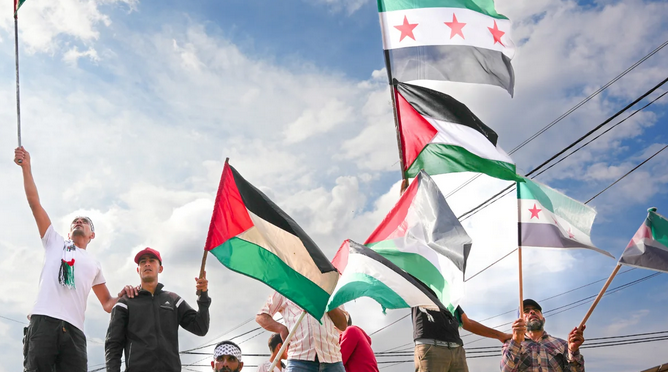
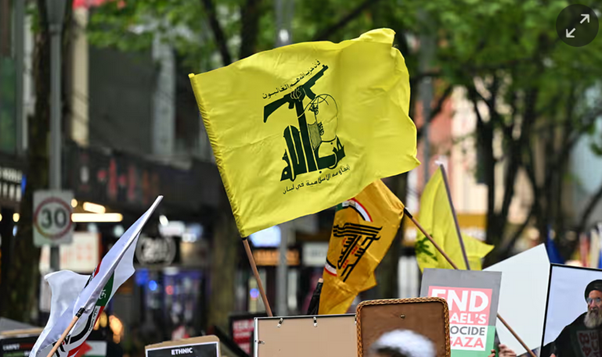
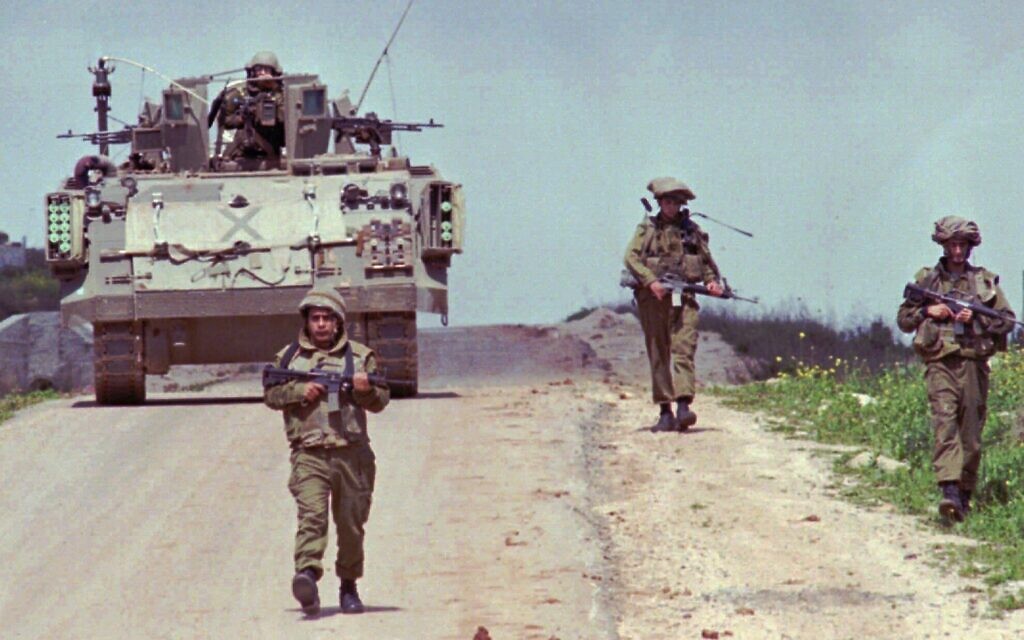
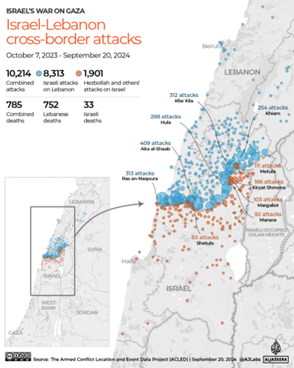
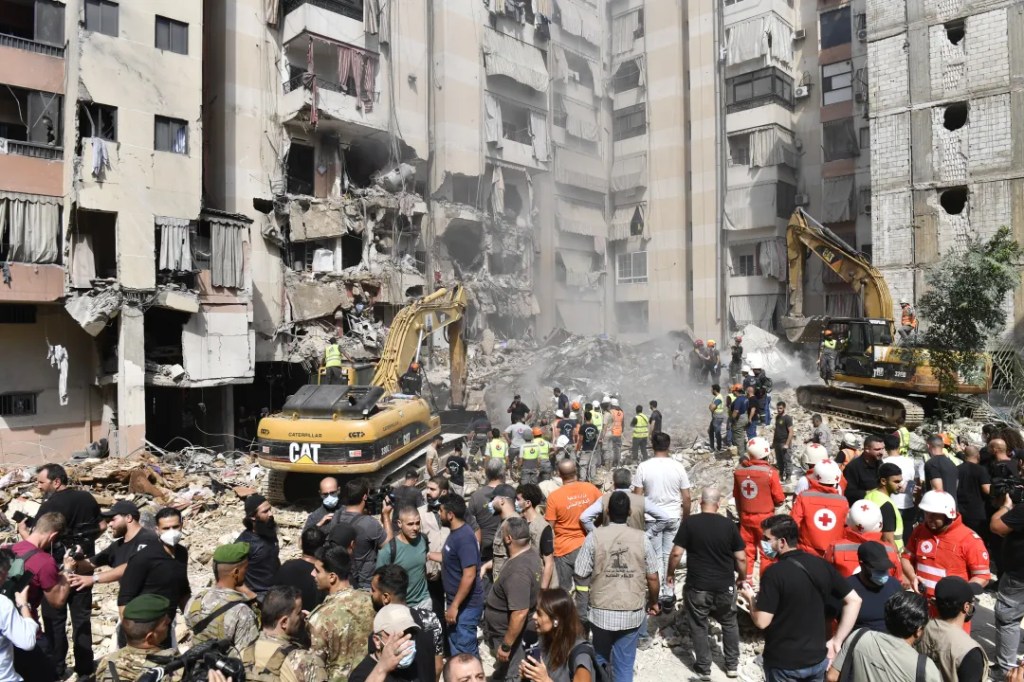
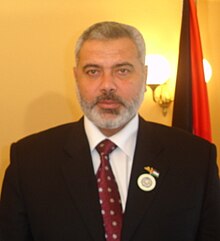
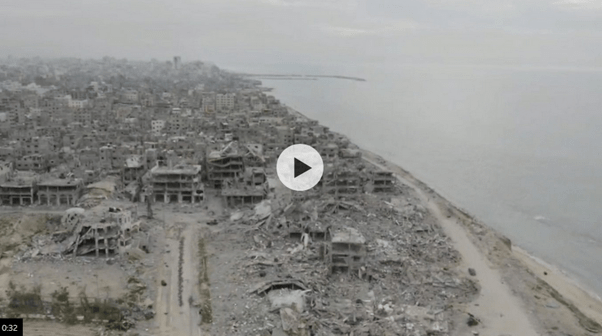
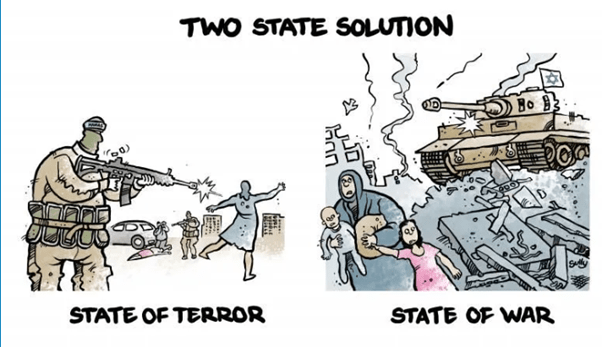
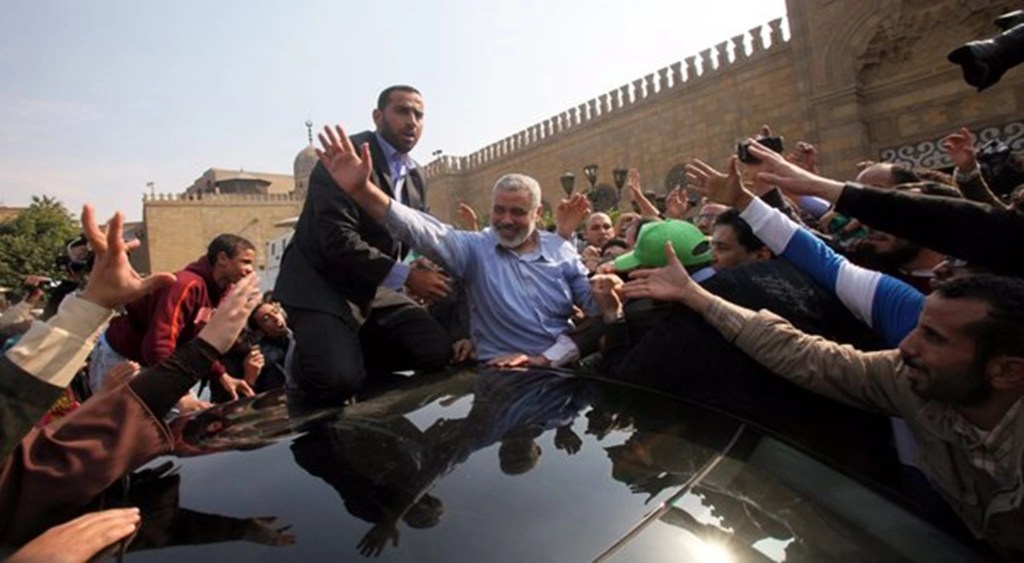
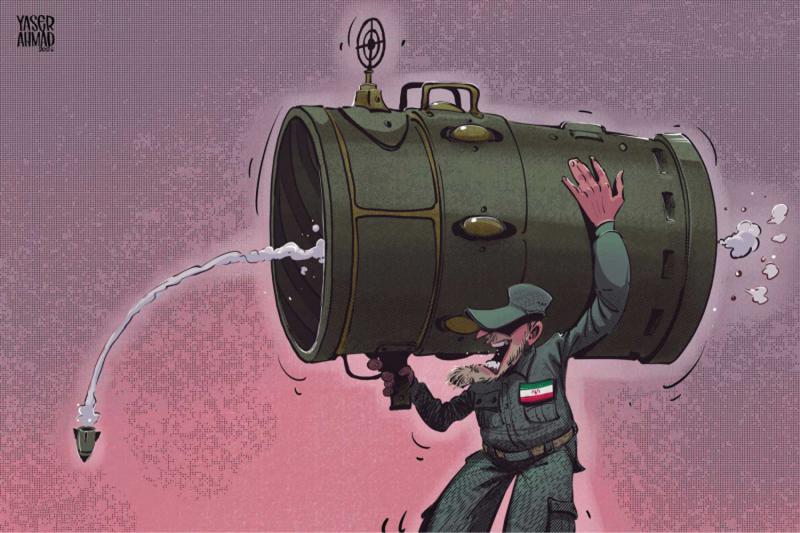
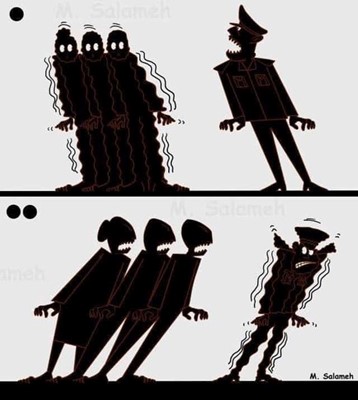
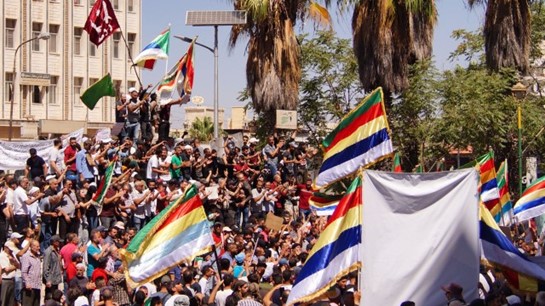
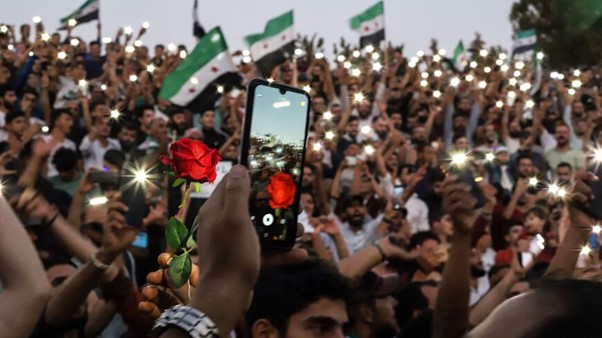
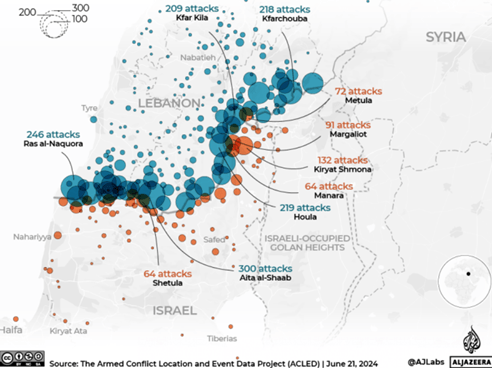
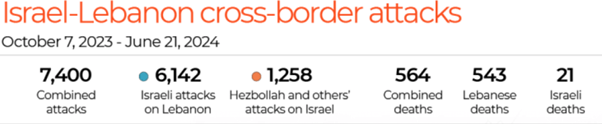
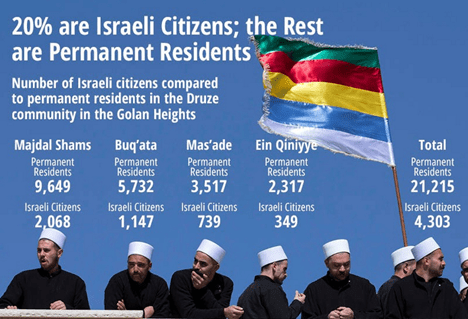
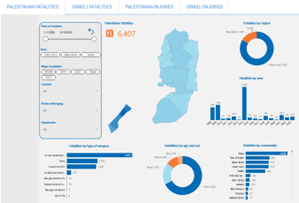
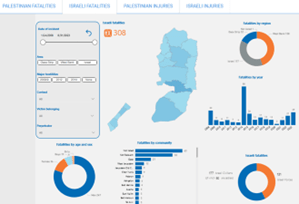
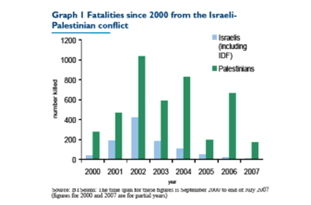
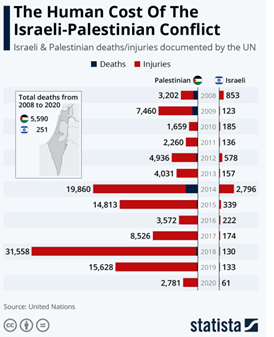
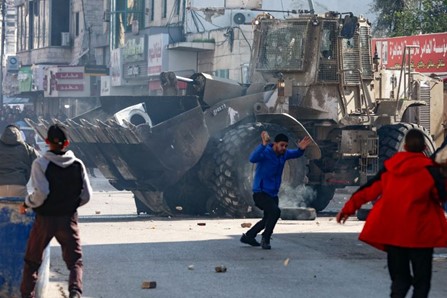
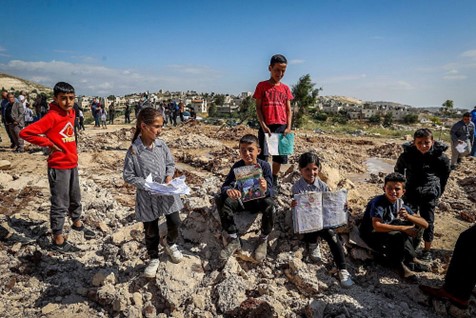
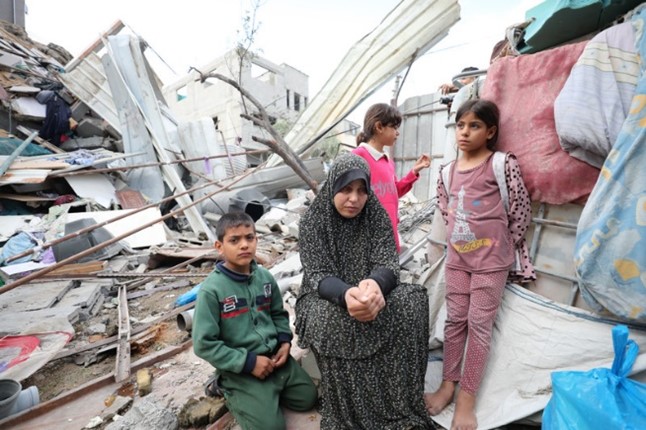



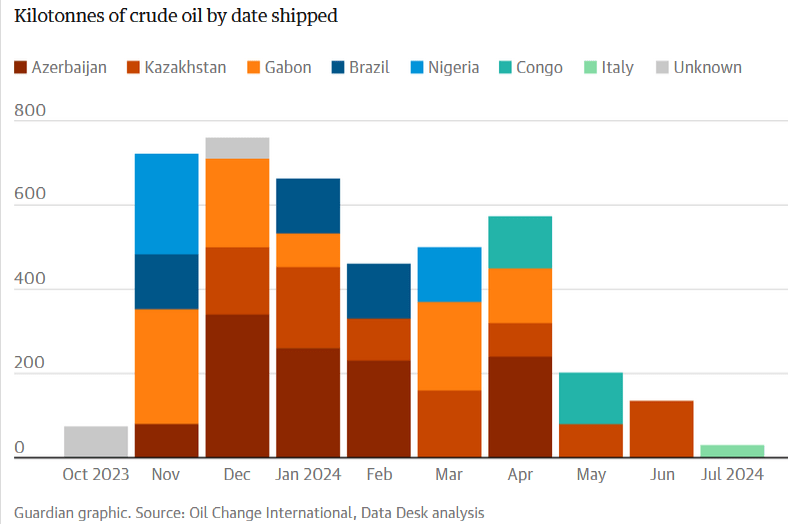
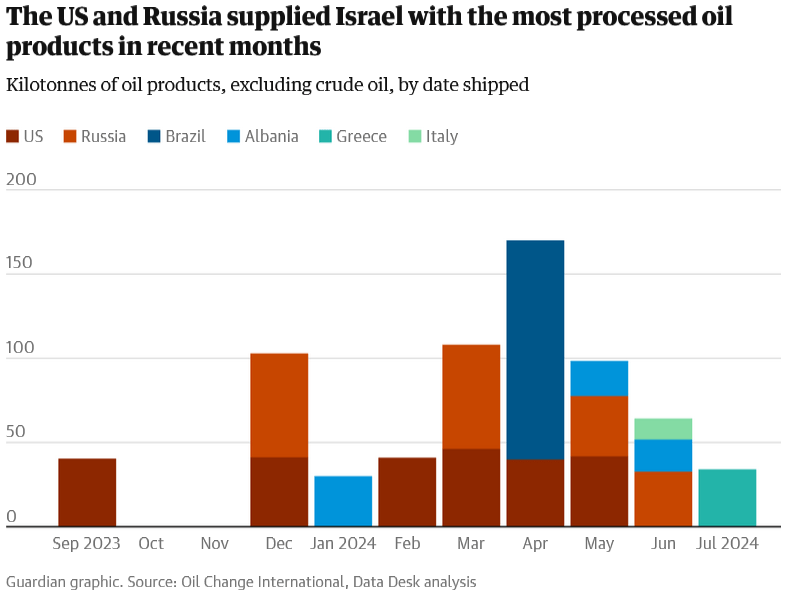
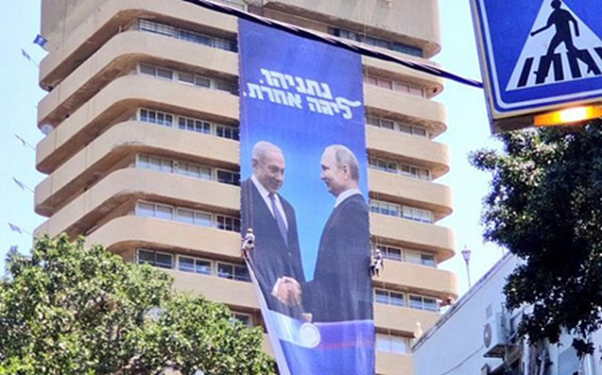

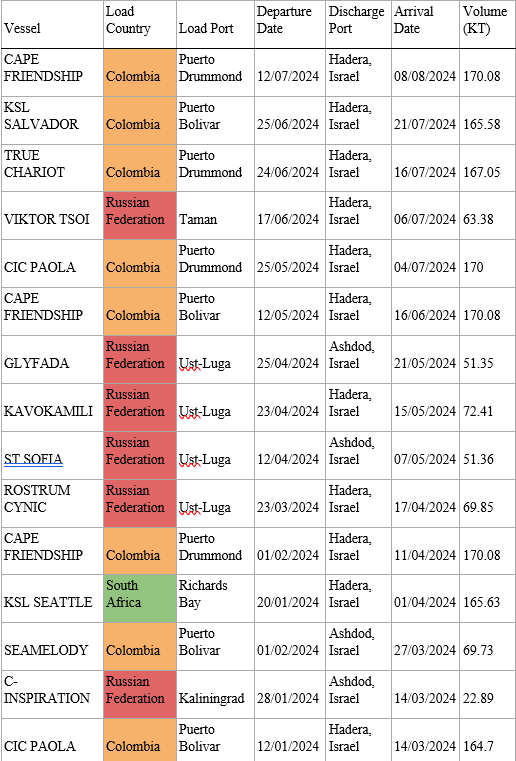
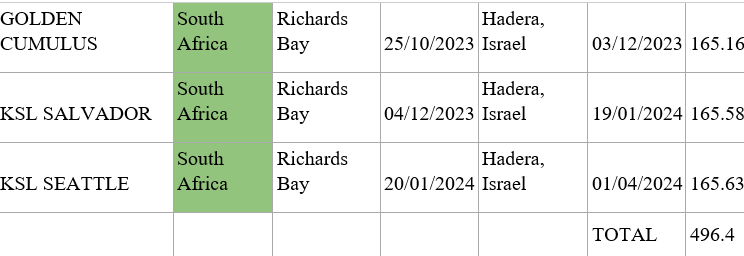


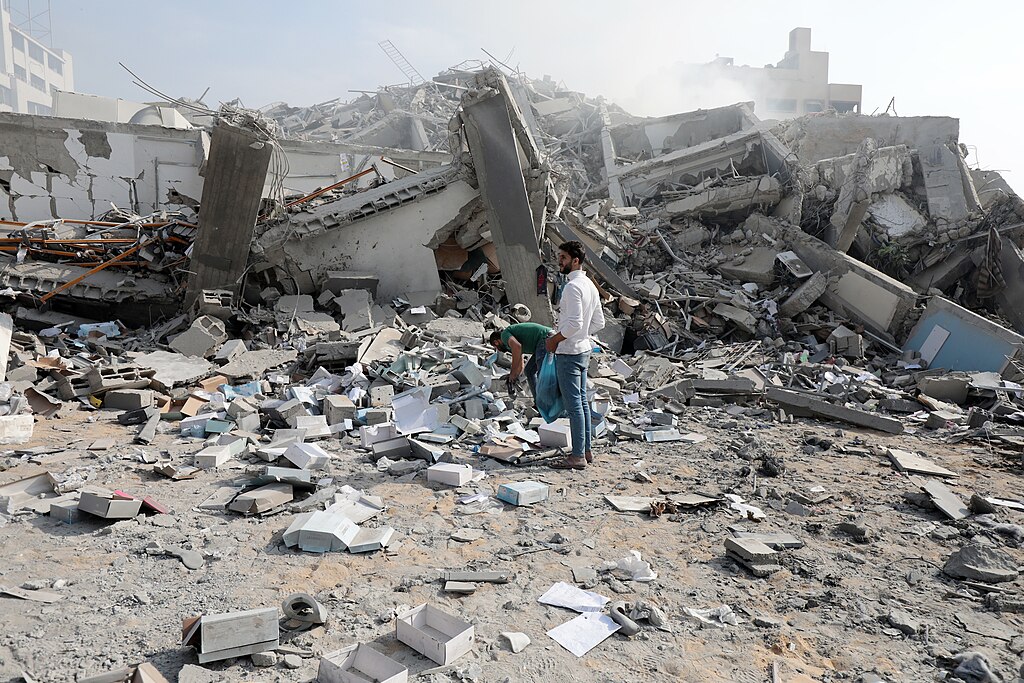
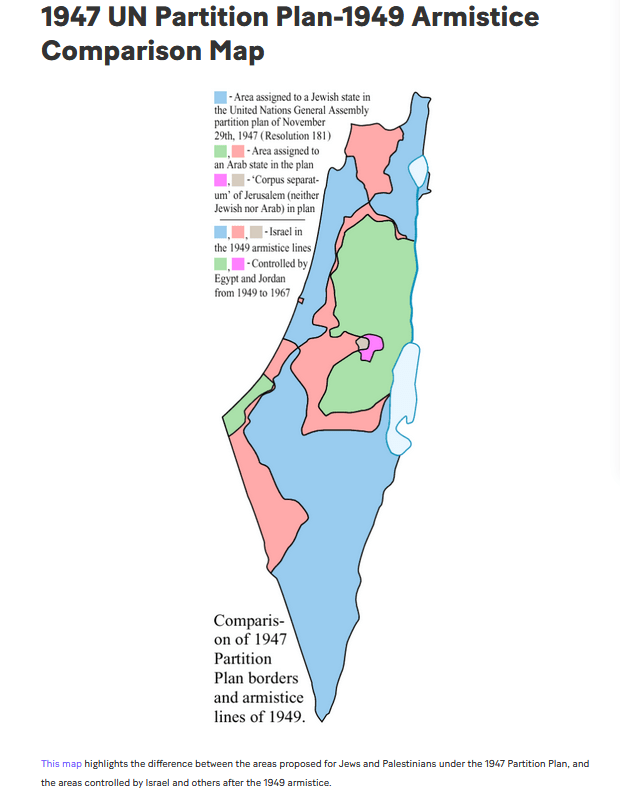
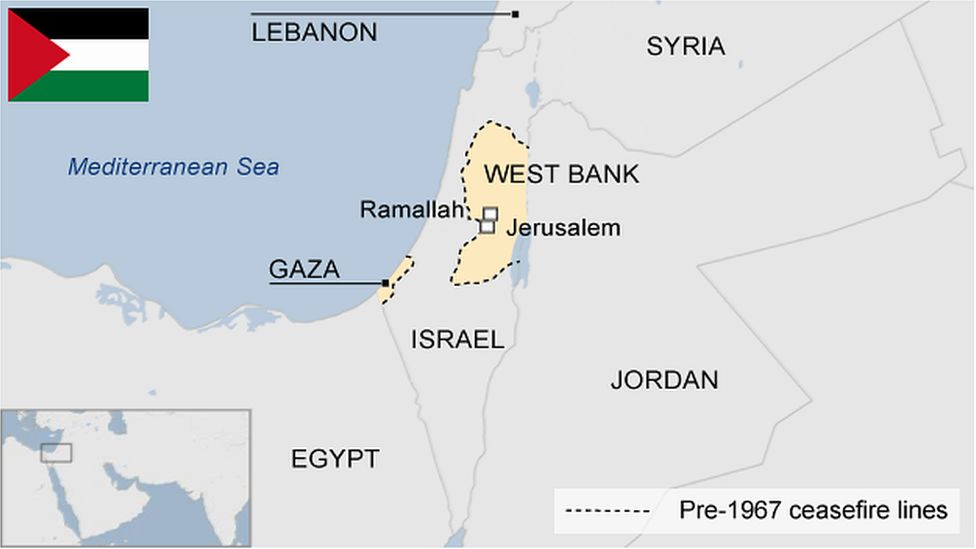
 Their Anti-imperialism and Ours